10 min read
Last Updated: 31 October 2025
HRIS integration with agentic AI is moving faster than ever. More than half of companies use AI agents today, and 75% plan to implement them in 2024. The results speak for themselves - businesses report 20-40% lower costs, 50-70% quicker case resolutions, and monthly time savings of 2-3 hours per employee.
Traditional HRIS integration solutions face challenges with disconnected workflows between HR and IT service management systems. AI has altered the map by bringing true autonomy to service management. AI-powered HRIS integration platforms now assess situations, weigh options, and pick the best actions aligned with company goals. On top of that, these smart systems chase objectives, respond to real-time signals, and handle complex tasks across platforms without constant oversight.
The results are clear - businesses using AI agents for IT requests saw their live agent chats cut in half within 30 days. This piece explores how HRIS integration software and HRIS API integration can change your employee workflows to create a more responsive workplace.
The Disconnect Between HRIS and ITSM Systems
Organizations today face their biggest problem in operations that reduces efficiency: a deep disconnect between Human Resource Information Systems (HRIS) and IT Service Management (ITSM) platforms. This split creates a digital divide that affects everything from onboarding experiences to daily workflow execution.
Manual Handoffs and Workflow Delays
HR and IT departments depend heavily on manual handoffs that cause major delays. IT teams often don't know about hardware needs after HR completes a new hire's contract. This creates a chain of delays. Research shows 63% of new employees don't get timely access to critical systems, and 41% wait more than three days to get their essential equipment.
These delays cost organizations dearly. Each employee's delayed onboarding wastes INR 438,778.34 in productivity costs. The manual onboarding processes might work for a few employees, but they don't deal very well with larger numbers. Problems multiply rapidly when companies need to onboard 50 employees weekly instead of three.
Security risks emerge during offboarding without proper HRIS integration solutions. Former employees keep their access longer than they should. Data entry errors across multiple systems create compliance risks. One healthcare provider found that 22% of onboarding errors came from mismatched data between HR platforms and IT access control lists.
Lack of Contextual Awareness Across Systems
Departmental systems working in isolation cause this disconnect. HR teams use HRIS platforms like BambooHR or Workday while IT departments handle requests through ITSM tools such as Jira, Microsoft Teams, or Zendesk. These platforms create what experts call "a fragmented archipelago of systems" without proper HRIS system integration. Each system works well alone but fails to connect with the organization's bigger picture.
This split shows up in several ways:
- Data inconsistency: Systems keep different "versions of truth" which leads to duplicate and inconsistent records
- Tool proliferation: Staff members switch between 10-13 different tools daily
- Process gaps: Security becomes vulnerable when 18% of badge access requests have wrong authorization levels
Remote work makes this problem worse. One tech firm reports that remote employees' onboarding takes 35% longer than office staff. Systems can't share vital contextual information for efficient decisions without proper HRIS API integration.
Impact on Employee Experience and Productivity
Disconnected HRIS and ITSM systems hurt employee experience and organizational productivity. HR professionals spend 57% of their time on administrative tasks. Employees waste up to two hours daily looking for information that should be easy to find.
New hires feel this impact strongly. They sit idle during their first week when access takes days instead of hours. One expert notes, "If it's day three and they still can't get onto Slack to say hello to their team, they could be missing a team ritual they didn't know about". These early negative experiences leave lasting impressions.
Daily workflows suffer beyond onboarding issues. Simple tasks like updating addresses or requesting time off need multiple system interactions. Teams often create their own workarounds with spreadsheets and unofficial processes. This fragments the digital world even more.
Money problems go beyond wasted time. Payroll errors happen more often without integrated systems. This creates compliance risks, financial penalties, and frustrated employees. Managers also struggle because they can't see attendance patterns and leave data clearly. This affects their project deadline management and workload distribution.
How Agentic AI Bridges HRIS and ITSM Gaps
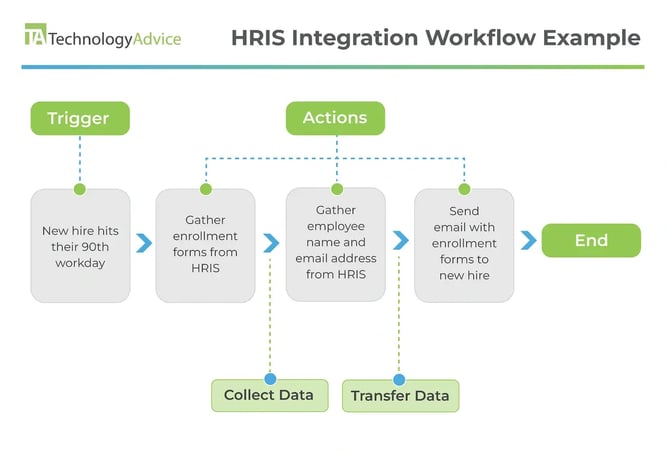
Image Source: Technology Advice
Agentic AI brings a fundamental change in how organizations handle HRIS integration. It goes beyond simple automation to create truly autonomous systems that connect HR and IT service platforms. This AI doesn't just link systems—it arranges complete workflows with minimal human input.
Autonomous Workflow Execution Across Platforms
Old HRIS integration solutions need manual coordination between systems. This creates bottlenecks in employee service delivery. Agentic AI works independently across organizational boundaries and runs end-to-end processes without constant oversight. The AI can:
- Start automated workflows once it verifies a ticket. It calls underlying APIs for password resets, user provisioning, and service restarts just like a skilled agent would
- Check outcomes immediately by reviewing audit logs, compliance hooks, and dependency states before moving to the next steps
- Choose the right next actions based on success or failure conditions. It closes the loop with notifications or smartly escalates when needed
The AI follows a complete action cycle—plan, perform, see, decide. This transforms HRIS integration platforms into self-optimizing engines that keep improving service delivery.
Real-Time Decision-Making with Contextual Data
Agentic AI raises HRIS system integration by adding contextual awareness that wasn't possible before. It analyzes information from multiple sources to make smart decisions right away, instead of just moving data between systems.
Research shows that organizations using real-time HR analytics see a 32% boost in employee productivity and 25% better retention rates. This smart decision-making shows up through:
- Combined data integration across HR platforms (HRIS, payroll, benefits) and IT service management systems
- Smart triage that sorts and ranks issues based on effect and urgency
- Event-driven automation that responds to system alerts and performance thresholds
These systems use HRIS API integration to create a closed-loop automation cycle. This cuts down manual handoffs between departments and has been shown to reduce incident costs and speed up resolutions by up to 40%.
Self-Learning Capabilities for Continuous Optimization
Agentic AI systems get better over time through machine learning and reinforcement learning. These self-learning features help HRIS integration software to:
The system first spots patterns across incidents, changes, and assets to make decisions easier. It then adapts to changing operational contexts without needing reprogramming. This creates a cycle of constant improvement where each interaction creates structured telemetry and event data. Human experts can then use this data to improve automation logic.
Organizations can build custom agents that line up with their HR policies and workflows. The system processes more interactions and creates better analytical insights. These insights help HR leaders understand critical issues and employee needs better.
IT and HR teams get a system that handles routine requests from start to finish on its own. It keeps getting better at its job and bridges the gap between these crucial business functions.
Key Use Cases for Agentic AI in Employee Workflows
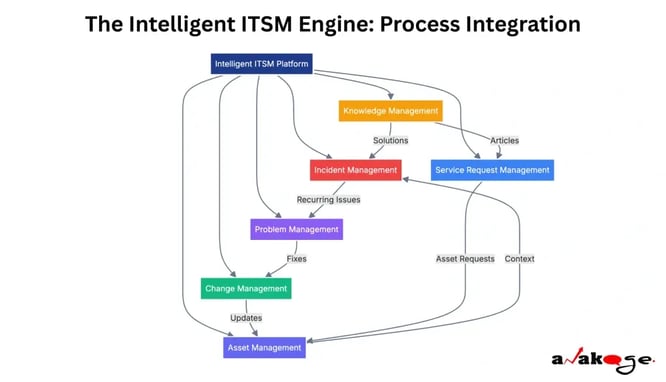
Image Source: Anakage
Organizations don't deal very well with fragmented HR and IT processes, but they are finding powerful applications for agentic AI. These innovative implementations show how HRIS integration can change everyday employee workflows from manual coordination to autonomous arrangement.
Automated Onboarding with HRIS Integration
New employee onboarding used to require many manual handoffs between HR and IT departments. New hires would sit idle while waiting for system access. Agentic AI has changed this process through intelligent HRIS integration platforms that coordinate end-to-end onboarding without human intervention.
The agentic AI starts predefined workflows as soon as a hire is confirmed in the HRIS. These workflows handle everything from account creation to equipment provisioning. It also arranges birthright provisioning, which will give new employees the right level of access through consistent policy enforcement. Companies that use automated provisioning report up to 80% fewer permission-related security issues. This brings major improvements in both security and efficiency.
Access Provisioning via ITSM and HRIS API Integration
Manual provisioning of access across multiple systems usually takes up valuable IT time. Agentic AI executes complex access workflows automatically through HRIS API integration.
The system links authoritative HR data sources (like Workday or SuccessFactors) with identity management platforms for instant synchronization. This creates a continuous automation sequence. IAM platforms get updates the moment HR staff record employment changes. Predefined workflows then trigger appropriate access changes—granting, modifying, or revoking permissions.
Real-Time Leave and Device Request Handling
Leave management used to need time-consuming manual reviews and approvals. Agentic AI has simplified this process with connected workflows that handle leave requests instantly.
AI agents can review and approve leave requests based on set policies. Managers now approve multiple requests in seconds. The system analyzes how requests affect project timelines, team capacity, and deliverables. It finds substitute resources and flags potential risks. One company using AI-powered leave management found its HR managers saved 80% of the time they once spent processing leaves manually.
Cross-System Compliance Documentation Generation
Companies used to collect data and create reports manually to maintain compliance documentation across HR and IT systems. Agentic AI solves this challenge with automated cross-system documentation.
The system creates individualized model documentation that proves processes work correctly and suit business needs. Companies generate compliance reports with one click. This maintains detailed audit trails, systematic duty segregation enforcement, and historical access certification records. The automated approach ensures clear workflow automation with verifiable deprovisioning processes that meet regulatory requirements.
Designing Seamless Workflows with HRIS Integration Platforms
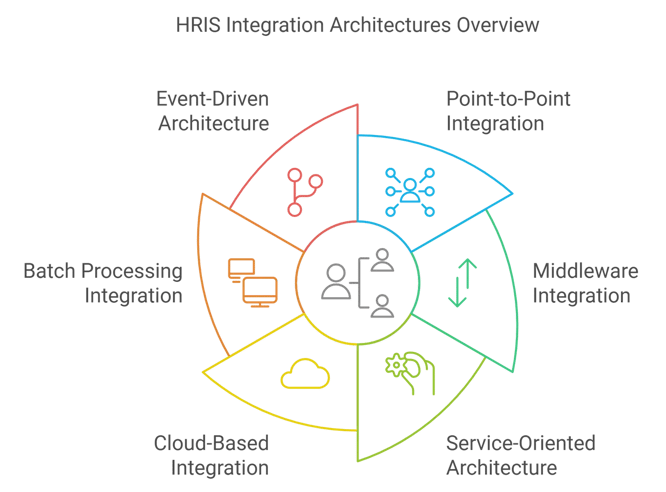
Image Source: Azilen Technologies
A successful HRIS integration needs careful planning and systematic implementation. Organizations must make smart choices about technology, data architecture, and workflow design to build a strong framework that connects HR and IT systems.
Choosing the Right HRIS Integration Software
The right HRIS integration software matches your organization's requirements. Look for platforms that blend with your existing systems like payroll, applicant tracking, and communication tools. Here are the key features to consider:
- Easy-to-use with no-code configuration options
- Strong integration ecosystem with pre-built connectors
- Role-based access controls to protect data
- Options to adapt as your needs change
Companies that use the right HR automation solutions see a 51% boost in recruitment and retention results. This shows how much the right software choice can affect your success.
Mapping Data Flows Between HRIS and ITSM
Data mapping is the foundation of a good HRIS system integration. Start with a thorough data audit to spot any inconsistencies, duplicates, and errors. Then create detailed maps that show how user information matches between systems.
We focused on making employee data models standard, with matching field names and structures across providers. This helps information flow smoothly between HR platforms and IT service management systems.
Using HRIS API Integration for Real-Time Sync
Systems need strong API connections to sync in real time. Unified APIs let you work with multiple providers at once through a standard interface. You won't have to learn each vendor's unique format. Plus, real-time data polling updates everything right away.
Let's say an employee asks for vacation time. API integration checks the request against policies right away. It sends it to managers and updates resource planning systems immediately.
Avoiding Redundancy in Workflow Automation
Smart integration cuts out processes that waste time and resources. Add self-service options for common requests like time-off and equipment. Give employees one central portal where they can find all the information they need.
Each integration should serve clear, measurable goals to avoid having too many tools. Track how much time you save on administrative work and how much more accurate your data becomes after integration.
Governance, Security, and Change Management Considerations
The integration of HRIS with ITSM systems creates major security and governance challenges. Teams need structured protocols and oversight mechanisms to address these challenges effectively.
Role-Based Access Control Across Systems
HRIS integration demands close coordination between HRIS systems and Identity Governance Administration (IGA) solutions. High-quality user data and well-laid-out management processes are the foundations of successful implementation. These systems follow rules that won't deliver results with poor data. Teams should identify business and technical role owners. They need to set up processes to evaluate roles and define clear maintenance duties to stop roles from multiplying.
Audit Trails and Compliance Logging
HRIS integration deals with sensitive personally identifiable information (PII) such as names, Social Security numbers, and payroll details. Audit logs that track all data changes will give a solid paper trail during compliance audits. These permanent, unchangeable records capture:
- The person who made changes and timing
- Systems that got updates
- Specific field changes in all platforms
Human-in-the-Loop for Edge Case Handling
Human-in-the-loop (HITL) methods add human oversight at crucial decision points in automated AI workflows. This oversight stops permanent errors and ensures compliance in regulated cases. It also catches ethical issues that AI might miss. HITL acts as a safety net in high-risk areas. It helps solve the "black box" problem where AI's decision-making process stays unclear.
Training and Change Management for HR and IT Teams
HRIS implementations need detailed training customized for different groups like HR staff, managers, and end-users. Documentation should cover data flow diagrams, field mappings, error handling steps, and escalation paths. This ensures smooth operations even when unexpected problems arise.
Conclusion
Modern enterprises can achieve operational excellence by integrating HRIS and ITSM systems through agentic AI. Businesses waste money and time when HR and IT processes don't work together. Without doubt, employees wait days to get their equipment while companies lose valuable productivity during onboarding. AI agents bridge this gap and blend previously scattered workflows into a continuous experience.
Agentic AI is different from regular automation because it knows how to make decisions on its own. It adapts to changes and runs complex tasks without constant monitoring. The results speak for themselves - 20-40% cost reductions, 50-70% faster case resolutions, and employees save several hours each month.
Companies see the best results with specific applications like automated onboarding, access provisioning, up-to-the-minute leave management, and compliance documentation. These solutions fix the biggest gaps between HR and IT systems and improve security and compliance at the same time.
The system needs careful planning to work well. Companies should pick the right integration software, map data flows precisely, build resilient API connections, and remove duplicate processes. These steps are the foundations to connect HRIS and ITSM effectively. On top of that, strong governance ensures proper access controls, complete audit trails, and human oversight for unusual cases.
The future looks promising as agentic AI moves beyond basic connections toward smart orchestration of employee experiences. HR and IT departments will work closer as systems learn from every interaction and make workflows better based on company patterns and needs. Companies that embrace this integration will create responsive, efficient workplaces. Their employees will spend less time dealing with administrative tasks and more time doing meaningful work.
Key Takeaways
Organizations implementing agentic AI for HRIS-ITSM integration are transforming fragmented employee workflows into seamless, autonomous experiences that deliver measurable business value.
• Agentic AI delivers proven ROI: Companies achieve 20-40% cost reductions, 50-70% faster case resolutions, and save 2-3 hours per employee monthly through autonomous workflow execution.
• Traditional disconnects create costly inefficiencies: 63% of new employees face delayed system access, with organizations losing ₹438,778 per employee in productivity costs due to manual handoffs between HR and IT.
• Real-time integration transforms employee experience: Automated onboarding, access provisioning, and leave management eliminate waiting periods while maintaining security through role-based controls and audit trails.
• Strategic implementation requires careful planning: Success depends on selecting integration software with robust APIs, mapping data flows precisely, and establishing governance frameworks with human oversight for edge cases.
The future of employee service delivery lies in intelligent systems that learn from interactions and continuously optimize workflows, creating workplaces where administrative friction disappears and productivity flourishes.
FAQs
Q1. How does agentic AI improve HRIS and ITSM integration? Agentic AI enhances HRIS and ITSM integration by enabling autonomous workflow execution, real-time decision-making with contextual data, and self-learning capabilities. This results in cost reductions, faster case resolutions, and improved employee productivity.
Q2. What are the key benefits of implementing HRIS integration with ITSM systems? The main benefits include streamlined onboarding processes, automated access provisioning, real-time leave management, and improved compliance documentation. These integrations lead to significant time savings, reduced errors, and enhanced employee experiences.
Q3. How can organizations ensure security when integrating HRIS and ITSM systems? Organizations can maintain security by implementing role-based access controls, maintaining comprehensive audit trails, and using human-in-the-loop approaches for edge cases. These measures help protect sensitive data and ensure compliance with regulations.
Q4. What should companies consider when selecting HRIS integration software? When choosing HRIS integration software, companies should look for ease of use, robust integration capabilities, role-based access controls, and customization options. The software should also offer seamless integration with existing systems and a strong ecosystem of pre-built connectors.
Q5. How does HRIS integration impact employee onboarding? HRIS integration significantly improves employee onboarding by automating processes such as account creation and equipment provisioning. This reduces delays in system access, improves first impressions, and allows new hires to become productive more quickly, ultimately enhancing the overall onboarding experience.
Trusted by 330+ CHROs
See why global HR teams rely on Amber to listen, act, and retain their best people.
