HR case management has undergone a remarkable transformation, with automation rising by an astonishing 235% in just a single year. This surge isn't surprising when we consider the profound impact automation has on HR operations and employee experience.
According to Gartner, operational efficiency and employee experience rank as top priorities for HR leaders in 2024 and beyond. This focus comes at a critical time, as nearly 76% of employees now base their loyalty on the flexibility they have in when and where they work. Therefore, implementing effective hr case management systems has become essential for organizations aiming to streamline their operations while maintaining employee satisfaction.
By 2025, 80% of customer service and support organizations will apply generative AI technology to enhance agent productivity and customer experience. Similarly, HR departments can benefit from these technologies. In fact, CHROs who clearly define an HR-focused AI strategy can achieve significant productivity gains, with predictions suggesting up to 29% improvement from AI adoption.
We've seen firsthand how automation takes repetitive, time-consuming tasks off HR teams' plates, allowing them to focus on more strategic initiatives. Additionally, optimizing case management workflows simplifies processes and automates routine tasks, which ultimately helps HR professionals work more efficiently and accurately while reducing the risk of manual errors.
In this article, we'll explore proven strategies for implementing effective HR case management, from intake and categorization to resolution and feedback collection, along with smart automation approaches that deliver measurable results.
Why Modern HR Needs Case Management Systems
Modern HR teams face a growing volume of complex employee issues, from grievances to accommodations requests. Without structured systems, these sensitive matters easily fall through the cracks, creating risks for organizations and frustration for employees.
Handling sensitive employee issues with empathy and speed
Empathy stands as a critical HR leadership skill, fostering positive workplace relationships while facilitating conflict management. Consequently, HR departments outperform other functional leaders in empathy-related skills like coaching, developing others, and leading teams.
Nonetheless, empathy alone isn't enough – speed also matters. When employees reach out to HR with concerns, they're seeking reassurance, guidance, and sometimes, a lifeline. Traditional email-based approaches leave employees wondering if their complaint has vanished into a void, eroding trust and creating uncertainty.
A structured HR case management system addresses this challenge by providing:
- Immediate access to HR without waiting for meetings
- Transparent status tracking through ticketing numbers
- Clear escalation paths for sensitive matters
For example, when handling workplace discrimination concerns, HR case management ensures payroll issues, grievances, and leave requests receive timely resolution. This approach particularly benefits situations involving inappropriate comments or unfair treatment, where documentation of every step – from initial report to final resolution – becomes essential.
Reducing complexity through centralized request intake
HR teams drowning in requests from email, chat, and hallway conversations struggle to resolve issues quickly. Furthermore, without centralized systems, requests often get buried in email threads with unclear ownership, leaving employees uncertain about who's addressing their concerns.
A well-designed HR case management system transforms this chaos by consolidating all channels into a single dashboard. This centralization creates a single source of truth for case details and employee information, ensuring HR professionals have everything needed to resolve issues quickly and amicably.
In large organizations especially, the volume and complexity of queries necessitate HR case management software to ensure consistency and accuracy. This approach enables immediate visibility into case status, deadlines, and escalation requirements while streamlining collaboration for complex cases requiring multiple team members.
Improving compliance and audit readiness
To compliance officers, case management serves as a control mechanism where every case becomes a data point. Each note, flag, and follow-up contributes to a bigger picture that reveals risk exposure and uncovers patterns. These insights then prepare organizations for external scrutiny.
On one hand, ineffective HR case management leads to legal risks; on the other, effective systems help reduce these risks significantly. For instance, one retailer paid $84.38 million in settlements due to improper hiring practices at its distribution center. Regular HR audits could have caught these issues before they led to lawsuits.
Proper HR case management creates immutable timestamps, consistent audit trails, and secure access controls ensuring only authorized individuals can view sensitive information. This documentation particularly matters for leave requests, reasonable accommodations, or adjustments under the ADA, which aren't just policy matters but are governed by law.
Most importantly, this approach helps organizations maintain compliance with regulations like HIPAA while fostering trust through proper safeguarding of employees' sensitive data. The result? Reduced legal exposure and a workplace where employees feel both heard and protected.
Core Workflow of HR Case Management
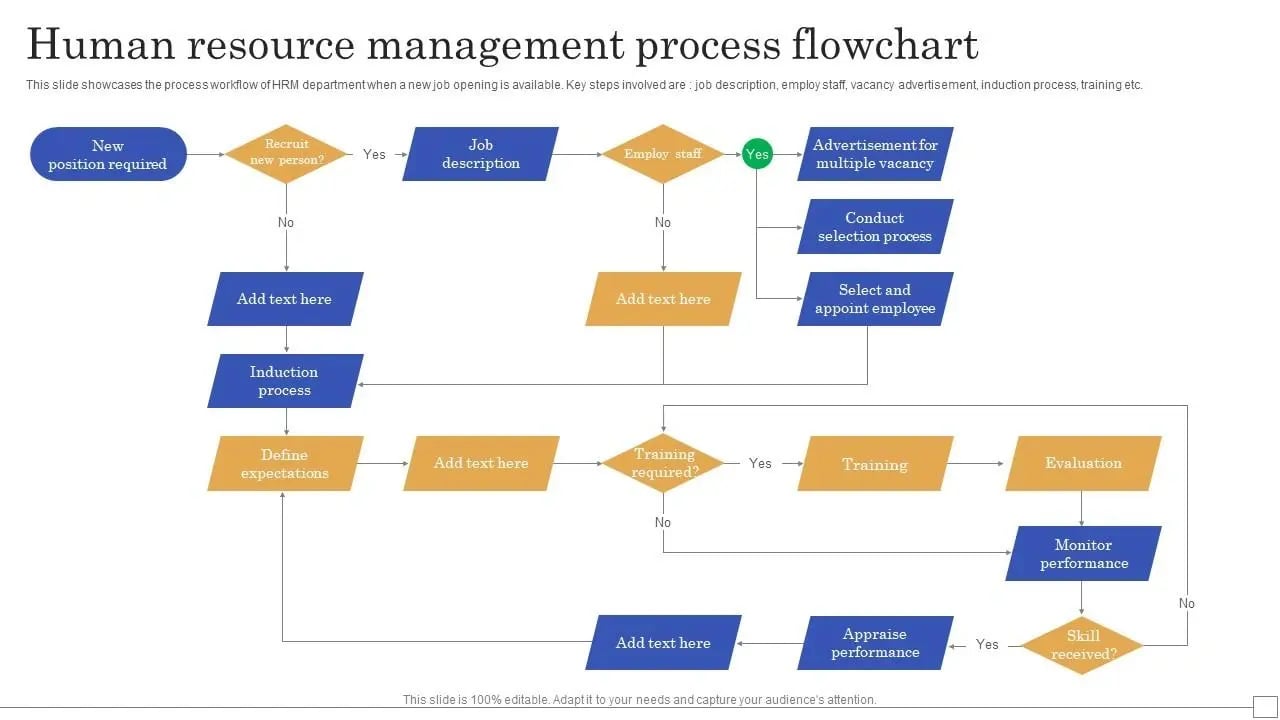
Image Source: SlideTeam
Effective HR case management relies on a systematic workflow that transforms complex employee issues into manageable processes. Initially, each step builds upon the previous one to ensure consistent, fair case handling from start to finish.
Case intake and categorization via HR portal
The workflow begins when employees submit requests through multiple channels - unified HR portals, email, chat platforms like Slack or Teams, or even phone calls. Modern HR case management systems automatically tag these incoming cases into categories like leave requests, benefits inquiries, or policy questions. This classification ensures cases enter the system in an organized manner, with appropriate handling protocols activated from the start.
What distinguishes advanced HR case management is its ability to account for case sensitivity. Employee relations issues or whistleblower reports often require restricted access, anonymization, or data masking to protect confidentiality.
AI-based routing and prioritization
Once categorized, AI analyzes the case content, writes titles and notes, sets priority levels, and routes to the best-qualified specialist—often within seconds. This intelligent routing matches cases to HR specialists based on:
- Case type and complexity
- Employee location or department
- Urgency metrics derived from content analysis
- Agent expertise and availability
High-priority cases involving compliance issues receive automatic escalation, subsequently triggering time-sensitive protocols. AI-driven systems analyze urgency, impact, and sentiment to determine case priority, while SLA timers run in the background to prevent breaches.
Investigation, resolution, and documentation
During investigation, HR specialists gather necessary information, consult relevant policies, and use knowledge bases to determine appropriate resolutions. The process frequently involves:
- Collecting evidence from documents, emails, and witness statements
- Conducting interviews with involved parties
- Maintaining strict confidentiality protocols
- Documenting every interaction for future reference
Advanced systems provide immutable timestamps and comprehensive audit trails throughout this phase, establishing defensible records. For complex cases, HR may collaborate across departments—consulting legal, payroll, or IT—to develop thorough resolution plans.
Feedback collection and closure
The final workflow stage occurs after resolving the case. HR professionals document outcomes, communicate resolutions to employees, and mark cases as closed. Moreover, the most effective systems include feedback mechanisms like quick satisfaction surveys or Net Promoter Score assessments to measure employee experience.
This feedback creates a continuous improvement loop, helping HR teams identify systemic issues and refine processes. Many organizations use data from closed cases to reveal patterns, providing insights that help prevent similar problems from recurring. By analyzing case metrics, HR departments can discover underlying policy issues or process bottlenecks that might otherwise remain hidden.
Smart Automation Strategies That Actually Work
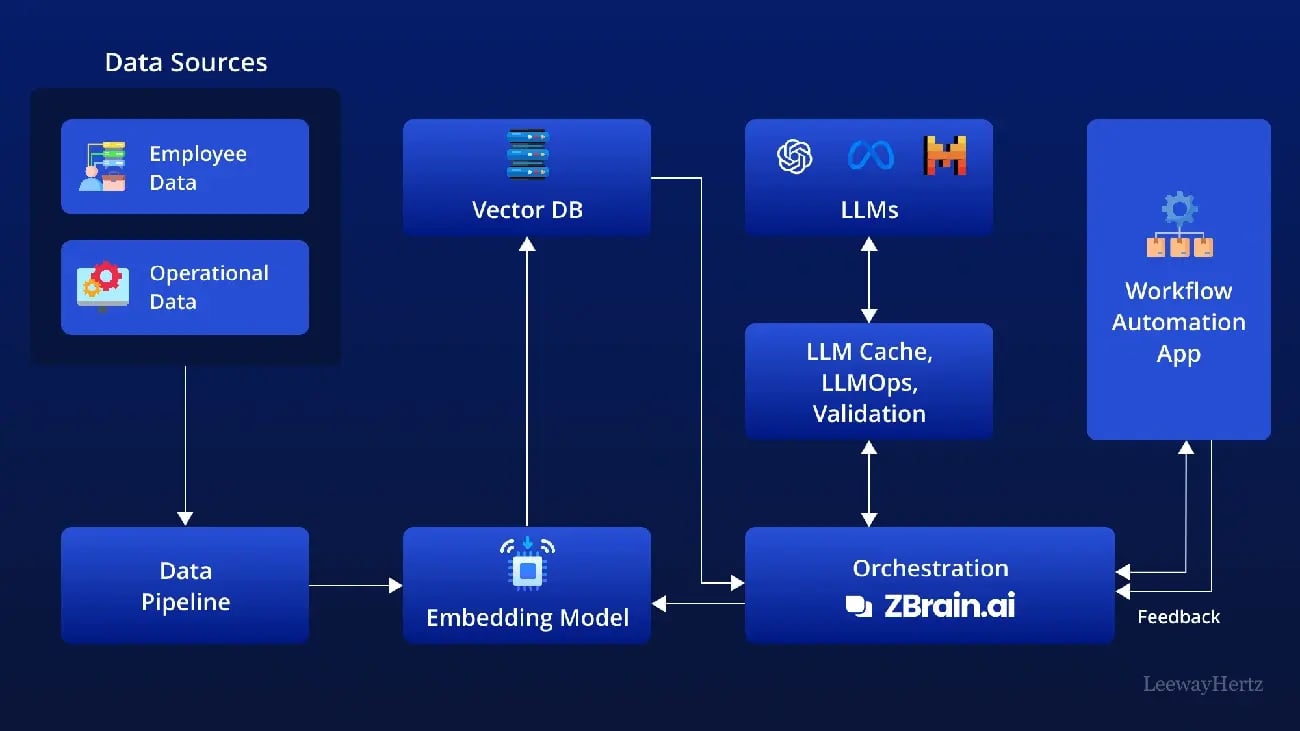
Image Source: LeewayHertz
Automating HR case management goes beyond basic ticket tracking. Successful implementations use strategic automation at key workflow points rather than attempting to automate everything at once.
Auto-routing based on case type and sensitivity
Intelligent case routing eliminates the manual process of assigning cases, which can be slow and error-prone when done by hand. Advanced HR case management systems employ assignment and matching rules that associate specific skills using HR case templates. These systems enable routing based on different methodologies including:
Round-robin distribution that routes cases based on turn order, ensuring equal workload distribution across the team. Alternatively, workload balancing assigns cases to team members with the least capacity based on in-progress work. For sensitive matters, routing can be configured to match cases with HR specialists possessing relevant expertise.
Virtual HR assistants for FAQ deflection
Case deflection—preventing a ticket from requiring human intervention—delivers significant efficiency gains. Virtual HR assistants employ natural language processing and AI to carry out various functions that traditionally consumed HR staff time.
These assistants excel at handling most employee queries about policies, benefits, and procedures, specifically:
- Answering FAQs instantly from the knowledge base
- Conducting intelligent searches to return appropriate knowledge articles
- Delivering deflection content through multiple channels like email, SMS, or chat
Companies that implement FAQ deflection see reduced administrative workloads, allowing HR staff to focus on complex issues requiring human intervention.
SLA tracking and escalation alerts
Service Level Agreements (SLAs) establish measurable targets for HR case resolution timeframes. Effective HR case management systems automatically apply response and resolution time allowances to incoming cases.
The technology tracks time-in-stage, enforces due dates, and escalates items before deadlines are missed. These systems can automatically prompt case owners when it's time to update employees and keep cases on track for resolution within agreed timeframes. Even more valuable, they can alert HR management who might need to intervene before an SLA breach occurs, maintaining service quality expectations.
Agentic AI for proactive triage and resolution planning
Agentic AI represents the evolution beyond basic automation. Unlike traditional automation, agentic AI acts independently—planning, initiating, and coordinating entire HR workflows. These systems analyze intent and sentiment, verify information upfront, and auto-create cases with pre-filled fields.
Furthermore, they proactively launch follow-up tasks, monitor progress, and learn from resolution patterns to improve over time. This capability allows HR departments to move from reactive to proactive support models. For instance, if multiple employees from the same department ask about a specific policy change, agentic AI can surface this pattern as an actionable insight to HR leaders in real time.
Dynamic Case Management for Complex Scenarios
Complex employee relations matters demand more than standard case handling procedures. Dynamic case management equips HR teams with the flexibility to respond like humans, not helpdesks, adapting to each case's unique context and rules.
Adaptive workflows for employee relations and compliance
Dynamic case management combines technology with human judgment, enabling on-the-fly task adjustments as cases evolve. Unlike rigid systems, these adaptive workflows categorize cases by characteristics—expediting simple matters yet dedicating attention to complex ones. For instance, employee relations cases might require extra review, anonymous handling, or legal approval depending on their sensitivity.
Through this approach, HR professionals can:
- Adjust investigation steps based on new information
- Add approval requirements for sensitive situations
- Maintain confidentiality protocols where needed
- Apply different rule sets for varied compliance scenarios
Low-code configuration for evolving HR policies
Although HR policies constantly evolve, traditional systems often can't keep pace. Low-code platforms solve this challenge by allowing HR teams to configure workflows independently without IT department involvement. This capability ensures HR case management systems remain aligned with current policies.
As organizations implement policy changes, HR can immediately reconfigure case workflows, preserving compliance throughout transitions. Simultaneously, this approach maintains flexibility as workplace needs shift over time.
Cross-functional collaboration with IT, Legal, and Payroll
Effective resolution of complex HR cases frequently requires expertise beyond the HR department. Dynamic case management enables seamless handoffs between teams, ensuring all case history remains visible throughout transitions. Connected integrations with payroll, IT, or compliance tools automatically ensure relevant data travels with the case.
This collaborative foundation helps maintain consistency across departments while respecting case confidentiality. Hence, complex cases involving payroll discrepancies, workplace investigations, or policy exceptions receive appropriate multi-departmental input.
Real-time alerts and knowledge integration
Knowledge integration stands at the heart of dynamic case management, automatically displaying relevant data like knowledge articles and past case notes. Virtual HR assistants leverage policy databases to handle routine queries, whereas real-time alerts track steps and notify HR professionals about delays.
Together, these capabilities create an intelligent approach that improves response times through context-driven decisions. By treating each case uniquely, HR teams deliver more responsive service while maintaining appropriate oversight for complex scenarios.
Measuring Success: KPIs and Continuous Improvement
Successful hr case management requires clear, measurable KPIs to evaluate performance and drive continuous improvement. Without proper metrics, teams struggle to identify bottlenecks and showcase HR's strategic value.
First contact resolution and SLA compliance
First contact resolution (FCR)—the percentage of cases resolved in a single interaction—serves as a critical efficiency indicator. Industry standards consider 70-79% a good FCR rate, while 80% or higher is deemed "world-class". For every 1% FCR improvement, operating costs decrease by 1%, notably through reduced follow-up interactions.
SLA compliance, meanwhile, tracks the percentage of cases resolved within agreed timeframes. Ultimately, this metric reflects reliability, accountability, and trust.
Case deflection rate via self-service
Case deflection—measuring how effectively self-service resources prevent formal cases—typically ranges from 50-80% when quality knowledge articles exist. Track both explicit deflection (abandoning case creation after viewing resources) and implicit deflection (resolving issues without reaching case creation).
CSAT and NPS for employee satisfaction
Employee satisfaction metrics, including CSAT and Net Promoter Score (NPS), gage service quality. An NPS above 50 indicates high employee trust in HR, whereas scores below -10 warrant immediate attention.
Root cause analysis for reopened cases
Root cause analysis, often using the "Five whys" technique, examines patterns behind reopened cases. This practice yields:
- Improved case handling efficiency
- Higher employee satisfaction
- Reduced compliance issues
Above all, this analysis creates a continuous improvement cycle, transforming recurring issues into prevention opportunities.
Conclusion
As we've explored throughout this article, effective HR case management represents a critical foundation for operational efficiency and positive employee experience. Smart automation has certainly transformed how HR teams handle employee inquiries, with adoption rates increasing by 235% in just one year. This dramatic shift reflects the genuine business value these systems deliver.
Centralized intake systems, AI-based routing, and dynamic workflows together create a framework that addresses the core challenges HR departments face daily. Most importantly, these technologies free HR professionals from repetitive tasks, allowing them to focus on what truly matters - building meaningful connections with employees during sensitive or complex situations.
The benefits extend far beyond mere efficiency. Proper case management significantly reduces compliance risks through comprehensive documentation and audit trails. Additionally, the data collected through these systems reveals valuable patterns that help prevent future issues rather than simply reacting to problems after they emerge.
Looking ahead, organizations that embrace smart automation while maintaining the human touch will undoubtedly gain competitive advantages. First contact resolution rates, case deflection percentages, and employee satisfaction scores provide clear metrics to measure success and drive continuous improvement.
Ultimately, HR case management done right balances technology and empathy. The goal remains helping employees feel heard, valued, and supported throughout their journey with your organization. Though implementing these systems requires thoughtful planning and execution, the return on investment - measured both in operational metrics and employee trust - makes it well worth the effort.
Trusted by 330+ CHROs
See why global HR teams rely on Amber to listen, act, and retain their best people.
