HR metrics are undergoing a dramatic transformation as we approach 2025. According to IBM, 70% of HR executives believe the HR function is ripe for reinvention. This isn't surprising when we consider that 41% of HR professionals have already improved efficiency and driven business value through skilled use of technology and data.
The evolution of human resource metrics has been accelerated by artificial intelligence, creating powerful new ways to analyze workforce data. In fact, 74% of organizations are either planning to employ AI into HR systems or already using it. By utilizing HR analytics, we can enhance decision-making precision and build a stronger knowledge base for people strategies. The types of hr metrics available today go far beyond traditional tracking, with AI-powered systems now predicting employee turnover with remarkable accuracy—IBM reports being able to anticipate departures with 95% accuracy using their attrition prediction models.
Furthermore, these advanced hr matrix approaches are becoming essential for financial reasons. The cost of replacing an employee can reach 1.5-2 times their annual salary, especially for senior roles. Through this article, we'll explore eight cutting-edge AI-powered metrics that are transforming how we make people decisions, helping you prepare for a more data-driven HR function in 2025.
What Are AI-Powered HR Metrics?
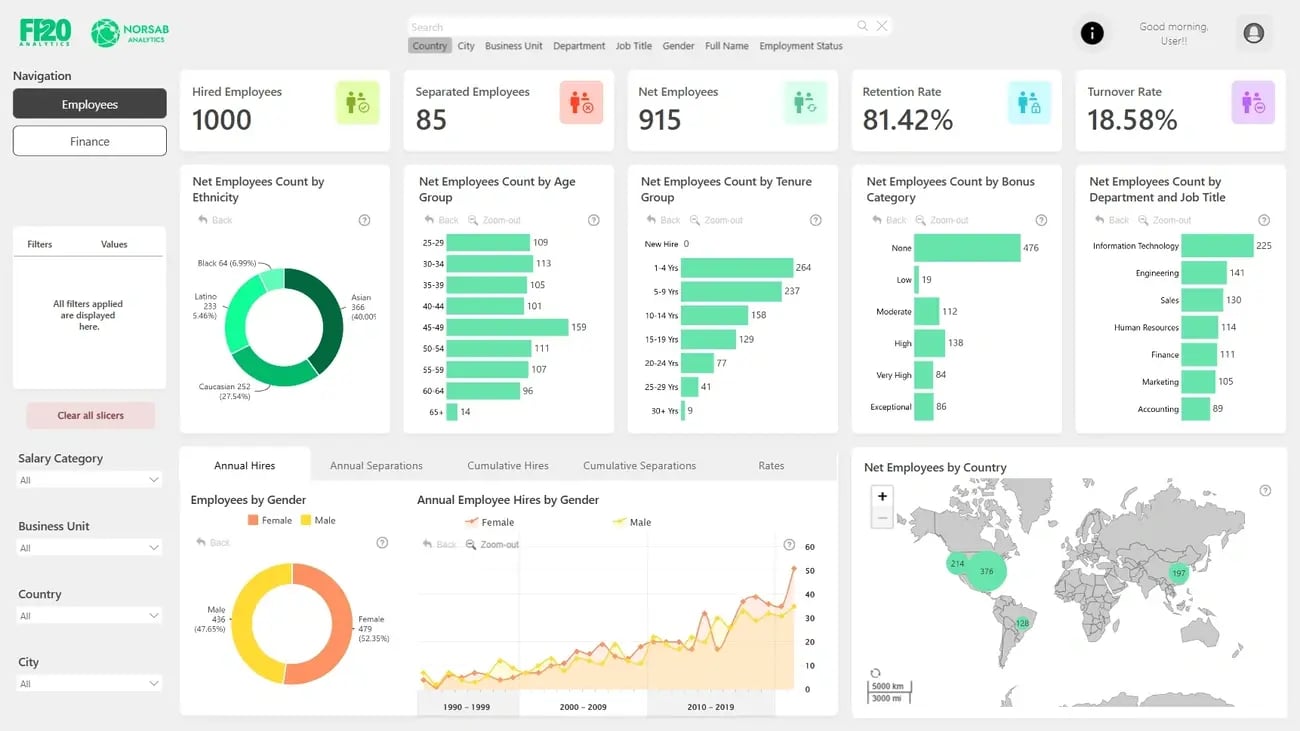
Image Source: ZoomCharts
Artificial intelligence is reshaping how organizations measure, analyze, and optimize their workforce. AI-powered HR metrics represent a significant advancement that enables companies to turn their untapped employee data into actionable insights and predictions.
Definition of AI-powered HR metrics
AI-powered HR metrics utilize machine learning and advanced analytics to process vast amounts of workforce data, uncovering patterns and insights that traditional methods might miss. These sophisticated tools transform human resource metrics from simple tracking mechanisms into predictive instruments that support strategic decision-making. AI-powered HR analytics enable HR departments to gather and analyze large datasets on employee performance, engagement, turnover, and organizational culture, identifying key areas for improvement. Consequently, businesses can make more informed, data-driven decisions about managing their workforce.
Most HR teams already collect substantial workforce data, but AI takes this further by highlighting not just what's happening but why trends occur, how they connect, and what actions should follow. Rather than relying on basic reporting, these advanced systems can forecast outcomes, test potential decisions, and identify influential factors across the organization.
Difference between traditional and AI-driven metrics
Traditional HR metrics and AI-driven metrics differ substantially in both approach and capabilities:
- Timeframe: Traditional methods typically rely on annual or periodic surveys providing only snapshots of employee sentiment at specific moments. AI-driven systems offer continuous, real-time monitoring and analysis.
- Depth: While traditional metrics often use simplistic questionnaires with limited insight, AI provides nuanced analysis of complex emotions and concerns.
- Approach: Traditional HR matrix approaches are reactive, responding to problems after they occur. Conversely, AI-powered solutions are predictive, allowing HR to prevent issues before they arise.
- Focus: Traditional metrics track straightforward outputs like hours worked or calls made. AI shifts focus toward outcomes, quality, and actual business impact.
Notably, 60% of companies report that AI has improved their ability to measure and analyze employee sentiment. Organizations using AI-powered analytics move from merely collecting data to making strategic workforce decisions that drive meaningful business outcomes.
Role of AI in HR analytics
AI is fundamentally changing HR analytics by enhancing data collection, processing, and decision-making capabilities. This technology streamlines HR processes, helping teams work faster and more intelligently. Additionally, AI supports critical HR functions including identifying top talent within organizations, addressing skills gaps, anticipating turnover risks, and effectively managing talent for future needs.
One of AI's most valuable applications is forecasting skill requirements—both predicting shortages and identifying skills likely to become obsolete. By analyzing internal workforce data alongside external labor trends, HR departments can anticipate gaps before they affect operations.
However, adopting AI-driven analytics faces significant barriers. Research indicates 58% of HR executives whose organizations use people analytics report insufficient resources for upskilling HR professionals in data literacy, while 56% cite inadequate data infrastructure. Overcoming these challenges requires organizations to invest in both technology and human capability development.
As organizations integrate more AI into HR functions, the emphasis shifts toward combining technological capabilities with human judgment. Despite advanced algorithms and real-time analysis, successful implementation still requires HR professionals to interpret insights and apply them ethically within their unique organizational contexts.
Metric 1: Predictive Turnover Risk Analysis
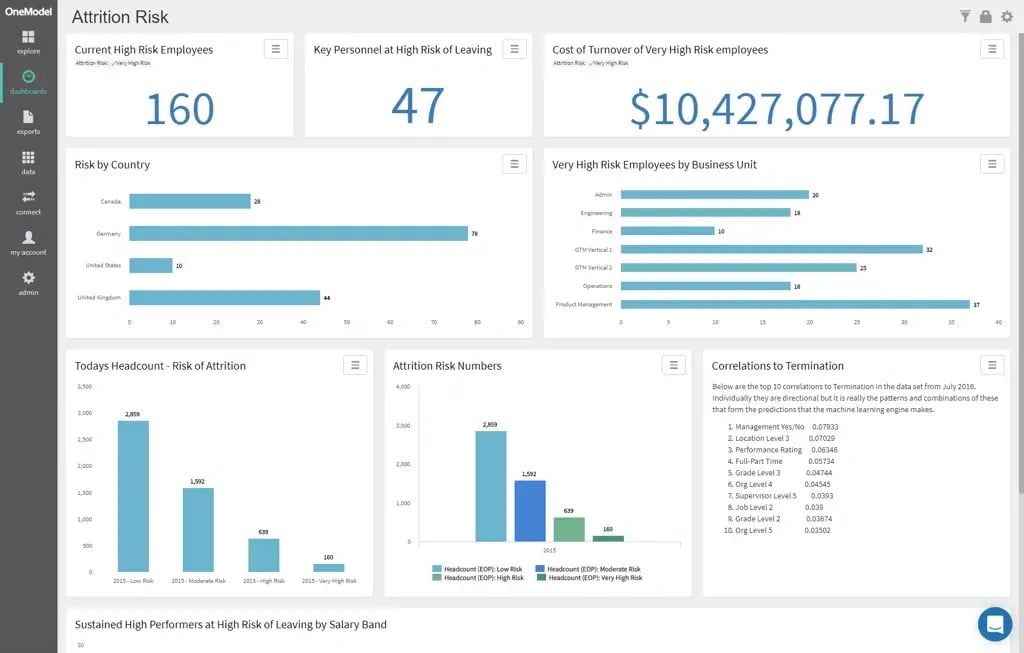
Image Source: One Model
Employee turnover presents a significant challenge for organizations across all sectors. With average attrition rates hovering between 12-15%, companies face substantial financial impacts and operational disruptions. The cost of replacing just one software engineer can reach approximately INR 33,752, making retention a critical business priority.
AI models for attrition prediction
Advanced artificial intelligence systems now allow HR departments to anticipate resignations months before they occur. These predictive models analyze complex patterns in workforce data using various machine learning techniques. Among the most effective approaches, Random Forest has emerged as the leading method across multiple studies. Other prevalent models include Support Vector Machine, Logistic Regression, Decision Tree, and Neural Networks.
The technical sophistication of these models continues to improve. One particularly effective system achieved remarkable results with an error rate of just 3.46%, an accuracy rate of 96.54%, and precision and recall rates exceeding 99%. Such models perform significantly better than traditional statistical methods, with reductions in error rates by up to 14.89% compared to standard approaches.
These AI systems process numerous variables simultaneously, identifying subtle patterns that human analysts might miss. Key factors these models analyze include:
- Compensation metrics: AI systems flag when an employee's compensation falls below market standards
- Performance indicators: Gradual productivity declines over months rather than weeks
- Attendance patterns: Frequency of sick leaves, late logins, and meeting participation
- Management relationships: Review tone, frequency of one-on-ones, and recognition patterns
- Employee communications: Sentiment analysis of feedback, messaging tone, and participation
- Career progression: Limited promotions, lack of training adoption, or denied opportunities
Using historical data to forecast resignations
Successful predictive models rely on comprehensive historical data about past employee departures. Initially, HR teams must collect extensive information including tenure records, performance reviews, compensation history, training completion, absence rates, and engagement survey results. The AI then identifies trends and patterns in this historical data to construct a predictive attrition model.
Throughout this process, Job Satisfaction consistently appears as the most critical factor in turnover prediction, identified across a majority of studies. Subsequently, the AI assigns each current employee a dynamic "attrition likelihood score" based on hundreds of behavioral factors.
Organizations can then categorize employees into risk levels: low-risk (stable and satisfied), medium-risk (showing early signs of dissatisfaction), and high-risk (requiring critical intervention). This enables targeted retention strategies based on specific risk profiles.
The practical value of these models extends beyond simple prediction. Indeed, organizations implementing data-driven retention approaches have reported meaningful reductions in turnover rates. By identifying at-risk employees early, HR can deliver personalized interventions that address specific concerns before they lead to resignations.
For maximum effectiveness, predictive turnover analysis should examine employee data alongside external factors such as market conditions. This comprehensive approach helps companies develop truly proactive retention strategies that address both internal and external drivers of attrition.
Metric 2: AI-Enhanced Quality of Hire Score
Quality of hire stands as one of the most critical human resource metrics that directly impacts an organization's long-term success. As talent acquisition teams evolve, we've witnessed a profound shift from intuitive, gut-feel assessments to data-driven evaluation methods powered by artificial intelligence.
Analyzing candidate success predictors
Traditional hiring approaches often fail to accurately predict on-the-job performance. Currently, organizations using AI-powered recruitment analytics report a 10x improvement in candidate pipeline quality and 33% reduction in external sourcing reliance. This dramatic improvement stems from AI's ability to identify patterns in historical hiring data that correlate with successful outcomes.
The key advantage lies in how these systems analyze complex datasets beyond basic resume screening. Research indicates that organizations using predictive analytics achieve 39% fairer hiring treatment for women and 45% fairer treatment for racial minorities compared to traditional approaches. Essentially, AI-enhanced quality of hire metrics shift focus from subjective assessments to concrete, measurable traits that correlate with success.
In practice, these advanced hr matrix approaches examine numerous data points to build comprehensive candidate profiles:
- Assessment scores (validated with over a hundred years of empirical evidence)
- Interview performance metrics
- Skills alignment with role requirements
- Communication patterns and problem-solving approaches
- Cultural fit indicators based on values and motivations
Upon examining historical data, these systems can identify which pre-hire indicators truly predict post-hire success. For instance, one large call center implemented job-specific candidate assessments and cut new-hire attrition in half. Moreover, predictive analytics has demonstrated potential to improve talent matching by up to 67%.
Integrating resume parsing and performance data
The foundation of effective AI-enhanced quality of hire metrics starts with sophisticated resume parsing technology. Modern AI parsing algorithms extract structured data from unstructured resumes through a four-step process: extracting text, organizing data into logical sections, prioritizing relevant information using Natural Language Processing (NLP), and outputting ATS-compatible formats.
Beyond basic keyword matching, these systems analyze over 200+ data points in seconds. Furthermore, advanced parsers can process 100,000+ resumes in minutes with exceptional accuracy. This creates a robust dataset that serves as the foundation for quality of hire predictions.
The true power emerges when combining this parsed resume data with post-hire performance metrics. AI algorithms continuously learn by correlating pre-hire signals with actual job performance outcomes. Organizations tracking these correlations develop what some experts call a "Net Hiring Score" (similar to customer Net Promoter Scores) by asking two key questions:
- To hiring managers: "On a scale of 0-10, how much of a fit is this new hire for the job?"
- To new hires: "On a scale of 0-10, how much of a fit is this new job for you?"
As an example of this integration's effectiveness, machine learning in recruitment can cut shortlisting time by over 70%. Additionally, AI-driven quality of hire metrics help reduce mis-hires and turnover rates by ensuring better job fit from the start.
In building these systems, we must remember that fair results depend on fair data. The most reliable tools undergo validation to ensure predictions remain equitable across all demographics. Through continuous refinement of these algorithms based on actual performance data, AI-enhanced quality of hire scores become increasingly accurate predictors of candidate success over time.
Metric 3: Real-Time Employee Engagement Index
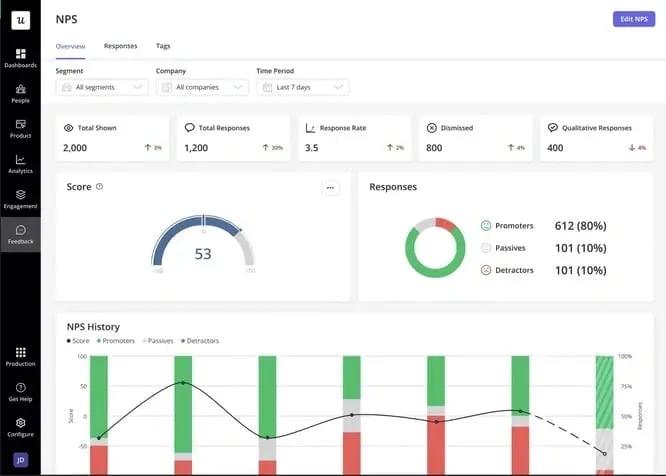
Image Source: inFeedo AI
Measuring workforce sentiment has evolved into a critical component of modern human resource metrics. Traditional annual surveys fail to capture the dynamic nature of employee engagement, much like taking a single photograph to understand an entire movie. This is where AI-powered real-time engagement monitoring creates significant value.
Sentiment analysis from surveys and communication tools
AI-powered sentiment analysis transforms qualitative employee feedback into quantitative insights through computational identification and categorization of opinions expressed in text data. This technology evaluates the writer's attitude, classifying responses as positive, negative, or neutral. Unlike traditional methods that provide static snapshots, AI offers continuous monitoring that reveals nuanced feelings, motivations, and engagement levels.
The technology works by analyzing various data sources:
- Pulse surveys – Short, frequent questionnaires capturing real-time sentiment on specific topics
- Internal communication channels – Monitoring intranet, chat, and social media platforms for sentiment trends
- Email interactions – Analyzing patterns in language, tone, and engagement
- Collaboration tools – Revealing communication patterns and potential bottlenecks
Organizations implementing AI-powered engagement metrics have witnessed remarkable outcomes. Companies that measured engagement levels before and after implementing engagement strategies saw 21% to 51% lower turnover. Teams with satisfaction scores of 80% or higher complete projects 23% faster. Throughout the workplace, engaged employees generate 12% higher customer satisfaction scores through better service delivery.
Tracking engagement trends across departments
AI excels at identifying patterns across different teams and departments that would otherwise remain hidden. By segmenting data based on teams, departments, or demographics, the system reveals engagement trends specific to each group. This targeted approach allows HR to tailor interventions precisely where needed.
Actually, AI acts as an early warning system, identifying signs of disengagement or low morale before they escalate. For example, AI might highlight that two teams rarely interact, causing delays in shared projects. Similarly, a technology startup implemented weekly pulse surveys during restructuring and detected a drop in engagement due to communication gaps, prompting management to quickly organize town hall meetings.
Other benefits of department-level engagement tracking include:
- Identifying high and low productivity zones across the organization
- Detecting potential problems or points of dissatisfaction early
- Enabling timely interventions before issues affect performance
- Providing concrete data to inform strategic decisions
Beyond simple metrics, AI-powered engagement indexes often examine the emotional components of feedback. The technology decodes emotions hidden within responses, going beyond just words to understand underlying sentiments. This emotional intelligence can be turned into actionable insights that strengthen communication, personalize engagement strategies, and predict potential employee churn.
The shift from annual surveys to continuous listening strategies reflects changing workforce expectations. By combining periodic comprehensive surveys with ongoing AI-powered analysis, organizations develop a comprehensive understanding of employee sentiment that drives data-driven people management decisions. This approach allows businesses to respond proactively rather than reactively to workforce challenges.
Organizations must ensure anonymity in these systems to build trust and enable transparent feedback. As sentiment analysis becomes increasingly sophisticated, it's emerging as a cornerstone of modern hr matrix approaches that helps businesses reduce turnover, boost engagement, and ultimately drive better business outcomes.
Metric 4: Personalized Learning Effectiveness Score
Traditional training programs often fail to address individual learning needs, creating skill gaps that hinder organizational growth. Personalized Learning Effectiveness Scores represent a significant advancement in human resource metrics that measure both learning progress and practical skill application.
Adaptive learning paths using AI
Artificial intelligence has transformed corporate learning from standardized courses to dynamic, personalized experiences. Modern AI-powered learning systems analyze individual performance patterns and automatically adjust content difficulty and teaching approaches based on learner progress. Unlike conventional training methods, these systems identify when employees have mastered concepts and accelerate their path forward, or detect struggles and provide additional support.
State-of-the-art machine learning techniques, including Decision Trees, Support Vector Machines, and Naïve Bayesian Classifiers, form the technical foundation of these adaptive systems. These algorithms examine learner interactions and performance data to create hyper-relevant learning experiences tailored to specific job roles. Throughout this process, the technology:
- Assesses current skill levels through quizzes and performance data
- Recommends targeted learning paths relevant to specific roles
- Adjusts difficulty levels based on progress patterns
- Delivers training at optimal times using predictive analytics
K-means clustering algorithms segment learners based on behavioral patterns, enabling targeted strategies. Alongside these clustering techniques, reinforcement learning optimizes learning paths using implicit feedback from participants. Organizations implementing these adaptive approaches report significantly higher engagement and completion rates compared to traditional training programs.
Tracking course completion and skill acquisition
Measuring learning outcomes remains essential for proving ROI and refining educational strategies. AI analytics provide a comprehensive view of learning effectiveness through a six-step framework: defining clear learning objectives, selecting appropriate metrics, establishing baseline measurements, deploying assessment tools, collecting post-training data, and analyzing results.
Beyond basic completion rates, AI-powered measurement systems track practical skill application in real-world scenarios. Experimental analysis demonstrates these hybrid systems provide high accuracy in predicting successful course completion. Furthermore, organizations can visualize learning data through AI-generated dashboards that highlight both individual progress and department-level trends.
Effective measurement requires combining quantitative data (scores, percentages) with qualitative feedback (surveys, interviews) for a complete assessment. Moreover, scheduling both immediate post-assessments and follow-up checks at 30-day intervals ensures knowledge retention. Through this continuous monitoring, organizations can identify which learning interventions deliver lasting impact versus those producing only short-term knowledge spikes.
The personalized learning effectiveness score ultimately connects training investments directly to business outcomes. By tracking how effectively employees apply newly acquired skills to their work, organizations can quantify the ROI of their development programs. Undeniably, this metric helps HR leaders move beyond simple activity tracking toward meaningful measurement of capability building across the workforce.
Metric 5: Workforce Productivity Heatmap

Image Source: Facebook
Visualizing workplace productivity patterns becomes possible through AI-powered heatmaps that transform complex performance data into actionable insights. These sophisticated tools represent a vital addition to modern human resource metrics, enabling precise identification of productivity trends across an organization.
AI-based performance clustering
Artificial intelligence elevates productivity analysis by segmenting employees into distinct performance clusters based on multiple data points. Advanced algorithms, particularly K-means clustering, group employees according to similar productivity patterns and behaviors. This methodology shifts HR analytics from generalized approaches to targeted, cluster-based strategies that optimize resource allocation and reduce operational costs.
The clustering process begins with data collection from diverse sources:
- Pulse surveys and engagement feedback
- Performance review metrics
- Application and website usage patterns
- Time tracking and activity monitoring
Once collected, AI systems process this information through several stages. First, they create a digital twin of operations by stitching together various activities. Afterward, the algorithms identify productivity patterns among your highest performers. Through continuous monitoring, these systems generate increasingly accurate performance profiles over time.
K-means segmentation is particularly valuable as it reveals different employee profiles within the organization, leading to more effective HR strategies aligned with company objectives. In practical terms, this clustering approach helps companies design targeted interventions for specific employee segments rather than applying one-size-fits-all solutions.
Identifying high and low productivity zones
The visual representation of productivity data forms the core strength of heatmap analysis. Traditional approaches to productivity assessment often rely on limited observations or anecdotal evidence that fail to capture the true complexity of work patterns. Alternatively, AI-powered heatmaps transform raw data into intuitive, color-coded visualizations that immediately highlight productivity variations.
These visualizations typically employ a traffic-light system: green indicates high-performing zones, yellow signals moderate productivity requiring attention, and red highlights problematic areas needing immediate intervention. Beyond simple color coding, each cell in the heatmap represents a snapshot of productivity for a specific team or dimension, revealing patterns that numerical scores alone cannot illustrate.
Organizations gain several advantages through these visualizations:
- Rapid identification of underutilized resources
- Early detection of workflow bottlenecks
- Clear view of productivity fluctuations over time
- Objective measurement of intervention effectiveness
By examining productivity heatmaps alongside other metrics like engagement and turnover risk, organizations develop a comprehensive understanding of workforce performance dynamics. This integrated approach helps leaders make data-driven decisions that address root causes rather than symptoms of productivity challenges.
Metric 6: Diversity and Inclusion Analytics Index
Organizations increasingly recognize that diverse workplaces deliver superior business results, with companies having the highest DEI scores showing 80% higher adaptability than others. This adaptability translates into concrete financial benefits: 2x earnings improvement, 2x shareholder return, and 1.5-3x revenue growth. The Diversity and Inclusion Analytics Index represents a crucial advancement in human resource metrics that helps companies measure and improve these outcomes.
Bias detection in hiring and promotion
AI-powered bias detection tools revolutionize how companies identify and address inequities in their workforce. These systems follow a three-step process: first, they aggregate and normalize HR data from various platforms; next, they analyze patterns to flag biased language, statistical imbalances, and pay discrepancies; finally, they generate risk reports highlighting potential legal issues.
In contrast to manual reviews that require hours per case, AI processes massive HR datasets in minutes. This efficiency gap is substantial—AI tools identify subtle patterns that human reviewers often miss while maintaining consistent evaluation criteria. For instance, IBM's AI Fairness 360 and Google's What-If Tool enable HR teams to detect, measure, and mitigate biases in algorithms.
Nevertheless, AI systems themselves aren't immune to bias. As one study notes, "AI-driven HRM systems are not without challenges, particularly regarding biases embedded in their design, which can disproportionately affect marginalized groups". Hence, effective implementation requires human oversight to balance algorithmic decisions.
Tracking DEI progress with AI dashboards
DEI dashboards serve as centralized interfaces that transform raw diversity metrics into visual insights. Currently, most organizations collect diversity data but never fully utilize what it reveals about equity and inclusion. AI-powered dashboards solve this by making "the invisible visible", enabling real-time tracking of:
- Representation across identity groups
- Pay disparities between demographics
- Promotion rates for underrepresented employees
- Retention patterns among diverse talent
Equally important, modern DEI dashboards integrate qualitative feedback alongside quantitative metrics, revealing why certain groups feel excluded even when representation numbers appear strong. Above all, they update in real-time rather than on quarterly schedules, enabling proactive intervention when issues emerge.
Organizations leveraging these advanced hr matrix approaches can identify specific areas requiring attention and tailor interventions accordingly. At the same time, accurate monitoring enables companies to meet forthcoming regulatory requirements for ESG reporting, creating both ethical and compliance advantages.
Metric 7: AI-Driven Succession Readiness Score
Succession planning represents a critical challenge for organizations looking to maintain leadership continuity. The AI-Driven Succession Readiness Score transforms this traditionally subjective process into a data-driven approach that identifies potential leaders and prepares them before critical positions become vacant.
Mapping internal talent pipelines
AI-powered talent pipeline mapping analyzes vast amounts of workforce data to identify high-potential employees across the organization. Unlike traditional methods that often overlook promising candidates, AI systems examine performance across departments, levels, and locations without bias toward visible employees. This comprehensive approach ensures organizations don't miss qualified internal candidates who might demonstrate leadership potential in non-obvious ways.
These sophisticated systems evaluate employees through multiple dimensions:
- Performance records and success profiles
- Competency mapping and career trajectories
- Communication patterns and collaboration metrics
- Learning agility and skill acquisition speed
Throughout this process, machine learning algorithms compare employee characteristics against successful leadership profiles. For instance, AI can analyze historical performance data, including predictive signals typically missed by human evaluation, to find hidden patterns that connect candidates with different success profiles. This allows HR to cut through biases and ensure the most qualified leaders rise based on merit rather than alliances.
Forecasting leadership gaps
Predictive analytics enables organizations to anticipate future leadership needs based on current trends, organizational goals, and market conditions. This foresight allows companies to identify potential gaps in their leadership pipeline before they become problematic.
The forecasting process typically involves:
- Trend analysis examining historical data patterns related to turnover and retirement
- Scenario planning simulating various factors that might impact leadership needs
- Risk assessment identifying potential issues associated with leadership gaps
Previously, organizations relied on pipeline management—identifying talent within each group and moving them upward. Presently, a portfolio management approach offers a broader view of all organizational talent who could develop for several future roles based on skills and potential. Random Forest and Gradient Boosting algorithms have shown remarkable accuracy in this forecasting, with studies reporting classification accuracy rates above 85%.
Through AI-driven succession planning, organizations build a strategic roadmap ensuring smooth leadership transitions while maintaining institutional knowledge.
Metric 8: Skills Gap Forecasting Metric
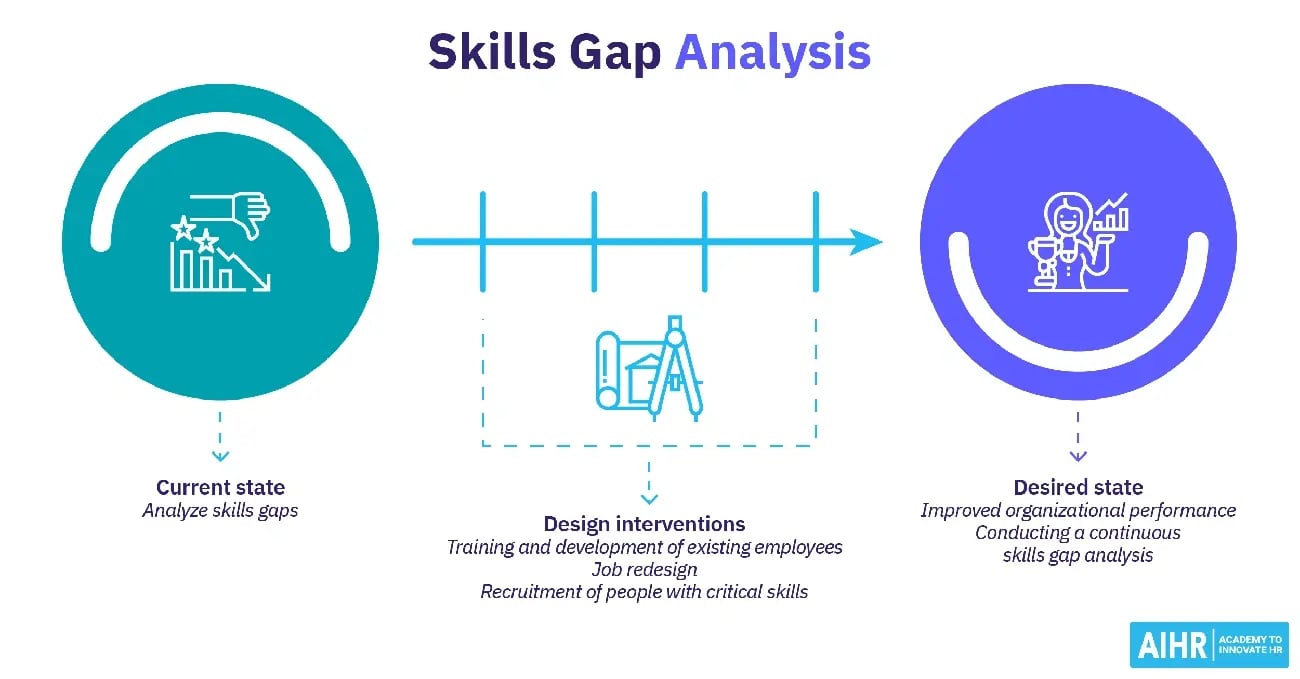
Image Source: AIHR
Skills forecasting has emerged as a critical component within modern hr metrics frameworks. According to executives, approximately 40% of the workforce needs reskilling over the next 3 years, highlighting the urgency of addressing skill gaps proactively.
Comparing current vs. future skill needs
Fundamentally, AI-powered skill gap analysis provides real-time visibility into current capabilities while forecasting future requirements based on industry trends and business strategy. Through this technology, organizations can examine both internal job descriptions and employee profiles to identify discrepancies. In 2024, the required skill sets for jobs underwent a 25% transformation since 2015, with projections reaching 50% by 2027. This rapid evolution necessitates continuous assessment rather than periodic reviews.
Using AI to recommend upskilling paths
Following gap identification, AI generates personalized learning recommendations tailored to individual employees. Throughout this process, machine learning algorithms analyze performance data, learning platform usage, and certification information to pinpoint specific training needs. In essence, AI transforms upskilling from one-time initiatives into continuous growth cycles.
The impact becomes measurable—organizations implementing AI-driven learning pathways report 20% increased usage of professional development resources. Beyond direct skills development, these systems help identify mentors and mentees based on backgrounds and interests, creating a comprehensive approach to human resource metrics that aligns workforce capabilities with business objectives.
Conclusion
AI-powered HR metrics have fundamentally transformed how organizations understand and manage their workforce. Throughout this article, we explored eight cutting-edge metrics that empower HR professionals to make data-driven decisions rather than relying on intuition alone. These advanced analytical tools now enable precise predictions about employee behavior, talent quality, engagement levels, and skill requirements.
Undoubtedly, the most significant advantage of AI-enhanced HR metrics lies in their predictive capabilities. Traditional metrics merely described past events, whereas today's AI systems forecast future outcomes with remarkable accuracy. Organizations implementing predictive turnover analysis can anticipate resignations months before they occur, allowing targeted interventions that significantly reduce attrition costs.
Additionally, real-time measurement capabilities provide HR teams with continuous insights rather than point-in-time snapshots. The employee engagement index exemplifies this shift, offering ongoing sentiment analysis that reveals emerging issues before they escalate into major problems. This dynamic approach allows HR to respond quickly to changing workforce needs and expectations.
Another key benefit emerges through automated pattern recognition across complex datasets. AI algorithms identify connections between variables that human analysts might miss, especially when examining productivity heatmaps or succession planning metrics. These patterns help organizations understand the underlying factors driving performance and engagement.
Data-backed diversity and inclusion metrics also stand out as crucial tools for building equitable workplaces. AI systems can detect subtle biases in hiring and promotion processes, helping companies create truly inclusive environments that drive innovation through diverse perspectives.
The skills gap forecasting metric addresses perhaps the most pressing challenge facing organizations today – rapidly evolving skill requirements. Companies must now prepare their workforce for jobs that may not even exist yet, making AI-powered skills analysis essential for future-proofing talent strategies.
Looking ahead to 2025 and beyond, HR departments will increasingly rely on these advanced metrics to guide strategic workforce decisions. Though technology provides powerful analytical capabilities, human judgment remains essential for interpreting results and designing appropriate interventions. The most successful organizations will combine AI-powered insights with human expertise to create workplaces where people thrive and business goals align seamlessly with employee needs.
As we conclude, remember that implementing these metrics requires more than just technology investment. Success depends equally on building data literacy among HR professionals, establishing robust data infrastructure, and fostering a culture that values evidence-based decision making. Organizations that master these elements will gain substantial competitive advantage through their ability to attract, develop, and retain the talent needed to succeed in an increasingly complex business environment.
Trusted by 330+ CHROs
See why global HR teams rely on Amber to listen, act, and retain their best people.
