17 min read
Last Updated: 8 October 2026
Employee experience platforms have become essential as workplaces struggle with app fatigue and fragmented processes that stall productivity. 26% of executives say their HR teams use AI more than any other department because it saves them time. The best digital employee experience platforms now combine AI-powered analytics and employee engagement tools with HR automation to change how organizations manage the whole employee journey. We've analyzed the top 11 employee experience management platforms to help you choose the right HR technology for your workplace experience needs.
What is an Employee Experience Platform for HR Automation

Image Source: Customertimes
Defining Digital Employee Experience Platforms
An employee experience platform is enterprise digital infrastructure that integrates communication, knowledge, tools and workflows into a single individual-specific environment. These platforms support people and teams by helping organizations improve connections, learn about shared purpose and encourage growth. Rather than forcing employees to toggle between multiple disconnected apps, an employee experience management platform creates a cohesive digital workplace layer that brings systems into one unified experience.
Enterprise definitions show these platforms include a centralized dashboard offering high-level overviews, connections to HR systems like payroll and benefits, communication and collaboration tools, personalization options, spaces for employee goals and feedback, professional development categories, and analytics showing work trends. This integration eliminates the friction that comes from app switching and scattered information access.
Digital employee experience platforms differ from employee engagement platforms in a most important way. Employee engagement tools focus on measuring engagement levels without suggesting improvement actions. Employee experience platforms collect engagement data and provide recommendations for enhancement, making them more thorough solutions for workplace experience management.
How Employee Experience Platforms Transform Workplace Experience
The impact of employee experience platforms on organizational outcomes is measurable. Research shows that 94% of employees would stay at their company longer if it invested in their learning and development. Employees who report clarity about their work priorities are more than four times as likely to say they're happy at their current company. Organizations with highly engaged employees have 23% greater profitability.
These platforms reduce tool fragmentation by creating a single entry point to access information, services and systems. Employees spend less time navigating systems and more time acting on what matters. Early employee experiences shape confidence, productivity and retention, and platforms support onboarding along with key moments across the employee experience.
The Role of AI in Modern Employee Experience Management Platforms
AI transforms employee experience platforms by making them more individual-specific, efficient and influential across the entire employee lifecycle. Machine learning models can predict employee turnover with predictive performance scores above 0.8, giving HR teams opportunities to identify risks early and take action before disengagement occurs.
AI utilizes employee data to create customized experiences, including individual-specific dashboards, training suggestions and communication tailored to individual priorities, roles and behaviors. AI-powered chatbots and virtual assistants provide instant support around the clock, assisting with IT, HR and other internal services. These tools resolve common issues quickly and boost satisfaction.
AI-driven systems analyze large datasets to provide applicable information into workforce trends, engagement levels and performance metrics. Sentiment analysis processes open-text feedback from surveys and pulse checks to identify trends and recurring themes in up-to-the-minute fashion. Coupled with automation capabilities, AI streamlines routine administrative tasks like scheduling, payroll processing and compliance notifications.
inFeedo AI
Image Source: www.infeedo.ai
inFeedo positions Amber as an AI Chief Engagement Officer rather than another survey platform. 330+ enterprise CHROs in 60+ countries trust it. Amber holds conversations with employees at career-defining moments: first month onboarding, project changes, manager transitions, post-promotion periods and pre-exit phases. The platform converts these interactions into ranked attrition risk scores with specific manager actions.
Key Features and Capabilities
The PTM (People-To-Meet) algorithm analyzes sentiment patterns and behavioral changes to rank employees by attrition risk 60 to 90 days before exit. This prediction window allows time for career conversations, scope adjustments or compensation corrections that can change outcomes. Silent employees are 3X more likely to quit than survey respondents. This makes the capability critical for retention.
Conversational AI triggers natural-language check-ins based on lifecycle events rather than calendar quarters. Organizations achieve 90%+ response rates through empathetic interactions. The platform has 26 psychologist-designed templates grounded in a validated framework of 7 drivers and 45 elements. This builds on 9 years of People Science research and 80M+ employee responses.
Report Studio delivers decision-ready analytics with AI summaries and 50+ filters. The system identifies specific problem areas, such as finding a 12-person platform team at 35% engagement inside a company-wide score of 80%. Lens AI functions as an omnipresent People Scientist and provides instant insight summaries. Anonymous Ally provides a separate confidential channel for concerns employees won't attach their name to.
The platform automates 98% of routine HR queries and eliminates wait times through delivery via Slack, Microsoft Teams, WhatsApp, email, SMS and web.
Pricing and Plans
inFeedo quotes pricing per employee based on headcount and selected modules. Three module options exist: Listening (continuous feedback and predictive insights), Automation (service delivery and workflow automation) and Communication (targeted campaigns and customized messaging). Detailed pricing requires contacting their sales team through the official pricing page.
Why inFeedo AI Stands Out
Genpact deployed Amber among 130,000 employees. Those who participate with her are 2x more likely to stay at the organization. The engagement metric became the only non-financial driver affecting bonus pools for 200+ leaders at Genpact. Organizations using Amber improved engagement scores by 24.8% in a single quarter.
User Testimonials and Success Stories
"Every week I review the Amber report, which helps me connect with at-risk employees. This has been very supportive in retaining my top talent," says Guruvayurappan PV, CHRO. Piyush Mehta, Country Manager & CHRO at Genpact, notes: "We've deployed Amber across 130,000 employees & those who engage with her are 2x likely to stay". Another organization reports: "Our engagement score stands at 84, and we've been able to automate 98% of the routine queries that we receive using AI".
Moveworks
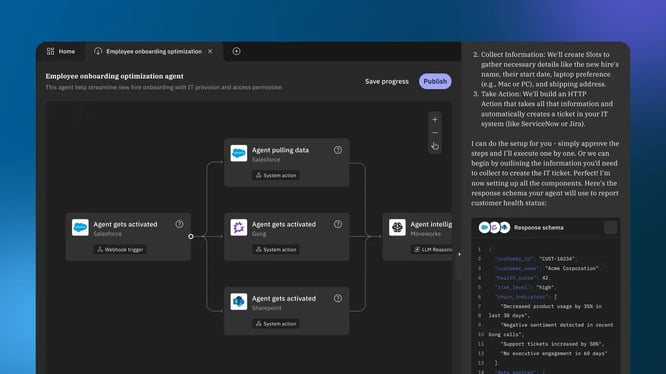
Image Source: Moveworks
Moveworks functions as the AI interaction layer that unifies all HR systems, creating a single access point to every platform in your employee experience technology stack. The agentic AI platform integrates with Workday, BambooHR, ADP, and ServiceNow to help employees find information and trigger multi-step workflows through one conversational interface.
Key Features and Capabilities
The AI Assistant delivers personalized answers 24/7 in over 100 languages and eliminates support ticket submissions for simple HR questions. The Reasoning Engine autonomously executes multi-step tasks like processing leave requests or updating tax information directly within existing systems. This agentic workflow automation handles cross-system tasks end-to-end and fills out forms related to HR or accounting requests without manual intervention.
Employee Experience Insights (EXI) analyzes unstructured data from support tickets using Language Core, a network of NLP and NLU models built to understand support issues. The system identifies department-level friction points in near-live time and reveals hidden improvement opportunities without manual tagging or categorization. Organizations can track all-encompassing issue counts, time-to-resolution, and first-time resolution rates while analyzing the most important ticket clusters.
The platform catches issues like stuck approvals or missing documents before they become bottlenecks. It inherits existing security permissions to support complete audit trails across systems.
Pricing and Plans
Moveworks operates on a custom quote-based enterprise pricing model with no published tier structure. Pricing depends on total employee count, departments automated, integration depth, and contract length. Annual costs range from INR 1265.71 to INR 3797.12 per employee for mid-market and enterprise deployments. Implementation requires 8 to 16 weeks with professional services costs between INR 4219022.54 and INR 16876090.16. According to Forrester, companies achieve 256% ROI and savings of INR 970.38M over 3 years.
Best Use Cases
Moveworks suits large organizations and enterprises that require autonomous workflow execution across multiple systems. HR teams can offload high-volume repetitive tasks while improving employee self-service experiences.
ServiceNow Employee Experience
ServiceNow built its employee experience platform around autonomous AI agents that complete work across HR, Finance, Procurement, Facilities, and Legal rather than simply offering suggestions. More than 85% of the Fortune 500 rely on ServiceNow AI Platform. This makes it one of the most widely used enterprise solutions for workplace management.
Key Features and Capabilities
The platform's AI agents handle transactional cases autonomously. They onboard suppliers, create leave requests, and complete tasks in single clicks. ServiceNow automates direct deposit setup, employee bio information collection, and IT hardware requests during onboarding. This automation extends through the whole employee experience, from hiring to exit. AI initiates workflows, updates systems, and supports task completion without manual intervention.
Employee Center functions as the unified portal where employees access services, request support, and complete tasks through personalized dashboards, knowledge base integration, and service catalogs. The platform integrates with Microsoft 365 and brings these capabilities into Microsoft Teams. Virtual agents and Now Assist provide AI-powered self-service that reduces ticket volumes.
Now Assist transforms case management by scrutinizing each case in real time and formulating answers from the organization's knowledge base. It understands question intent and places entire ticket threads in context within seconds. Now Assist reads employee queries, finds relevant clauses in internal documents, and explains them with applicable exceptions for policy questions. The system also automates leave and attendance workflows by collecting leave type, length, eligibility, and supporting documents while determining policy compliance.
Organizations have saved 1M hours of manual task activity and INR 480.97M annually using AI agents. NASCAR streamlined IT operations and improved cross-departmental workflows through ServiceNow automation. Mondelēz International unified disparate systems across regions and increased self-service rates substantially.
Pricing and Plans
ServiceNow operates on custom-quote models without published rate cards. Core ITSM costs approximately INR 7594.24 to INR 12657.07 per user monthly. Specialized modules like ITOM and CSM reach INR 12657.07 to INR 16876.09. AI add-ons start near INR 4219.02. Fulfiller seats drive costs, whereas requester seats remain free. Implementation runs three to five times the annual license fee. Small deployments start near INR 4219022.54 yearly and mid-market deployments range from INR 42190225.40 to INR 168.76M in the first year.
Best Use Cases
ServiceNow suits large enterprises and mid-sized organizations needing cross-departmental automation with strong compliance and security requirements. It works best for companies with complex system landscapes requiring unified service delivery across HR, IT, finance, and facilities.
Workday Peakon Employee Voice
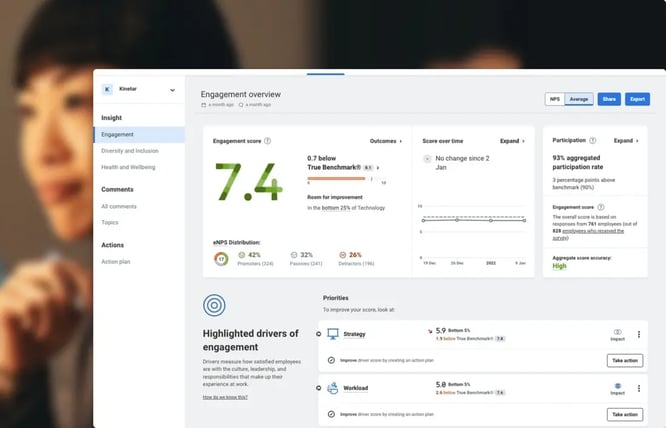
Image Source: Workday
Workday Peakon Employee Voice takes a person-first approach to employee feedback, measuring 85 key pieces of data around employee wellbeing through confidential surveys. The platform compares this data to standards across half a million data points and enables organizations to compare performance against industry benchmarks.
Key Features and Capabilities
The continuous listening model captures engagement shifts before they escalate into retention problems. Up-to-the-minute sentiment data allows managers to respond quickly to team concerns. Driver-based analysis pinpoints exactly what affects engagement scores. Predictive attrition signals determine turnover risk on employee, segment and company levels, with active employees showing 20% higher scores than departed counterparts.
Each survey question invites employees to start anonymous discussions with leadership. Managers can initiate conversations when employees leave comments. The employee remains anonymous but knows who they're speaking with. This confidential two-way communication encourages transparency employees rarely share face-to-face.
The platform delivers surveys through multiple channels: email links, SMS, Microsoft Teams, Slack messages and kiosk mode for retail and manufacturing environments where workers lack personal computers. Organizations can export entire data instances in 3 clicks and generate presentation decks within minutes. The question library supports 65 languages, with dashboards available in 15 languages.
Pricing and Plans
Standard pricing starts at INR 421817.87 per year and has performance management, employee engagement, compensation planning and reporting. Pro begins at INR 1012481.03 per year, adding API access, SAML SSO and advanced customization. The Manager Agent operates as an optional add-on at INR 8353.66 per manager monthly. Enterprise pricing remains custom for organizations with 250 or more employees.
Best Use Cases
Workday Peakon Employee Voice suits mid-size and large enterprises requiring science-backed engagement measurement with predictive retention capabilities. Financial services organizations use it for up-to-the-minute well-being insights during periods of change, whereas technology companies scale engagement to promote innovation.
Microsoft Viva
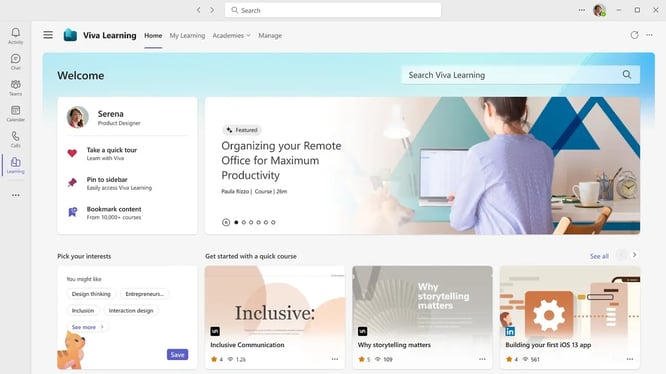
Image Source: Microsoft
Microsoft Viva integrates into Microsoft Teams and Microsoft 365. It brings communication, feedback, analytics and learning into the platforms organizations already use. The suite now has nine apps and several distinct services: Connections, Learning, Insights, Goals, Engage, Amplify, Glint, Pulse and Answers, plus capabilities for People, Skills and Copilot. This embedded approach eliminates the need to adopt yet another standalone platform.
Key Features and Capabilities
Viva Connections delivers company news, policies and resources as a personalized intranet inside Teams. Viva Learning integrates training from LinkedIn Learning, Microsoft Learn and third-party LMS platforms. Employees can browse and complete training without leaving Teams. Viva Insights provides workplace productivity and wellbeing analytics. Personal insights remain private while manager views show team trends in total.
Viva Goals connects individual and team objectives to business strategy through OKR tracking. Viva Engage supports organization-wide conversations and leadership communications as Yammer's successor. Viva Amplify centralizes campaign management for multichannel publishing with analytics for corporate communicators. Viva Glint delivers immediate visibility into employee engagement with organization-wide surveys and recommended actions. Viva Pulse makes quick team feedback surveys possible for managers.
Copilot capabilities thread through multiple modules and generate reports in Viva Insights through natural language prompts. They draft content with intelligent suggestions in Viva Engage. The platform integrates with non-Microsoft technologies like ServiceNow and Cornerstone through connectors and API capabilities.
Pricing and Plans
Simple features like Connections and personal Insights come with Microsoft 365 at no extra cost. The full Microsoft Viva Suite costs INR 1012.57 per user monthly. Individual modules range from INR 337.52 for Viva Learning premium connectors to INR 506.28 for Viva Goals. Organizations need Microsoft 365 F1, F3, E3, A3, E5 or A5 licenses as prerequisites.
Best Use Cases
Microsoft Viva suits organizations already invested in Microsoft 365. They want to get the most from existing infrastructure rather than layering additional platforms.
Culture Amp
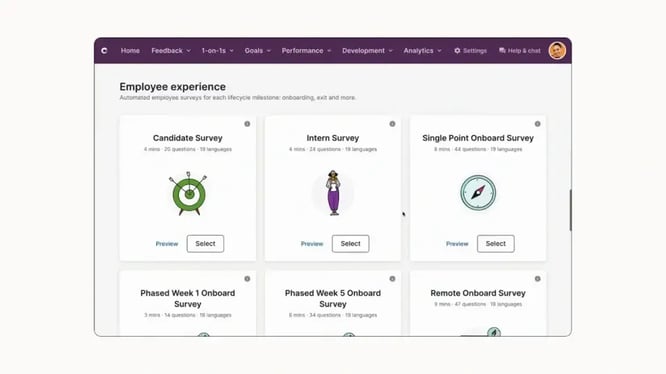
Image Source: Culture Amp
Culture Amp positions itself as CultureOS, an intelligence layer that connects culture and performance through people science increased by AI. The platform serves 6,500+ companies and grounds its approach in organizational psychology and data science built from 1.6 billion answered questions.
Key Features and Capabilities
AI Coach surfaces focus areas from engagement survey data and partners with managers to determine next steps. The system uses expert coaching and guided role play to help managers handle complex conversations. It creates personalized and balanced performance reviews faster. So survey workflows become end-to-end processes where managers receive results, discuss them with AI Coach to identify pain points, and develop action plans with structured formats and deadline reminders.
The Engage module provides 40+ science-backed survey templates with AI comment summaries that analyze sentiment without reading every line manually. Heat maps show performance snapshots, attention areas, and keyword frequencies across demographics like geography and tenure. Perform delivers goal tracking lined up with organizational strategy, 1-on-1 conversation tools, and 360-degree feedback. Calibrations ensure fair HR decisions. Recognition through Shoutouts combines smoothly with Slack and prompts employees to attach company values. The system feeds recognition into individual profiles for review evidence.
Organizations using Culture Amp experience 2x rate of state-of-the-art, 2x higher customer satisfaction, and 25% greater profitability.
Pricing and Plans
Culture Amp operates on annual billing with pricing dependent on employee count, product selection, and service tier. Three plans exist: Self-Starter (25-200 employees), Standard (200-1,000 employees), and Enterprise (1,000+ employees). Detailed quotes require you to contact sales.
Best Use Cases
Culture Amp suits large enterprises and data-driven organizations that prioritize science-backed engagement measurement with performance management integration. Platforms like inFeedo.ai offer specialized retention-focused solutions for organizations seeking predictive attrition capabilities with conversational AI.
Qualtrics EmployeeXM
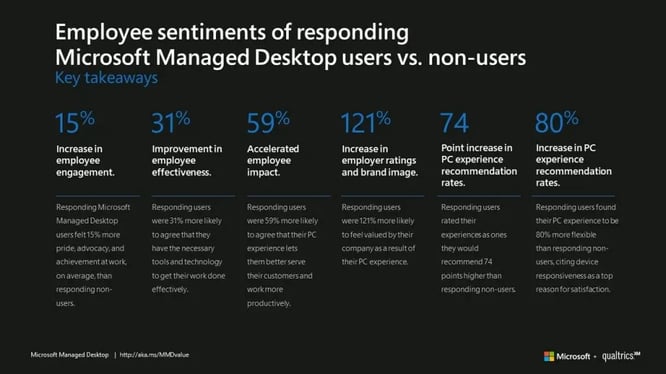
Image Source: Qualtrics
Qualtrics EmployeeXM is an enterprise software suite that collects continuous employee feedback and converts it into engagement, lifecycle, and retention insights for HR leaders. The platform sits within the larger Qualtrics Experience Management platform. This explains why its pricing and setup can feel heavier than standalone HR tools.
Key Features and Capabilities
The platform covers pulse surveys, 360-degree feedback, and lifecycle surveys with manager dashboards. Digital Listening Posts allow employees to provide feedback anonymously at any time beyond periodic surveys. This creates an always-on feedback structure. Prescriptive Insights surface opportunities automatically that each manager can take to improve engagement and save time spent filtering through employee data. Guided action planning shows managers step-by-step how to act on insights with recommended tasks and resources. The platform analyzes engagement results against IBM Kenexa WorldNorms standards and consolidates data from 350 companies across 200 countries based on 15 million employee responses.
Pricing and Plans
Qualtrics does not publish EmployeeXM pricing. Every deal starts with a custom quote scaled to headcount and modules. Full deployment involves consultants and weeks of configuration before the first survey goes live.
Best Use Cases
Qualtrics suits large enterprises with 10,000+ employees already invested in the wider Qualtrics XM suite. Mid-market companies seeking retention-focused solutions without adjacent research modules often review alternatives like inFeedo.ai.
monday service
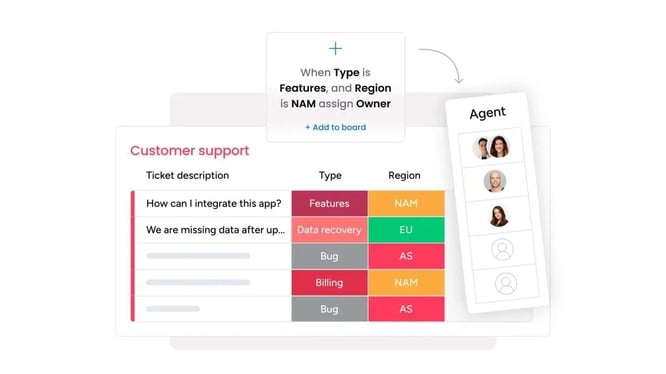
Image Source: Monday.com
monday service delivers operational service desks in weeks through no-code templates and pre-built workflows. This contrasts with platforms that require months of configuration. The platform unifies service delivery across IT and HR into one employee portal. Requests get submitted, tracked, and resolved through AI automation.
Key Features and Capabilities
AI-powered ticket triage categorizes requests by urgency, sentiment, and department. It routes them to appropriate teams. The unified employee portal provides "My tickets" view and knowledge base access. Status tracking across all service requests happens up-to-the-minute. Cross-department workflow automation connects HR onboarding to IT provisioning through no-code templates. The platform provides ISO 27001/27017/27018/27701 Compliance and SOC 1/2/3 Type II certification. It maintains 99.9% uptime SLA.
Pricing and Plans
Standard costs INR 2193.89 per seat monthly (billed annually). Pro runs INR 3206.46 per seat monthly (billed annually). Enterprise operates on custom quote-based pricing. Annual prepayment receives an 18% discount. Additional AI credits required beyond trial limits.
Best Use Cases
monday service suits mid-size teams and large enterprises that need rapid deployment without heavy IT overhead. Organizations needing retention-focused AI with predictive attrition capabilities often review inFeedo.ai alongside service management platforms.
Lattice
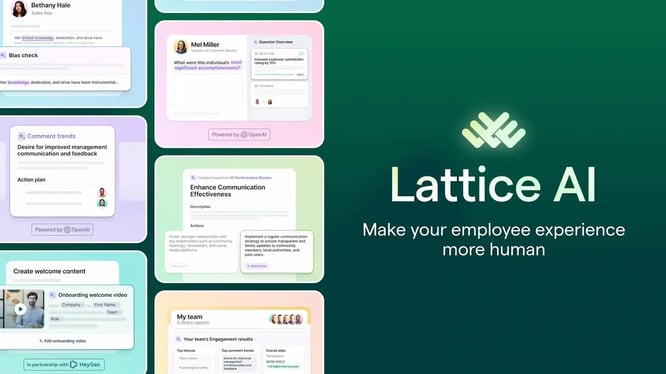
Image Source: Lattice
Lattice built its reputation as a performance management platform now valued at $1 billion, serving small to mid-sized businesses with modular HR tools. The platform simplifies performance reviews, goal tracking and employee engagement through integrated workflows that connect individual development to business outcomes.
Key Features and Capabilities
Performance management tools include review cycles, succession planning, promotions and calibrations. The Goals & OKRs module cascades organizational priorities into team objectives with progress tracking and integrations to Salesforce and Jira. Engagement surveys deliver pulse checks, onboarding feedback and eNPS scoring with AI-powered trend analysis. The AI Agent coaches managers live, answers HR policy questions and acts on employee data beyond simple chatbot functionality. Lattice integrates with Slack, Teams and major HRIS platforms to embed performance tools into existing workflows.
Pricing and Plans
Lattice operates on modular annual billing starting at INR 337521.80 minimum commitment. Base pricing begins at INR 928.18 per user monthly, with add-ons escalating total costs:
| Module | Monthly Cost per User |
|---|---|
| Talent Management (base) | INR 928.18 |
| Engagement | +INR 337.52 |
| Grow (career development) | +INR 337.52 |
| Compensation | +INR 506.28 |
Full platform bundles cost INR 1603.23-INR 2109.51 per user monthly after negotiation.
Best Use Cases
Lattice suits organizations with 100+ employees requiring structured performance cycles and dedicated HR teams. Companies prioritizing predictive attrition and retention-focused AI should consider inFeedo.ai, which offers specialized conversational intelligence with 60-90 day exit prediction windows.
Workleap Officevibe
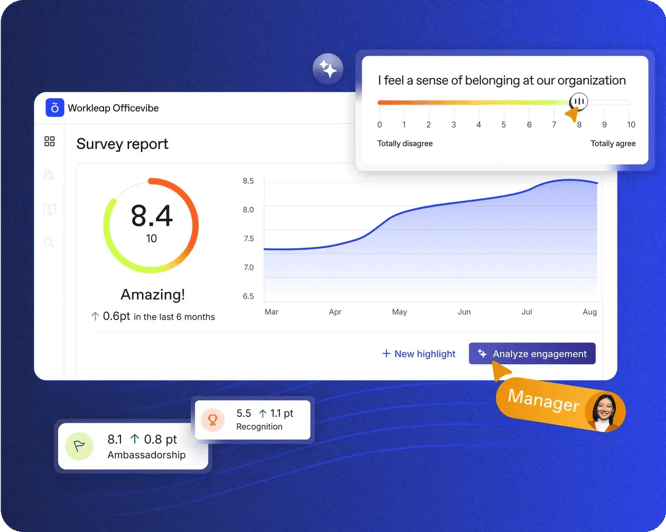
Image Source: Workleap
Workleap focuses on making managers better at their jobs by removing administrative burden and giving people insights needed to lead high-performing teams. Over 70,000 leaders worldwide choose Workleap, which evolved from the Officevibe platform to become a manager enablement toolkit.
Key Features and Capabilities
The platform delivers a Briefing that surfaces what to know and what's blocking the team each day. Performance reviews gather evidence, draft in the manager's voice, and prep conversations. Team health & feedback spots engagement issues early through pulse surveys and anonymous feedback. The Good Vibes recognition system surfaces work deserving acknowledgment. Analytics give instant answers about any person or team using up-to-the-minute data. Workleap used 15 years of proprietary data to build AI skills that support proven HR best practices.
Pricing and Plans
| Plan | Price | |
|---|---|---|
| Standard | INR 421.90/user/month | |
| Pro | INR 675.04/user/month |
Best Use Cases
Workleap suits small to mid-sized companies focused on manager development and continuous feedback. Organizations that prioritize predictive retention with conversational AI often review inFeedo.ai for 60-90 day attrition prediction capabilities.
BambooHR
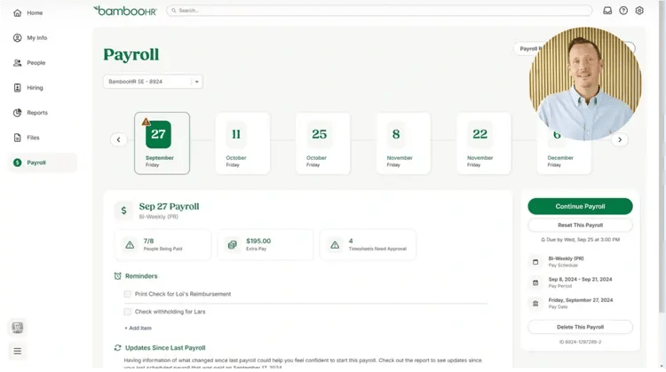
Image Source: BambooHR
BambooHR unites disconnected HR, payroll, benefits, time, and talent tools into a unified employee experience platform serving more than 30,000 companies in 190 countries. The platform covers the full employee lifecycle from hiring to offboarding, with native apps that include HR Data & Reporting, Applicant Tracking, Onboarding, Payroll, Benefits Administration, Time & Attendance, Performance Management, and Employee Experience.
Key Features and Capabilities
Bamboo AI integrates into workflows rather than functioning as a separate tool. Grounded in unified people data, it surfaces insights during work and recommends next steps while taking action. The employee experience suite has Employee Community for centralized announcements and recognition, Employee Satisfaction measuring eNPS with AI topic summaries, and Employee Wellbeing using research-validated questions with heatmap reports.
Customers save hundreds of hours and reduce HR costs by 40%. The platform integrates with 150+ partners and creates a single source of truth while eliminating multiple logins and systems that don't communicate.
Pricing and Plans
| Plan | Monthly Cost per Employee | Small Team Flat Rate (≤25 employees) |
|---|---|---|
| Core | INR 843.80 | INR 21,095.11/month |
| Pro | INR 1,434.47 | INR 35,861.69/month |
| Elite | INR 2,109.51 | INR 54,847.29/month |
Volume discounts apply automatically. A free trial allows exploration before commitment.
Best Use Cases
BambooHR suits growing organizations with 50 to 500 employees, though many customers scale beyond that range. Companies prioritizing predictive attrition with conversational AI should consider inFeedo.ai, which delivers 60-90 day exit predictions through continuous listening.
Key Features to Look for in Employee Experience Platforms
Selecting the right employee experience platform requires evaluating specific capabilities that determine ROI and adoption rates in your organization.
AI-Powered Analytics and Employee Feedback Systems
Natural language processing distinguishes leading platforms. It understands conversational employee requests and detects sentiment in open-ended survey responses. The technology surfaces predictive attrition signals. Platforms should analyze text-based feedback at scale. They use sentiment scoring, theme clustering and anomaly detection. Leading platforms report 30-50% deflection rates with effective self-service. Organizations with mature knowledge management achieve 40-70% self-service resolution rates. inFeedo.ai excels here with its PTM algorithm that predicts attrition risk 60-90 days before exit. The platform couples this with 90%+ response rates through empathetic conversational AI.
Cross-Department HR Automation Capabilities
Unified service delivery in HR, IT, facilities, legal and finance through a single interface eliminates data silos. Smart routing and cross-functional workflows reduce manual effort. Omnichannel access helps too, while workflow automation handles approval chains and conditional logic. AI agents can automate resume screening and guide onboarding. They resolve routine queries instantly.
Employee Engagement and Journey Mapping Tools
Journey mapping visualizes the employee experience from hire to exit. It illuminates holes and informs budget allocation to retain employees. Heat maps show performance snapshots. Pulse surveys and anonymous feedback channels maintain listening.
Integration with Existing HR Technology Stack
APIs connect main HR software with external tools. This creates centralized databases as single sources of truth. Integration breaks down data silos and enables workflow automation between systems. Employee data remains consistent.
How to Choose the Right Employee Experience Management Platform
Image Source: Applaud HR
Review Your Organization's Specific Needs
Your biggest workplace challenges should guide the selection process rather than comparing feature lists. Specific outcomes the platform needs to support must be defined, such as improving communication reach or reducing workflow friction. To name just one example, if retention is the main concern, prioritize platforms with predictive attrition capabilities. inFeedo.ai addresses this through its PTM algorithm that identifies at-risk employees 60-90 days before exit and achieves 90%+ response rates through conversational AI.
Platform strengths should match workforce composition. Distributed teams require mobile-first design and shift-aware access. Global organizations need multilingual support and regional compliance capabilities. The employee experience management platform must reach frontline workers, not only desk-based employees.
Review Implementation and Scalability
Integration capabilities across core systems should be reviewed to prevent friction later. The platform should connect with collaboration tools, HR systems and productivity suites through strong pre-built integrations rather than custom development. Platforms with native connectors eliminate months of technical work.
Governance, security and compliance capabilities need early review in the evaluation process. The platform must support growth through acquisitions, international expansion or seasonal workforce fluctuations.
Think Over ROI and Long-Term Value
Total cost of ownership goes beyond subscription pricing. Implementation services, integration costs, training, ongoing administration and future customizations must be factored in. Organizations achieving 256% ROI demonstrate how the right platform selection delivers measurable financial impact.
Conclusion
Selecting the right employee experience platform depends on your organization's specific challenges. Each platform we've analyzed offers distinct strengths in HR automation and engagement measurement. The platforms we've covered range from full-scale enterprise solutions like ServiceNow to manager-focused tools like Workleap.
Of course, if retention is your main concern, platforms with predictive attrition capabilities deliver the biggest effect. inFeedo.ai addresses this through its 60-90 day exit prediction window and 90%+ response rates. Organizations like Genpact achieve 2x retention among engaged employees with this approach.
Identify your biggest pain point first and then match platform capabilities to that specific outcome.
Key Takeaways
Modern employee experience platforms have evolved beyond basic surveys into AI-powered systems that predict attrition, automate workflows, and deliver personalized experiences across the entire employee lifecycle.
• AI-driven platforms predict turnover 60-90 days in advance, giving HR teams actionable time to intervene with career conversations, scope adjustments, or compensation corrections before employees exit.
• Organizations achieve 256% ROI and save millions annually through automated service delivery, with leading platforms deflecting 30-50% of routine HR queries through intelligent self-service.
• Silent employees are 3X more likely to quit than survey respondents, making continuous conversational listening more effective than traditional quarterly engagement surveys.
• Integration capabilities determine platform success - unified systems connecting HR, IT, payroll, and benefits eliminate data silos and reduce administrative burden by up to 40%.
• Platform selection should match your primary pain point - retention-focused organizations need predictive analytics, while distributed teams require mobile-first design and multilingual support.
The shift from reactive surveys to proactive AI agents represents a fundamental transformation in how organizations manage employee experience. Rather than measuring engagement after problems emerge, leading platforms now identify risks early, automate interventions, and provide managers with decision-ready insights that drive retention and productivity.
FAQs
Q1. What exactly is an employee experience platform and how does it differ from traditional HR software? An employee experience platform is enterprise digital infrastructure that integrates communication, knowledge, tools, and workflows into a single personalized environment. Unlike traditional HR software that focuses on administrative tasks, these platforms create a unified digital workplace that connects multiple systems, reduces app switching, and provides actionable insights for improving the entire employee journey from onboarding to exit.
Q2. How can AI improve employee retention in organizations? AI-powered platforms can predict employee turnover with high accuracy by analyzing sentiment patterns, behavioral changes, and engagement data. Advanced systems identify at-risk employees 60-90 days before they leave, giving HR teams sufficient time to intervene through career conversations, role adjustments, or compensation reviews. Organizations using AI-driven retention tools have reported 2x higher retention rates among engaged employees.
Q3. What features should I prioritize when selecting an employee experience platform? Focus on AI-powered analytics that provide predictive insights, cross-department automation capabilities that streamline workflows, continuous feedback systems with high response rates, and robust integration with your existing HR technology stack. The platform should also support journey mapping to visualize the employee experience and identify improvement opportunities across different touchpoints.
Q4. Are employee experience platforms suitable for small businesses or only large enterprises? Employee experience platforms come in various sizes and pricing models to suit different organizational needs. While enterprise solutions like ServiceNow and Qualtrics target large organizations with 1,000+ employees, platforms like BambooHR and Workleap Officevibe are specifically designed for small to mid-sized businesses with 50-500 employees, offering scalable features at more accessible price points.
Q5. What kind of ROI can organizations expect from implementing an employee experience platform? Organizations typically achieve significant returns through reduced turnover costs, automated service delivery, and improved productivity. Research shows companies can realize 256% ROI with savings reaching millions annually. Specific benefits include 30-50% deflection of routine HR queries through self-service, 40% reduction in HR costs, and measurably higher engagement scores leading to 23% greater profitability.
Trusted by 330+ CHROs
See why global HR teams rely on Amber to listen, act, and retain their best people.
