Your HR team might lose a full workday each week by handling repetitive tasks and routine requests. Artificial intelligence in HR has changed dramatically over the last several years. What started as simple automation scripts has now become sophisticated autonomous agents that can reason, learn, and execute complex processes.
AI in HR now provides systems that understand natural language, work across multiple platforms, and manage end-to-end processes without human intervention. This goes beyond simple automations that follow rigid rules. The change represents a shift from discrete task automation to integrated workflow orchestration. HR departments are becoming proactive, strategic powerhouses through these technologies, rather than staying reactive administrative functions.
AI's capabilities in HR course materials show this progress - from rule-based systems with limited capabilities to today's intelligent agents. These agents now handle complex global HR operations with unique tax laws, labor regulations, and statutory benefits. AI-powered tools have become an integral part of core HR processes and platforms, from recruitment and onboarding to employee development and internal mobility.
This piece will explore AI's progress in HR, the distinctive features of modern AI agents, and how they are changing the human resources world for organizations worldwide.
From Rule-Based Scripts to Workflow Automation
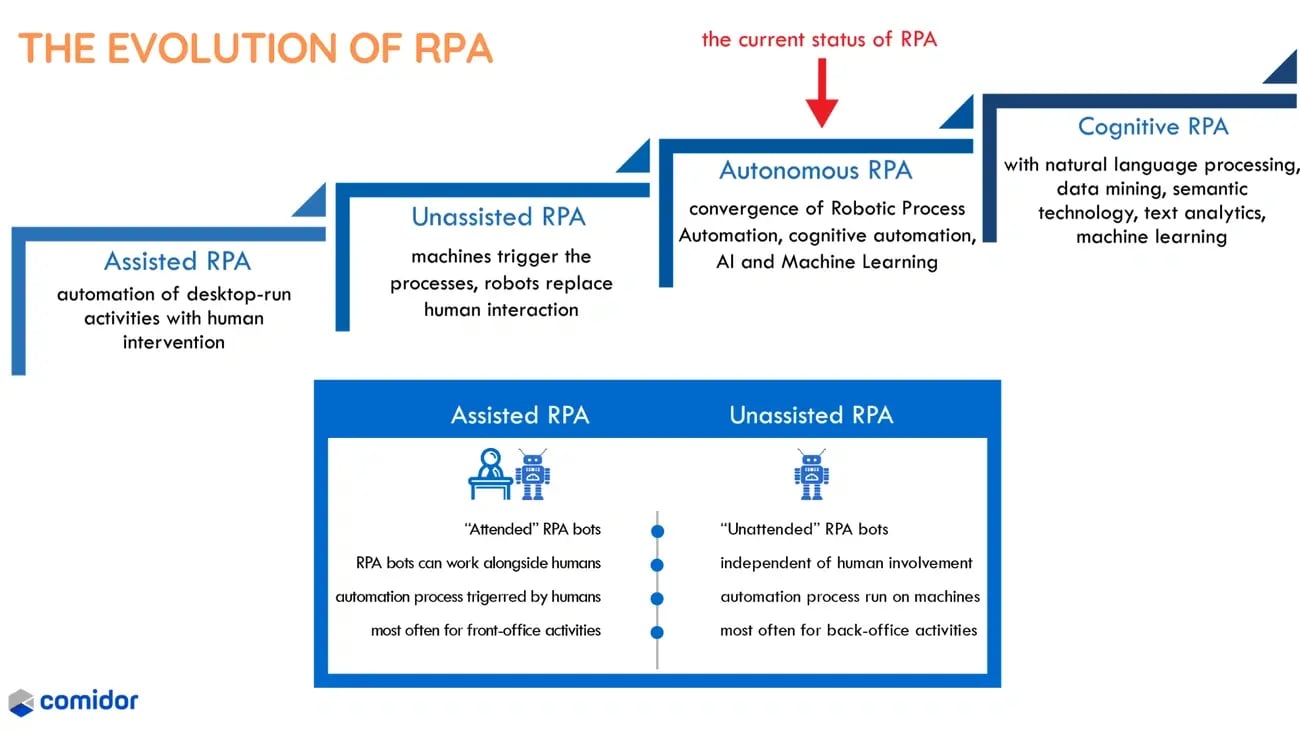
Image Source: Comidor
The digital transformation of HR started with simple automation scripts that cut down paperwork and made repetitive tasks easier. HR automation in the 1980s and 1990s aimed to simplify administrative tasks. These simple tools became the foundation for state-of-the-art solutions by giving HR teams freedom from manual work.
RPA and iPaaS in Early HR Automation
Robotic Process Automation (RPA) became the life-blood of early HR automation efforts. RPA uses software robots, or 'bots,' that follow specific rules to copy human interactions with computer systems and digital interfaces. These bots handle tasks like data entry, document processing, and other routine activities without needing complex integration or custom coding.
HR departments that used RPA got back up to 40% of their time while creating more user-focused workplaces. RPA runs rule-based tasks in systems of all sizes by working at the user interface level. It clicks buttons, enters data, and moves through screens just like a human would.
Integration Platform as a Service (iPaaS) proved vital in connecting different HR systems. RPA focused on task automation while iPaaS specialized in data and application integration to ensure uninterrupted data flow between HR systems. This combination created a powerful partnership: iPaaS helped information flow smoothly between systems, and RPA handled the manual, rule-based steps in those integrated processes.
Limitations of Static Logic in HR Workflows
Traditional workflows had their benefits but operated on fixed logic with thresholds, conditions, and branching paths. To name just one example, invoices over €5,000 would go to a senior manager, or leave requests that clashed with blackout dates faced automatic rejection.
These rule-based approaches had significant limitations:
- Rules broke when they met unexpected scenarios
- Business changes meant constant updates
- Similar situations got the same treatment whatever the context
- Learning wasn't possible – improvements needed manual updates
RPA software couldn't handle exceptions without human help. System rigidity meant that new policies or unusual requests could throw off the entire workflow.
Why Traditional Tools Struggled with Scale
Organizations grew and HR processes became complex. Traditional automation tools showed their weaknesses. Static workflows that worked well in stable settings turned into bottlenecks when markets changed, regulations shifted, and customer needs evolved.
ERP and SAP workflows were basically decision trees with complex if/then/else logic built into systems. Changing a threshold meant system updates, new regulations needed IT help, and unusual cases had to go to human operators. This worked in stable markets with slow-changing regulations – a world that doesn't exist anymore.
Large companies with thousands of employees faced challenges scaling these tools across HR functions and locations. Systems needed to handle different tax rules, labor laws, and statutory benefits. Traditional automation couldn't adapt to these changes without major updates.
HR departments realized they needed smarter, more flexible systems that could adapt without constant reprogramming. This paved the way for artificial intelligence to reshape HR operations.
The Rise of AI in HR: A Turning Point
AI technologies started reshaping HR practices around 2018. This marked a vital step beyond simple automation and changed how HR departments worked by adding intelligence and flexibility to their rigid processes.
Natural Language Processing in HR Chatbots
NLP emerged as a breakthrough that lets HR chatbots understand and process human language naturally. These AI-powered virtual assistants went beyond simple keyword matching to understand what employees mean in context. Gartner reports that 38% of HR leaders were using or testing generative AI by early 2024, up from 19% in mid-2023.
NLP-powered HR chatbots now handle these functions:
- They answer policy questions and process leave requests
- They manage employee data changes and collect feedback
- They provide instant support worldwide
Companies that use these solutions report a 30% reduction in administrative tasks and their employees are 25% happier with HR services. IBM's virtual agent AskHR shows this progress in action. It handles over 2.1 million employee conversations each year and automates more than 80 HR tasks.
Machine Learning for Resume Screening
ML has changed how companies hire people by automating the original screening process. Modern AI recruitment tools use smart algorithms to analyze resumes in context, unlike old keyword-matching systems. These systems pull relevant information through named entity recognition and part-of-speech tagging. They sort candidates effectively based on what each company needs.
The results speak for themselves—87% of organizations use AI somewhere in their hiring process. This technology does more than match keywords:
- It pulls structured data about experience, skills, and qualifications from resumes
- It matches candidates to jobs using context
- It scores and ranks applicants automatically based on job fit
- It removes candidates who don't meet core requirements
Predictive Analytics in Employee Retention
Predictive analytics helps companies forecast when employees might leave and improve their retention strategies. HR teams can spot at-risk employees before they resign by using ML models to analyze past data.
These systems look at job satisfaction, engagement scores, and subtle changes in work habits to calculate each employee's risk of leaving. Companies using these solutions see fewer surprise departures.
To cite an instance, a global company used ML to find high-risk employees they hadn't noticed before. This let them step in early. Their approach got 20% of identified high-risk staff into the company's clinical programs, which saved over $2,000 per person they helped.
NLP, machine learning, and predictive analytics working together have turned HR from reactive problem-solver into a strategic partner that makes evidence-based decisions throughout an employee's journey.
What Makes AI Agents Different
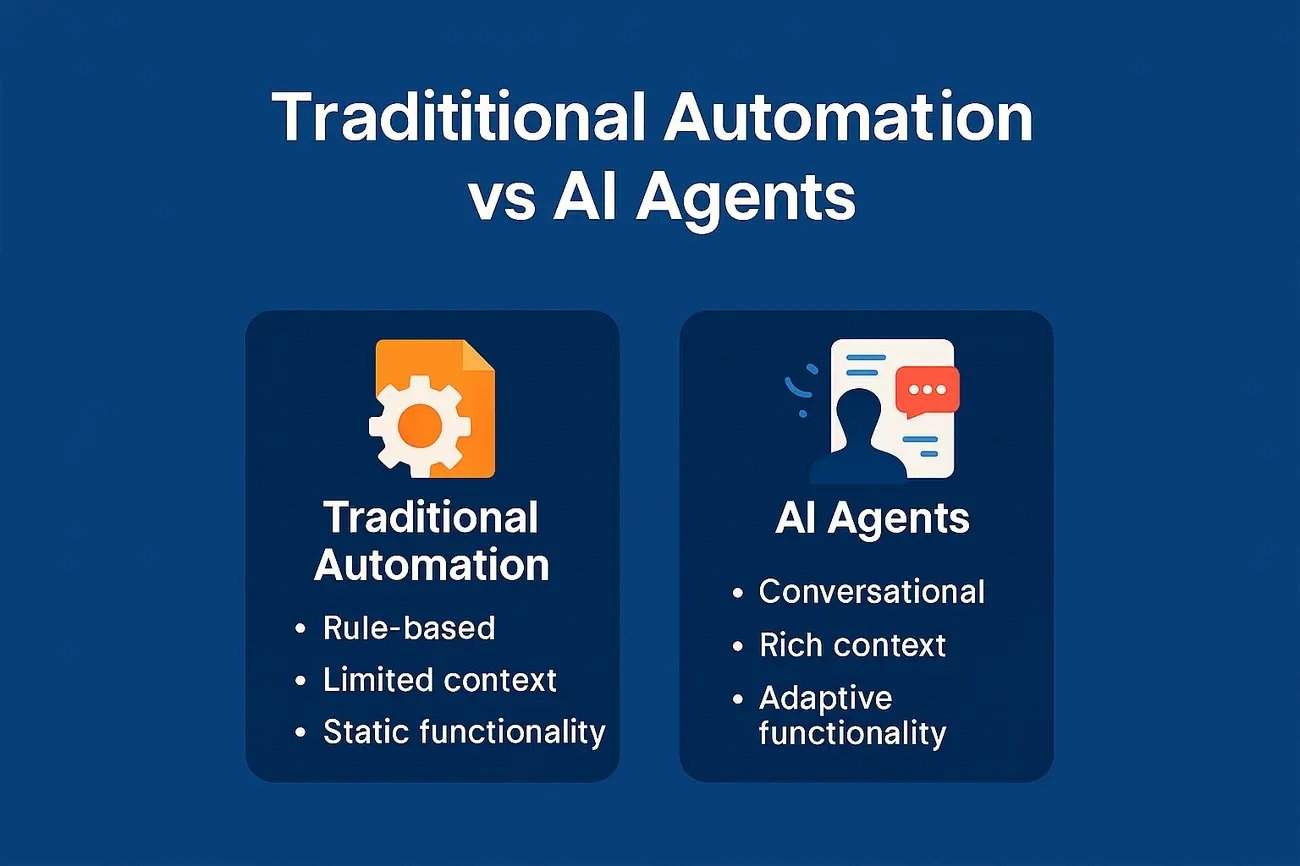
Image Source: Ampcome
Modern AI agents in HR showcase a fundamental advancement in capabilities compared to traditional AI applications. These advanced systems work independently and intelligently throughout organizations, unlike simple automation tools or early AI implementations.
Autonomous Task Execution Across Systems
AI agents uniquely move across multiple systems without human intervention. They freely roam your organization's digital environment instead of being limited to single applications like traditional HR tools. Their ability to move between different HR platforms connects applicant tracking systems, HRIS, and employee engagement tools. This enables true end-to-end automation.
Cross-system orchestration makes AI agents powerful tools. They coordinate HR, finance, procurement, legal, and workplace services simultaneously. This helps manage complex processes like employee relocations that once needed manual handoffs between departments. This orchestration lets agents run complete workflows from start to finish. One AI agent handles benefits enrollment while another manages time-off requests, working together seamlessly.
Contextual Reasoning and Goal Decomposition
AI agents stand out with their sophisticated goal-oriented behavior. They receive objectives and break them into manageable subtasks instead of following preset instructions. An AI agent will analyze current processes, spot bottlenecks, and fix issues on its own when asked to "reduce time-to-hire".
This goal decomposition capability allows agents to:
- Break complex HR objectives into prioritized subtasks
- Focus on actions with the greatest business effect
- Complete tasks quickly and consistently
Their contextual awareness goes beyond basic pattern matching. AI agents understand data meaning and their operating environment, making them more adaptable than rule-based systems.
Dynamic Adaptation to Workflow Changes
Most importantly, AI agents learn and evolve continuously. They adjust workflows in real-time based on new information, unlike traditional automation that fails with unexpected scenarios. Their self-improving feedback loop helps them evolve strategies and optimize actions over time by gathering input from HR teams, employees, and system results.
AI agents process structured and unstructured data through natural language processing and machine learning. This helps them handle nuanced situations that would confuse traditional automation. Their dynamic adaptation makes processes smarter and more resilient over time.
These distinctive capabilities revolutionize how artificial intelligence in HR works. The result enhances human capabilities rather than just running preset tasks.
Key Use Cases of AI Agents in HR

Image Source: LeewayHertz
AI agents create business value in HR through four main applications that reshape traditional operations. These solutions fix long-standing problems and offer strategic benefits compared to standard approaches.
End-to-End Employee Onboarding Automation
AI agents make onboarding smoother by automating document checks, pre-employment screening, and IT requests. They customize training plans and set up user profiles to give new hires a smooth start. The automation covers everything from pre-boarding tasks like welcome emails and document prep to processing paperwork, checking compliance, and setting up systems.
The results are clear - automated onboarding takes less time and reduces mistakes. Research shows 65% of HR professionals believe AI will boost employee retention. HR teams can focus on strategic work since they spend less time on manual tasks, while new employees get a consistent, tailored experience.
Cross-System Access and Permissions Management
AI agents have changed how organizations handle access management, which used to be manual and prone to errors. These systems automatically set permissions when employees start and adjust them as roles change. They also cut security risks by instantly removing all access when someone leaves.
This automation removes the hassle of managing permissions across systems by hand. Manual processes often lead to mistakes in access levels, but AI agents keep permissions accurate and current. Organizations with complex access needs find this feature particularly useful.
Benefits Enrollment and Compliance Tracking
AI agents handle benefits administration and regulatory compliance effectively. They check eligibility right away, generate carrier census reports, and monitor changing regulations. Companies that use AI for benefits administration cut processing time by 30% and reduce data errors by 40%.
The systems watch for compliance with ACA, ERISA, and HIPAA rules continuously. They create immediate reports and catch potential violations early. This leads to better benefits customization and stronger compliance protection.
Real-Time Employee Support via Slack/Teams
AI agents have changed internal support through function-specific channels like #ask-it and #ask-hr. These agents do more than route requests - they handle complete processes within Slack or Teams.
AI-powered request management knows your tech stack, routes requests smartly, and solves problems where employees work. The AI organizes every message, sends it to the right team, and manages approvals and tracking behind the scenes. This method cuts down case numbers and speeds up solutions.
Strategic Benefits for HR Teams and Organizations
AI in HR brings measurable business value that goes beyond technical capabilities. Companies that use these technologies see dramatic operational improvements on multiple fronts.
Reduced Manual Workload and Case Volume
Organizations that add AI solutions see a substantial drop in administrative work. IBM's AskHR tool handles 10.1 million interactions annually and saves 50,000 hours and $5 million each year. A global bank's AI system cut HR ticket volume by 83% without adding HR staff. This lets HR professionals work on strategic initiatives rather than routine cases.
Improved Compliance with GDPR and HIPAA
AI helps organizations follow regulations through automated compliance checks. These systems check documentation, spot potential risks, and recommend fixes. AI runs audits, confirms evidence, and updates policies immediately for regulations like HIPAA and GDPR. This approach catches small issues before they become major compliance problems and reduces the risk of penalties.
Faster Resolution Times and Employee Satisfaction
Quick response time is a key advantage. One organization cut HR resolution time by 80% after adding AI agents. AI-powered self-service options typically cut HR service delivery costs by 50-60%. These changes make employee experience better, and companies with engaged employees see 50% less turnover.
Integration with HRIS and ITSM Platforms
AI becomes more valuable when it blends with existing systems. Good implementations work with service desk platforms, chat tools, monitoring systems, and asset databases. This connection lets AI gather context from multiple sources while data flows between systems.
Conclusion
AI in HR has come a long way from its humble beginnings. What started as simple automation scripts for paperwork has now turned into sophisticated AI agents that make autonomous decisions across multiple systems. This dramatic change shows how HR departments work differently in organizations now.
Businesses grew more complex, and the old rule-based systems couldn't keep up. The static workflows that worked well in stable settings became roadblocks to progress. The rise of AI with natural language processing, machine learning, and predictive analytics changed everything. HR transformed from a purely administrative role into a strategic partner.
Modern AI agents are different beasts altogether. They work autonomously across systems, understand context, and adapt to changing workflows. This is a big deal as it means that they're unlike any previous technology. These systems bring real-life value through simplified onboarding, automated access management, benefits administration, and employee support—with minimal human oversight.
The benefits go beyond just technical improvements. Companies using HR AI see less manual work, better compliance, faster solutions, and happier employees. On top of that, these systems work smoothly with existing HRIS and ITSM platforms, which helps maximize returns while keeping data flowing consistently.
AI will keep reshaping the HR world, but human judgment stays crucial for complex decisions, ethical choices, and building real workplace relationships. The best HR teams will find the right mix—letting AI handle routine tasks while people focus on strategic work that helps organizations grow.
The rise of AI in HR isn't just a destination—it's an ongoing trip. We're at an exciting point where AI boosts human capabilities instead of replacing them. This creates HR departments that bring more strategic value than ever to their organizations.
Trusted by 330+ CHROs
See why global HR teams rely on Amber to listen, act, and retain their best people.
