13 min read
Last Updated: 16 December 2025
Your HR team might lose a full workday each week on repetitive tasks and routine requests. HR process automation can help reclaim this time. Companies have invested billions in technology, yet many still grapple with broken, inefficient systems.
The global AI in HR market reached US$3.25 billion in 2023. Experts predict it will grow to US$15.24 billion by 2030. Successful HR process automation remains a challenge. It needs deep insights into complex workflows unique to each organization. Traditional automation methods take too much time and often break easily. AI agents working alone can only handle simple, single-step tasks. Most ground problems need multiple steps, systems, and decisions.
38% of HR leaders have started using generative AI in their HR functions. This shows a clear need for better tools. The biggest issue? Companies waste resources on duplicate systems and clashing technologies without proper coordination. This patchwork of automation fails at enterprise scale. Cases stack up, employees face longer waits, and automation benefits disappear.
This piece explores why standard HR process automation fails. We'll show how a multi-agent strategy can revolutionize your HR operations. Specialized AI agents working together through central coordination lead to better efficiency, employee experience, and business results.
Why Traditional HR Automation Breaks at Scale
.webp?width=666&height=375&name=625b7f02-8282-4b65-84d1-f9660f419aa2%20(1).webp)
Image Source: SlideTeam
HR automation systems that work well for small companies often fail when companies grow larger. As operations become more complex, companies looking to boost efficiency through automation find diminishing returns. The promise of efficient HR processes turns into technical problems and frustration.
RPA Limitations in Unstructured Workflows
RPA seems like a perfect solution for HR process automation at first glance. However, its basic limitations become clear as organizations grow. RPA bots only work well with rule-based, repetitive, structured tasks. This makes them unsuitable for work that needs judgment or creative problem-solving.
Organizations using RPA face several key challenges:
- Adaptation failures: Changes in menus, interfaces, or systems can break RPA bots and lead to process failures or wrong results
- Exception handling: RPA bots stop working when workflows have unstructured data or too many exceptions without advanced AI support
- Maintenance burden: Setting up these systems needs complex configuration, which drives up both startup and ongoing maintenance costs
As a result, about 50% of RPA implementation projects fail because of poor solutions and wrong implementation. This high failure rate shows that RPA's capabilities don't match the changing nature of enterprise HR workflows.
The IT industry's labor market makes it expensive to attract, train, and pay IT professionals who maintain these systems. An RPA solution might look cheap at first, but developer salaries needed for maintenance can quickly eat away the expected returns.
iPaaS Complexity and Maintenance Overhead
iPaaS came about as a way to link multiple HR systems together. Yet it brings its own problems that get worse at scale. The rapid growth of HR/HCM enterprise systems has created a complex integration environment.
Old integration methods like middleware and point-to-point connections prove slow, expensive, and hard to scale. Point-to-point integrations create weak networks - one system's failure or update affects everything else. This weakness grows as more systems join the network.
Many iPaaS platforms need deep technical knowledge for complex automations, which limits their use across organizations. HR teams must either learn specialized technical skills or depend heavily on IT departments. This creates bottlenecks in improving processes.
Automations built at the user interface level can break when application interfaces change, which needs frequent fixes. These tools often just move work from manual processing to technical maintenance—a bad trade-off for large enterprises.
Siloed Systems and Fragmented Employee Experience
Fragmented organizations suffer the most damage from traditional HR process automation tools. Companies use an average of sixteen HR solutions or programs. Each new system creates another potential data silo.
This fragmentation seriously affects people:
- 90% of employees feel overwhelmed by their daily software tools
- Workers waste over 11 hours weekly searching for basic information
- 47% of digital workers have trouble finding information they need to do their jobs
Companies with fragmented HR systems spend 23% more time on administrative work and have 31% higher error rates in managing employee data compared to those with connected solutions. First impressions matter - onboarding processes often create poor experiences that hurt loyalty and retention.
Global operations face extra compliance risks. Each country has its own employment laws and rules, which become extremely hard to manage across multiple separate systems. Non-compliance costs can reach three times more than staying compliant.
Traditional HR process automation creates an odd situation. Technologies meant to improve efficiency actually increase administrative work, errors, and compliance risks as organizations grow larger.
The Role of AI Agents in Modern HR Automation
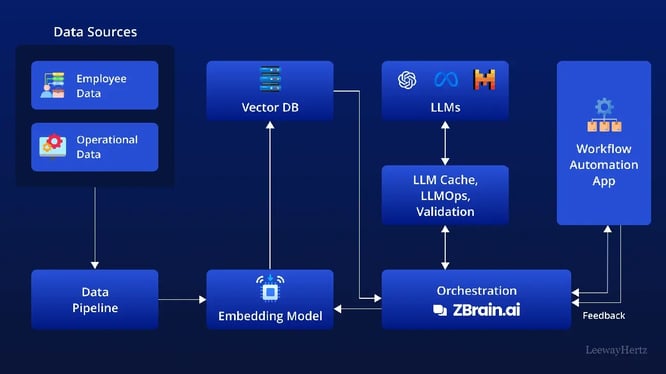
Image Source: LeewayHertz
AI agents are revolutionizing HR automation tools with their intelligence, adaptability, and autonomous capabilities. These systems go beyond simple rule-based automation. They understand context, reason across systems, and make smart decisions without constant supervision.
Natural Language Understanding in HR Queries
NLP serves as the foundation of AI agents that understand and respond to human language in HR contexts. The systems grasp employee queries' intent whatever their phrasing. This eliminates the need for exact keyword matches or rigid command structures.
Modern AI agents in HR utilize NLP to:
- Process sentiment analysis from employee communications and extract useful information from surveys and internal conversations
- Understand complex, long-tail employee queries with multiple intents at once
- Create tailored responses by combining industry-wide knowledge with enterprise-specific workflows
- Anonymize demographic identifiers in resumes to minimize unconscious bias in hiring
IBM's internal AskHR tool shows what's possible. It automates more than 80 common HR processes through natural language understanding. One department saved 12,000 hours in a single quarter. AI agents solve 40% of employee queries automatically with 99.9% accuracy when they understand natural language properly.
Cross-System Reasoning and Task Execution
AI agents excel at connecting isolated HR systems to handle complex, multi-step tasks. They solve one of HR process automation's biggest problems: breaking down platform silos.
Traditional automation works in single systems. AI agents, however, connect HR, payroll, and IT data to create a unified workforce view. This lets them:
- Handle complete workflows without manual handoffs
- Connect platforms like Workday or SuccessFactors with identity providers, payroll systems, and IT service tools
- Run HR-related workflows across multiple systems on their own
- Access and process information from databases, APIs, and software interfaces
This cross-system reasoning helps AI agents tackle complex scenarios. To name just one example, when employees submit leave requests via Slack, AI agents check HRIS eligibility, route manager approvals, and send confirmations automatically.
Context-Aware Decision Making in HR Workflows
AI agents' most important advancement in HR process automation is knowing how to make smart, context-informed decisions. We used integrated assessment methods that factor in employee history, organizational policies, and business context before acting.
This reasoning-based approach helps AI agents:
- Think over options, anticipate outcomes, and make context-aware decisions
- Assess similar cases and apply judgment to solve problems autonomously
- Adapt to role-specific needs rather than following static rules
- Track successful approaches and adjust future decisions
IBM's AskHR tool proves this at scale. It handles 10.1 million interactions yearly and saves 50,000 hours and $5 million annually. HR teams can now focus on strategic initiatives while AI agents handle complex decisions that once needed human input.
AI agents have transformed HR process automation by combining natural language understanding with cross-system reasoning and contextual decision-making. These technologies work together to create systems that understand employee needs and take coordinated action across platforms to deliver results.
What Makes Multi-Agent Strategy Essential
A fundamental change from standalone AI systems to connected multi-agent networks marks the most important step forward in hr process automation. Multi-agent AI creates a network of specialized agents that blend together like a team of digital specialists working as one.
End-to-End Workflow Ownership by AI Agents
AI agent systems need three basic parts to create real value. They need a reasoning layer (usually an LLM that understands instructions), tools they can use (APIs, databases, etc.), and full control of workflows from start to finish. Unlike old automation that only handled pieces of work, AI agents with complete ownership can understand what's happening, make plans, and complete tasks with little human help.
These agents work through a continuous cycle. They understand situations, decide what to do next, and take real actions across systems until they reach their goals. Each agent keeps track of what it has done, what's left to do, and how things have changed. This prevents doing things twice, missing steps, or getting mixed-up results.
Dynamic Task Delegation Across HRIS, ITSM, and Payroll
Multi-agent systems shine through smart coordination and work in two main ways:
- Vertical orchestration: A lead agent directs others and watches their progress
- Horizontal collaboration: Agents work together as equals and make group decisions
This setup helps work flow smoothly between systems that used to be separate. To name just one example, see how complex employee issues get solved - an IT agent checks equipment problems, an HR agent reviews policies, and a finance agent approves spending. Employees don't need to deal with multiple departments.
These multi-agent systems connect HR, payroll, and IT data to build a unified workforce view. Employee updates like promotions, transfers, or moves automatically flow through all connected systems. No one needs to enter the same information multiple times.
Autonomous Resolution Without Manual Handoffs
Multi-agent hr process automation shows its real strength when agents handle work from start to finish without human help. Leave management offers a good example. When employees ask for time off through chat, agents check HRIS eligibility, get manager approval, and send confirmations in minutes.
This self-running system removes backlogs and speeds up resolution times. A European automaker already uses agent teams to upgrade old systems. Humans mainly guide and confirm the work instead of doing it themselves.
The effects are far-reaching. Some companies need only 2-5 people to oversee an "agent factory" with 50-100 specialized agents. These agents run complete processes like customer onboarding, product launches, or financial closings.
Multi-agent automation revolutionizes hr process automation benefits. It goes beyond simple "if-this-then-that" rules to deliver real intelligence and adaptability. Old tools followed fixed rules and got stuck when requests didn't match patterns. Multi-agent systems learn and adapt through machine learning and natural language processing.
Organizations now structure their operations differently. Small mixed-skill human teams own and supervise AI workflows that deliver clear business results from end to end.
High-Impact HR Use Cases for Multi-Agent Automation
Multi-agent automation in HR delivers vital operational benefits to workflows that matter most. Organizations can cut manual effort by up to 80% when they use specialized agents to handle complex HR processes. This approach also makes employees happier through faster and more consistent service.
AI Agents for Employee Onboarding and Offboarding
Employee onboarding is a vital moment in the employee lifecycle. Yet companies don't deal very well with it - only 52% of employees feel positive about their onboarding experience. Multi-agent systems solve this by managing the entire process from job acceptance to full integration.
AI agents handle these onboarding tasks automatically:
- Set up core systems like email, applications, and HR tools based on role
- Send welcome messages and orientation materials
- Track document distribution and completion
- Set up user accounts and give proper permissions to tools like Workday, Okta, and Jira
- Help employees pick benefits and answer common questions
For offboarding, specialized agents work with different departments to create an uninterrupted exit process. They remove access after departure and reset passwords on platforms like Okta, Slack, and Salesforce. The system wipes devices to keep security tight. This integrated approach removes security risks from leftover access and ensures proper completion of legal and financial obligations.
Benefits Administration with Real-Time Sync
Traditional benefits management creates bottlenecks that frustrate HR teams and employees alike. Multi-agent automation removes these obstacles through smart system integration.
AI agents simplify benefits administration by automatically syncing data between HR platforms and benefits systems. Employee selections and life events flow directly into payroll systems. This ensures accurate deductions for health, retirement, and other benefits without manual work.
Advanced platforms let employees see how benefit choices affect their take-home pay right away. Employees can make better decisions about their benefits package with this transparency. It also reduces questions to HR staff.
Policy Acknowledgement and Compliance Tracking
Policy acknowledgment compliance poses a major risk for organizations. Multi-agent systems tackle this by bringing together the entire policy lifecycle under one roof.
AI agents handle everything from sending out policies to tracking who reads them and when. This creates a paper trail that proves vital during audits. The system also tells relevant employees when they need to review updated policies.
Top-tier systems offer customizable workflows for creating, reviewing, and approving policies. They keep complete audit trails and control versions automatically. These systems also track expiration dates to keep outdated policies from staying active.
Access Provisioning Across Identity Systems
Employee lifecycle access management brings unique challenges that multi-agent systems excel at solving. AI agents coordinate provisioning across identity systems to ensure proper access and minimize security risks.
Access provisioning needs coordination across multiple systems - from initial requests through approval, creation, monitoring, and removal. Multi-agent automation implements the principle of least privilege. Users get only the minimum access needed to do their jobs.
These systems shine during offboarding by shutting down accounts across all applications. This prevents security risks from forgotten accounts. Organizations with complex system setups benefit from consistent automation and detailed compliance logs. It creates a secure foundation for identity management that grows with the organization.
Why HR Process Automation Fails Without Orchestration
Organizations spend big money on hr process automation but don't get the results they want. A newer study, published by IBM shows that while companies start their digital transformation with automation, they soon find that disconnected automations don't scale well. This biggest problem undermines even the most advanced hr process automation platforms.
Lack of Coordination Between Point Solutions
HR technology stacks usually consist of systems that work in isolation and can't access all the data needed to fully automate workflows. The average company uses sixteen HR solutions at once. This creates a scattered digital world where information stays locked in specific applications.
These isolated efficiencies stay disconnected without proper coordination. The results are predictable - high maintenance costs, bigger compliance risks, and fragile workflows that don't meet what modern employees expect. HR staff must deal with multiple logins and interfaces, which cuts into their productivity and affects the overall employee experience.
Failure to Adapt to Workflow Changes
HR automation systems don't deal very well with changing requirements. Organizations often design processes poorly when they first set up automation. Poorly streamlined HR workflows can hurt outcomes.
Even well-designed solutions face challenges adapting:
- RPA tools break when data structures change or system interfaces update
- Integration points fail when connected applications change their APIs
- Workflows become outdated as business needs change
Companies without in-house technical experts face even bigger challenges in managing, integrating, and maintaining these systems. This lack of technical knowledge often creates data silos and raises costs, which cancels out the intended hr process automation benefits.
Inability to Handle Multi-Step, Multi-System Tasks
Business processes rarely follow straight paths or stay within one department. To name just one example, see employee onboarding—your HRIS might start the process, but IT still needs to create tickets manually for system access and equipment. New hires face delays instead of getting a smooth experience. Duplicate requests pile up and both HR and IT teams get frustrated.
Automation doesn't work well with multi-step sequences that cross department lines without proper coordination. Tool overload becomes a bigger issue as companies grow. Complex workflows like onboarding need HR, IT operations, payroll, and compliance teams to work together. Isolated automation tools just can't deliver unified results.
HR process automation works best when it coordinates entire workflows—not just single tasks. Orchestration keeps these complex processes running smoothly by connecting automations across departments.
Best Practices for Implementing Multi-Agent HR Automation

Image Source: Conceptdraw.com
Organizations need strategic planning and careful implementation to make multi-agent HR automation work. Companies that build cohesive AI systems follow several tested practices that ensure success over time.
Choosing the Right HR Process Automation Platform
A solid hr process automation starts with picking the right tools. Look for platforms that work smoothly with your current systems and provide role-based access controls. Your organization should pick solutions that let you customize workflows according to specific needs. The chosen platform must connect HR, IT, payroll and benefits systems to give you a complete view of your workforce.
Mapping Workflows to Agent Roles
Start with a clear picture of your current processes and find the bottlenecks. Analyze how users work, what resources they use, and their access needs. Create a map of each process that shows actions, triggers, systems, handoffs, and approval steps. You can then assess where AI can help based on business effects and automation possibilities.
Monitoring, Feedback Loops, and Continuous Learning
Set up reliable monitoring systems to track how agents perform and what they achieve. Clear accountability measures should include completion rates of follow-up conversations and team sentiment improvements. Create clear "you said, we did" channels to show how feedback creates real changes. User input helps refine these processes as you go along.
Ensuring Compliance with Role-Based Access Controls
Role-based access control (RBAC) limits sensitive data access based on job needs. This method reduces security risks through duty separation and makes operations simpler. NIST's three basic rules guide this process: role assignment, role authorization, and permission authorization. Think of AI agents as users who need specific permissions only for their tasks.
Conclusion
HR process automation gives organizations a chance to win back lost time and enhance their employee experience. Traditional approaches discussed in this piece fall short when organizations grow. RPA systems fail during interface changes, iPaaS solutions need constant maintenance, and disconnected systems break up the employee experience.
AI agents revolutionize everything through natural language understanding, cross-system reasoning, and smart decision making. These features help them manage complex HR workflows across multiple systems and departments. Single AI agents working alone can't deliver automation's full potential.
Multi-agent strategies become vital to create effective HR process automation. AI agents with specific skills can work together through central coordination. They handle complete workflows, assign tasks as needed, and fix problems on their own. This setup removes the bottlenecks, backlogs, and manual handoffs that make traditional automation difficult.
The effects show up clearly in valuable areas like employee onboarding, benefits administration, compliance tracking, and access management. These processes usually need multiple systems and departments, which makes them ideal for multi-agent automation.
Organizations should pick HR process automation platforms that work with multiple agents. They need to map workflows to agent roles and set up monitoring systems for ongoing improvements. Role-based access controls stay crucial to maintain compliance and security.
HR's future belongs to organizations that welcome coordinated, multi-agent systems. Setting up these systems needs careful planning, but the benefits are worth the work. Employees get faster, consistent service while HR teams move from repetitive tasks to strategic projects that add business value. HR process automation finally delivers its promise through smart teamwork between specialized AI agents.
Key Takeaways
Traditional HR automation fails at scale because isolated tools create fragmented systems that break down under enterprise complexity, but multi-agent AI strategies can transform HR operations through intelligent orchestration.
• Traditional automation breaks at scale: RPA and iPaaS solutions fail due to maintenance overhead, inability to handle exceptions, and fragmented employee experiences across 16+ HR systems on average.
• Multi-agent systems enable end-to-end workflow ownership: Specialized AI agents work together to handle complex processes from start to finish without manual handoffs across HR, IT, and payroll systems.
• Natural language understanding transforms employee interactions: AI agents can interpret complex queries, reason across systems, and make context-aware decisions, with some organizations saving 50,000 hours annually.
• High-impact use cases deliver immediate value: Employee onboarding/offboarding, benefits administration, compliance tracking, and access provisioning see up to 80% reduction in manual effort.
• Orchestration is essential for success: Without coordination between systems, automation creates silos, increases maintenance costs, and fails to adapt to workflow changes.
The key to successful HR process automation lies not in deploying more isolated tools, but in implementing intelligent multi-agent systems that can collaborate seamlessly across your entire HR technology stack to deliver truly autonomous, end-to-end workflow management.
FAQs
Q1. What are the main challenges of traditional HR automation approaches? Traditional HR automation often fails due to RPA limitations in handling unstructured workflows, iPaaS complexity and maintenance overhead, and the creation of siloed systems that fragment the employee experience. These issues become more pronounced as organizations scale.
Q2. How do AI agents improve HR process automation? AI agents enhance HR automation through natural language understanding, cross-system reasoning, and context-aware decision making. They can interpret complex queries, work across multiple systems, and make informed decisions without constant human supervision, leading to more efficient and effective HR processes.
Q3. What is a multi-agent strategy in HR automation? A multi-agent strategy involves deploying specialized AI agents that work together through central orchestration to handle end-to-end HR workflows. This approach allows for dynamic task delegation across HR, IT, and payroll systems, enabling autonomous resolution of complex processes without manual handoffs.
Q4. What are some high-impact use cases for multi-agent HR automation? High-impact use cases include employee onboarding and offboarding, benefits administration with real-time synchronization, policy acknowledgement and compliance tracking, and access provisioning across identity systems. These processes typically involve multiple departments and systems, making them ideal for multi-agent automation.
Q5. How can organizations ensure successful implementation of multi-agent HR automation? To implement multi-agent HR automation successfully, organizations should choose the right automation platform that supports integration and customization, map workflows to agent roles, establish monitoring and feedback loops for continuous improvement, and ensure compliance through role-based access controls. This approach helps maximize the benefits of automation while maintaining security and adaptability.
Trusted by 330+ CHROs
See why global HR teams rely on Amber to listen, act, and retain their best people.
