Artificial intelligence and automation are transforming HR practices today. Recent studies show 84% of executives consider AI crucial to accelerate their growth, while only 60% say the same about automation technologies. Organizations are radically changing their approach to technology adoption, but many HR leaders still find it challenging to differentiate between these two powerful tools.
AI and automation serve distinct purposes. Automation simply follows predetermined rules to complete tasks, while artificial intelligence possesses the capability to reason, learn, and adapt. A Brookings report reveals that generative AI could disrupt at least half the tasks for 30% of workers. This impact reaches way beyond the reach and influence of basic automation and rule-based systems.
This piece will uncover why HR departments often choose incorrectly between these technologies, even as the automation market heads toward USD 23.8 billion by 2025. You'll learn where each approach works best, how to review your organization's needs, and create a strategic implementation plan that combines technological power with human oversight.
AI vs Rule-Based Automation: What’s the Core Difference?
The biggest problem in understanding AI and automation lies in their capability limits. HR leaders who mix up these technologies often end up with solutions that don't deliver or spend too much on complex systems they don't need. Let's break down these differences to help you pick the right tech for your needs.
Automation executes, AI reasons
Rule-based automation works like a super-efficient robot that follows a script. It runs pre-programmed commands perfectly but can't handle surprises. You can think of rule-based automation as a simple "if-this-then-that" flowchart - reliable within set limits but lost with exceptions.
AI and automation have one vital difference: AI knows how to reason. Instead of just following orders, AI systems can:
- Analyze inputs and extract meaning (understanding)
- Make decisions based on patterns and probability (reasoning)
- Improve performance based on outcomes (learning)
- Work well with incomplete information (adapting)
A vacation request shows this clearly. Rule-based automation just checks leave balance and policy compliance. It says yes or no based on these rules alone. AI looks at team workloads, project deadlines, past vacation conflicts, and even signs of employee burnout before suggesting an answer.
Rule-based systems vs agentic systems
These technologies work differently at their core, which explains why they can do different things. Rule-based systems need explicit programming - someone must predict and code every possible scenario. They stick to strict logic paths and need updates as business rules change.
"Rule-based systems are deterministic – given the same input, they'll always produce identical outputs," explains Dr. Michael Wooldridge, professor of computer science at Oxford University.
Agentic AI systems reshape the scene with their capabilities. These systems:
- Process natural language and unstructured data
- Generate novel responses not explicitly programmed
- Learn from interactions and improve over time
- Handle ambiguity and operate with uncertainty
AI systems can act as independent agents that make decisions, set task priorities, and even define their own goals within limits. This marks a transformation from tools that just follow orders to systems that can think through complex situations.
Why this matters in HR decision-making
Getting AI and automation right is vital in human resources because these choices affect people's lives and company culture. Picking the wrong tech can backfire badly.
To cite an instance, a rule-based system might process performance reviews using numbers and checkboxes efficiently. But it can't spot worrying patterns in written feedback or catch bias in how managers rate employees. AI can read between the lines in open comments, spot fairness issues, and suggest growth opportunities that fit each employee.
HR processes are often too complex for rule-based systems to handle well. Here are some examples:
- Flexible work requests that need you to weigh role needs, team dynamics, and personal circumstances
- Succession planning that looks at both clear skills and hidden knowledge
- Internal job matching that considers qualifications, potential, growth path, and what the organization needs
The difference between AI and automation comes down to handling routine tasks versus supporting tough decisions. Modern HR departments need both, but mixing them up leads to capability gaps and disappointment.
Understanding these key differences helps you pick the right tech for each task. Next, we'll explore where each approach works best and how to assess your processes to find the best fit.
Where Rule-Based Automation Still Wins
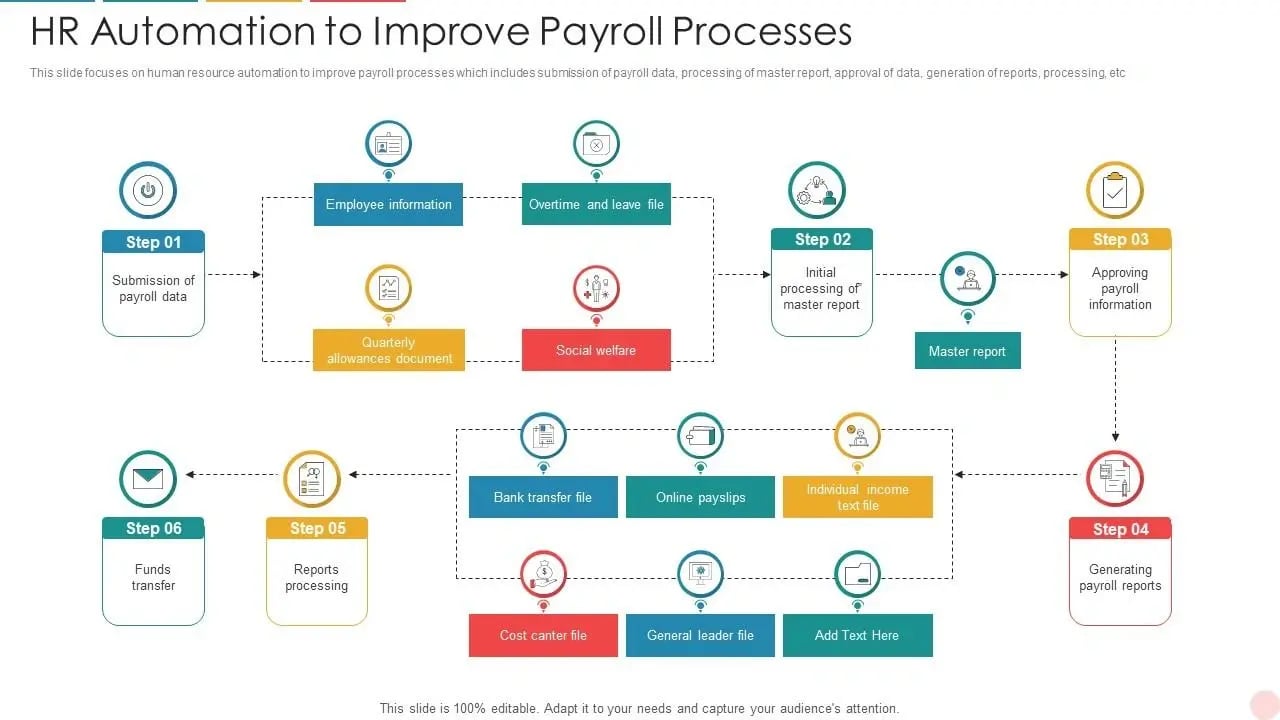
Image Source: SlideTeam
The AI hype continues to grow, yet rule-based automation proves better for many HR functions. Rule-based automation outperforms its sophisticated counterpart when tasks need consistency and predictable outcomes.
Stable, repetitive tasks with low variability
Rule-based automation runs on clear, unchanging rules and predictable inputs. Deloitte's research shows that reducing data errors ranks among HR departments' top process metrics since these mistakes create bottlenecks and compliance issues. Systems with stable parameters deliver unmatched reliability.
These systems excel at repetitive processes because they eliminate human error through consistent rule application. HR automation tools substantially reduce mistakes by removing manual data entry from employee records management. This reliability builds an accuracy foundation that human processing can't match.
Rule-based automation also handles high-volume, simple tasks well. CareerBuilder research shows HR managers waste 14 hours each week on tasks they could automate. These systems recover lost productivity through constant efficiency - they work tirelessly without distractions and process each transaction the same way.
Examples: payroll, compliance, data entry
Payroll processing emerges as the best example of rule-based automation benefits. Companies with 100 employees spend 15-25 hours monthly on manual payroll when everything goes smoothly. Ernst & Young found that fixing one payroll error costs about INR 24554.71, and one in five companies face payroll mistakes throughout the year.
Automated payroll systems deliver these results:
- Process payroll on time whatever the employee count or last-minute changes
- Cut errors with precise calculations of tax brackets, overtime, and benefits
- Meet federal, state, and local tax regulations automatically
- Cut administrative work through employee self-service portals
Rule-based systems excel at compliance management too. These automated systems ensure consistent adherence to legal requirements by tracking employee hours, benefits eligibility, and labor laws. They monitor changing regulations and deadlines automatically, which cuts risk exposure.
Data entry automation brings measurable improvements. Small HR teams usually spend 6-8 hours weekly on repetitive tasks like data entry, approvals, and reporting. Automation removes these manual processes so HR staff can move from basic tasks to strategic work.
Lower cost and faster implementation
Rule-based automation costs less than AI solutions. Small and mid-sized businesses might find the original cost high, but reduced administrative costs, better accuracy, and increased productivity justify this expense over time.
These systems also take less time to implement. Most HR automation tools need only weeks rather than months to set up. HRIS implementation takes 4 to 14 weeks on average, and most small to mid-sized companies complete it in 6 weeks with their core team.
Rule-based systems blend better with existing processes. They use predetermined rules that line up with current workflows, which causes minimal disruption during transition. Unlike AI systems that need extensive data training, rule-based automation works right after setup.
Companies see quick returns on their investment. Budget-friendly payroll systems show positive ROI within 2-3 months as errors decrease and processing speeds up. One manufacturing company that connected leave data with payroll cut payroll mistakes by 60% and saved 20 hours weekly for their HR department.
Where AI Outperforms Traditional Automation
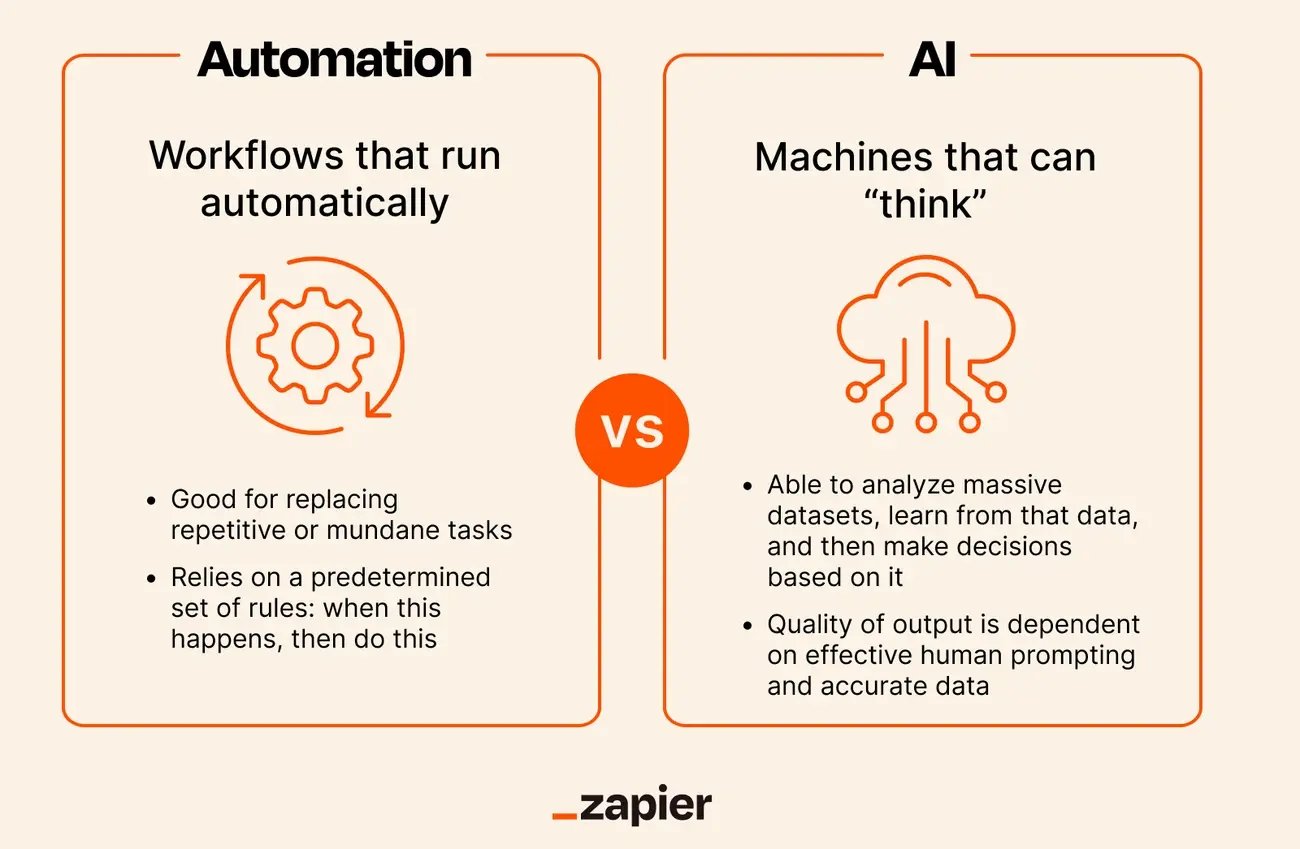
Image Source: Zapier
Rule-based systems excel at repetitive tasks, but modern workplaces just need flexible solutions for complex challenges. AI and automation complement each other in key areas. AI handles scenarios that would overwhelm traditional automation.
Handling exceptions and dynamic workflows
AI thrives amid complexity and change, unlike rigid rule-based systems. Traditional automation struggles with exceptions or unusual scenarios—this is where AI shows its true value.
AI-powered automation handles complex workflows by analyzing context and adapting responses. Let's think over HR case management: AI doesn't just follow predetermined paths. It understands employee intent, learns patterns, and tailors responses. Organizations can resolve issues before they escalate with modern platforms achieving case deflection rates up to 90% for simple questions.
To cite an instance, AI interprets policies while processing leave requests. It provides plain-language guidance, flags exceptions, and routes complex questions to appropriate managers intelligently. This dynamic handling eliminates bottlenecks that plague rule-based systems.
On top of that, it arranges cross-department workflows and automatically ensures compliance, equipment setup, and system access. AI adapts its approach based on available information and previous outcomes instead of breaking down when unexpected scenarios occur.
Personalized employee support
Today's workforce expects consumer-grade experiences at work. Less than half of employees prefer dealing with a live agent when they need help. Most would rather use digital self-service tailored to their needs.
AI transforms employee support through:
- Natural language understanding that interprets what employees mean, not just what they type
- Contextual responses that line up with an employee's role, location, and history
- Learning capabilities that improve accuracy over time
- 24/7 availability across multiple channels
Picture a virtual assistant creating a conversational support experience like "texting with an expert coworker who has infinite patience and 24×7 availability". These systems do more than answer FAQs—they understand complex queries, perform tasks, and even anticipate needs.
Understanding how each handles employee questions reveals the difference between AI and automation. Rule-based chatbots follow pre-scripted decision trees. AI assistants provide bias-free interview feedback, review complex human skills like creativity and emotional intelligence more objectively, and map tailored learning paths based on specific skills and aspirations.
Predictive workforce planning
Strategic workforce planning shows the clearest difference between artificial intelligence and automation. AI doesn't just track current data—it predicts future needs with remarkable precision.
Traditional workforce planning tools often rely on historical averages and simple trend analysis. AI systems analyze complex datasets from multiple sources to identify patterns humans might miss. Organizations can forecast workforce trends and line up their strategy proactively.
AI-powered tools analyze data to identify trends, predict employee behavior, and learn about strategic decision-making. These insights include employee turnover, engagement, performance metrics, and development needs—creating a complete view of workforce dynamics.
McKinsey research shows that up to 30% of current worked hours may potentially be replaced through automation by 2030. Organizations can react more quickly to these changes with AI-driven workforce planning by monitoring leading indicators and staying ahead of industry changes.
AI helps organizations identify high-potential employees and provides them with tailored development opportunities. These include relevant training programs, mentorship opportunities, and progress tracking. This proactive approach will give a talent readiness for future challenges without relying on reactive hiring cycles.
AI's predictive capabilities transform HR from an administrative function into a strategic driver of organizational success. Organizations can now make decisions based on evidence rather than intuition.
Common Mistakes HR Leaders Make When Choosing
Even seasoned HR leaders sometimes struggle to choose between artificial intelligence and automation solutions. Their mistakes can waste money, frustrate employees and fail to boost productivity. A good grasp of common pitfalls helps organizations make smarter choices that create lasting value.
Choosing based on cost, not capability
HR departments often make decisions based on budget limits rather than what they actually need. This narrow focus on immediate savings undermines long-term value creation. Technology plays a crucial role in HR operations, so budget constraints shouldn't force compromises on capabilities.
Many HR tools help optimize processes, but the real value comes from solutions that support data analytics. These tools continuously gather employee data, analyze it and share insights across the organization. HR leaders who focus too much on price tags miss chances to turn raw data into strategic insights.
Technology decisions require balanced evaluation. Organizations need bigger technology budgets as they rely more heavily on these tools. Running sophisticated software on outdated hardware just doesn't work. Companies that spend too little on technology infrastructure can't get the most from their automation investments.
HR departments find it hard to evaluate things like cultural fit, workforce diversity and remote work requirements. Simple rule-based systems struggle to measure these human elements. That's why capabilities should matter more than costs when deciding between artificial intelligence and automation.
Ignoring long-term adaptability
Many organizations pick automation solutions that only work for today without thinking about future growth, changing business needs or new technology. This short-term thinking creates big problems as companies outgrow their systems. They end up needing expensive migrations or get stuck unable to adapt to new HR trends.
Smart HR organizations keep improving their capabilities to meet business needs. Building scalability into your automation strategy from day one isn't optional - it's essential. You should ask vendors if their systems can handle:
- More data as your workforce grows
- Extra users across expanding departments
- New features required by changing regulations
Look for modular platforms that let you add features without starting over. Cloud-based solutions with regular updates help keep your technology current with security patches and technical improvements.
Change management works best with an HR technology environment that supports long-term strategic planning. The choice between AI and automation becomes really important for adaptability - AI systems usually adapt better to changing business needs.
Failing to involve IT and data teams
HR leaders sometimes make a big mistake by implementing automation solutions alone without connecting them to existing systems. Modern HR rarely uses just one system. Instead, they need various specialized tools for tracking applicants, managing HR information, handling payroll, evaluating performance and providing learning platforms.
Systems that don't communicate well force HR professionals to move data manually between them. This defeats the purpose of automation and increases the risk of errors and inconsistent data across platforms.
Integration planning must be foundational to your automation strategy. Before picking any new tool, check its integration capabilities, APIs, pre-built connectors and how it syncs data.
IT must be part of choosing HR software, even if HR teams feel confident about their choice. IT professionals bring technical expertise and make sure systems work well in-house. Getting them involved early helps solve technical issues before they become problems.
The selection process should include everyone who matters - HR staff, managers, system users, finance teams, legal departments and executive leaders. Without this team approach, automation and AI projects often miss key features, fail to meet user needs or face resistance during implementation.
How to Evaluate Your HR Processes for Automation

Image Source: Conceptdraw.com
A systematic evaluation of your existing processes sets the foundation for successful HR technology implementation. You need a methodical approach to determine which tasks work best with artificial intelligence and automation. This approach should match technology capabilities with business needs.
Step 1: Identify structured vs unstructured tasks
Your HR workflows need categorization based on their predictability and variability. Structured processes follow standardized patterns with clear steps. These processes make ideal candidates for rule-based automation. Unstructured processes need judgment and adapt to circumstances.
Here's what to look for when you evaluate your processes:
- Structured processes: repeatable, predictable, governed by well-laid-out workflows with clear sequences and responsibilities
- Unstructured processes: dynamic, open-ended, shaped by individual decisions and creativity
This significant difference matters. Structured processes like payroll produce predictable results because they follow standardized workflows. Unstructured processes like talent development vary with outcomes that differ each time.
Step 2: Map decision points and exceptions
Detailed workflow maps become essential once you've categorized your processes. These maps should identify all decision points, handoffs, and potential exceptions. Good HR process mapping shows the flow of information and tasks while spotting potential bottlenecks.
Each workflow needs documentation of:
- Actions and owners for every step
- Triggers that start the workflow
- Systems and documents involved
- Handoffs between departments
- Approval steps and tracking methods
- Common exceptions and rework patterns
Most workflows break at handoffs rather than within systems. This mapping exercise reveals such patterns. Teams can redesign ownership and set proper service level agreements by understanding where HR, IT, Finance, or managers face delays.
Step 3: Match tools to task complexity
The right technology should match each process based on complexity and variability. The basic difference between AI and automation becomes clear at this stage.
Rule-based automation typically offers the best return on investment for stable, repetitive tasks with minimal exceptions. Yes, it is easier to automate structured processes with workflow tools because they follow consistent patterns.
AI's reasoning capabilities benefit processes with exceptions, judgment calls, or unstructured data. Human creativity and situational decisions drive unstructured processes. Traditional automation struggles with these tasks, but artificial intelligence solutions handle them well.
Building a Future-Proof HR Automation Strategy

Image Source: Quixy
A well-planned implementation beats rushing to adopt the latest tools when building a lasting HR technology strategy. Organizations find success with a hybrid approach that maximizes both technologies' strengths.
Start with rule-based for quick wins
Your automation experience should target processes with defined workflows and high volumes but low complexity. This method delivers instant value while building momentum for advanced initiatives. Cyclical tasks like payroll processing often pull HR staff away from strategic work - these need immediate identification.
Success comes early when you focus on processes that work with multiple applications. Digital workers shine at connecting different systems and create pathways toward complete transformation. Data security must stay priority one since digital HR systems handle sensitive employee data that needs resilient protection.
Layer in AI for adaptability and scale
AI capabilities handle exceptions and unstructured data once simple automation takes root. Smart HR teams blend both technologies into a powerful strategy. Picture an automated system handling interview schedules while AI analyzes past hiring data to predict candidate success.
This integrated approach works best:
- Automation handles repetitive administrative tasks
- AI-powered chatbots answer employee questions
- Both free your team for strategic initiatives
Ensure governance and human oversight
Proper governance frameworks must stay in place as automation capabilities grow. Clear guidelines and policies promote transparency in AI-driven HR decisions. Organizations risk making inequities worse, losing trust, and facing regulatory issues without governance.
A governance committee with HR, Legal, DEI, IT and Compliance helps align ethical use with workforce strategy. Regular bias testing and adverse-impact monitoring should happen through qualified third parties to ensure fair treatment across groups.
Conclusion
HR leaders must know the difference between AI and rule-based automation to start their digital transformation trip. This piece explains how these technologies serve different purposes. Automation handles predefined tasks with precision, while AI reasons, learns and adapts to new scenarios.
Rule-based automation proves to be the better choice to handle stable, repetitive processes like payroll, compliance management, and data entry. These systems cut down errors and offer faster implementation at lower costs. AI shines at handling exceptions, providing individual-specific employee support, and enabling predictive workforce planning - areas where traditional automation lacks effectiveness.
Your organization should avoid choosing solutions based on cost alone rather than capability. Many companies neglect long-term adaptability or fail to work with IT and data teams during implementation. Such mistakes lead to wasted investments and missed opportunities.
A smart approach combines both technologies in a strategic way. You should begin with rule-based automation to get quick wins in structured processes. Then add AI capabilities to manage exceptions and unstructured tasks. This combined strategy lets your organization benefit from both worlds while you retain control and human oversight.
The goal extends beyond just replacing human tasks with technology. Your focus should be to increase your HR team's capabilities. This allows them to concentrate on strategic initiatives while automated systems and AI take care of routine and complex tasks.
Technology selection must match your organization's specific needs. The digital world changes faster each day, but a balanced approach using both AI and rule-based automation will build a resilient HR function ready to adapt and thrive in tomorrow's workplace.
Trusted by 330+ CHROs
See why global HR teams rely on Amber to listen, act, and retain their best people.
