Your HR team might be wasting a full workday each week on repetitive tasks and routine requests. A human-in-the-loop integration offers a robust solution to this challenge. AI promises to automate mundane HR processes but doesn't deal very well with critical decisions that need careful human judgment.
Adding human oversight at crucial decision points in automated workflows helps overcome these limitations. The combination of technology and human expertise produces remarkable outcomes. Healthcare settings demonstrate this success - nurse-AI partnerships have reduced diagnostic errors by 54% and treatment inaccuracies by 37%. A well-laid-out human-in-the-loop system follows specific principles. It uses automation for repetitive or data-intensive tasks and reserves human judgment for ambiguous, complex, or high-stakes situations.
Let's explore why AI HR agents often fail to deliver, how effective AI-human handoffs can revolutionize HR operations, and practical ways to build a system that delivers "all the benefits of AI automation running at full speed plus peace of mind when decisions carry risk, nuance, or downstream impact".
Why AI HR Agents Fail at Critical Decision Points
AI has made impressive strides in HR automation, but AI agents still stumble at key decision points. These failures show up right where human judgment matters most.
Lack of contextual understanding in edge cases
AI systems handle standard cases well but don't deal very well with scenarios outside their training parameters. They miss subtle contextual cues that HR professionals spot naturally. To name just one example, AI recruitment tools might reject non-traditional resumes that could reveal exceptional talent. These systems also treat situations matching specific criteria the same way, whatever the unique circumstances. This rigid approach creates problems in HR contexts where each employee's situation needs customized attention.
Over-reliance on static rules and workflows
Traditional AI systems run on rigid, rule-based structures that limit how well they work. One expert points out, "Rules are brittle. They break when confronted with scenarios their designers didn't anticipate". Unlike human-guided systems, fully automated ones can't adapt without manual updates. Organizations that depend too much on AI for HR processes see troubling results—recruitment teams actually "forget how to screen candidates manually" and lose their knack for gaging cultural fit. On top of that, employee participation drops when people feel machines rather than humans handle their concerns.
Failure to handle ambiguity and emotional nuance
AI agents consistently fail to guide through HR situations' emotional complexity. Even with advances in sentiment analysis, current systems cannot truly understand or respond appropriately to human emotions' full range. This weakness becomes obvious during sensitive employee interactions. AI doesn't pause or reflect like humans do when faced with unclear expressions—it just picks one interpretation based on statistical likelihood, which might miss the real intent. AI also lacks the moral compass needed to make ethical decisions in complex HR scenarios.
These limitations show why the human in the loop ai model offers a better balanced approach—it combines automation's efficiency with human oversight for nuanced decisions.
The Human-in-the-Loop Approach for Seamless Handoffs
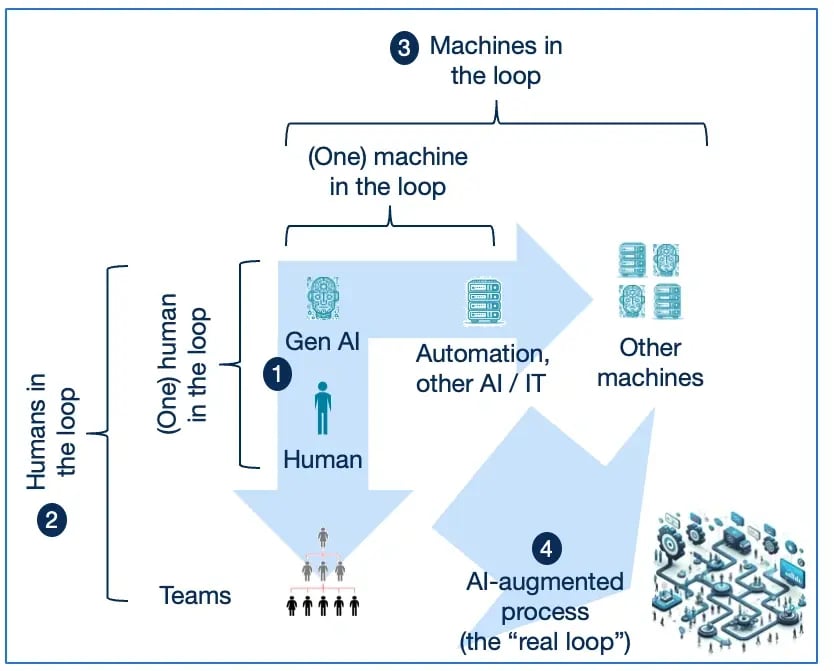
Image Source: LinkedIn
A balanced approach that blends machine efficiency with human judgment solves AI's limitations in HR. This blend, known as human-in-the-loop, creates a system that tackles the shortcomings of fully automated HR processes.
What is human in the loop AI?
Human-in-the-loop (HITL) describes a system where people actively participate in automated process operations, supervision, and decision-making. Unlike standard automation that runs independently, HITL adds human oversight at key checkpoints throughout the AI workflow. This method recognizes both AI's exceptional capabilities and its natural limits. HITL goes beyond technical implementation. It embodies a philosophical view of artificial intelligence that accepts machines can't match human experts' contextual awareness and ethical judgment. The system creates an ongoing feedback loop where AI handles routine tasks at scale, while human experts tackle complex cases, unclear data, or situations needing careful interpretation.
When to use HITL in HR workflows
HR scenarios that need judgment, context understanding, or handling incomplete information make HITL essential. HR departments should use HITL when dealing with:
- Complex decisions that need subtle handling, such as performance evaluations or sensitive employee relations issues
- Emotional intelligence requirements like addressing grievances or conducting difficult conversations
- High-stakes situations where mistakes could damage legal standing or reputation
- Novel scenarios that differ substantially from training data
Smart placement of human judgment points represents a vital design decision in HITL workflows. Too much human involvement reduces efficiency, while too little oversight can get pricey.
Benefits of HITL in compliance-heavy environments
HITL offers several key advantages in compliance-driven HR settings. It boosts regulatory compliance through detailed audit trails that show regulation adherence. These records support transparency during external reviews and internal accountability. Many AI regulations, including the EU AI Act's Article 14, require human oversight. HITL helps organizations meet legal requirements by strengthening human control throughout the AI lifecycle. The system substantially improves risk management by adding human checks at key points, which stops errors from growing. This approach proves exceptionally valuable in high-stakes environments where a single error could bring serious financial or regulatory problems.
Designing Effective HITL Checkpoints in HR Automation
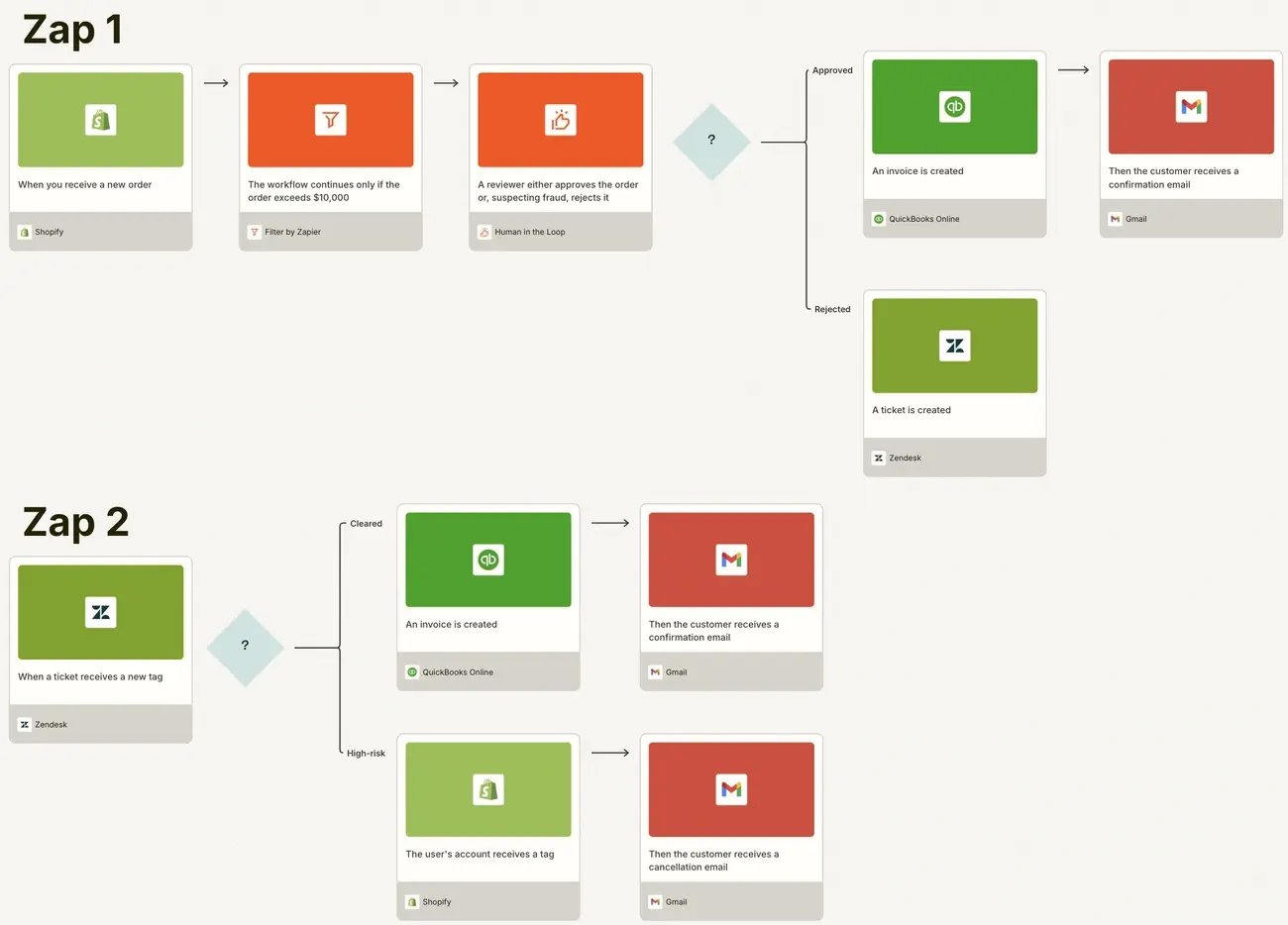
Image Source: Zapier
Setting up proper HITL checkpoints needs careful positioning of human oversight in automated HR workflows. This setup will give a solid foundation where AI and human expertise work together at the right moments.
Approval flows for sensitive HR actions
Multi-level approval workflows act as key HITL checkpoints for sensitive HR processes. These workflows ensure proper review of actions like salary adjustments, policy updates, and disciplinary measures. A well-designed approval flow helps organizations keep proper controls while getting the benefits of automation.
Confidence-based routing for ambiguous inputs
AI systems can assess their prediction accuracy through self-reflection mechanisms. The system automatically routes decisions to human experts if confidence drops below set thresholds. This approach stops errors by getting human input right when needed. Service quality stays high even in unusual cases.
Escalation paths for out-of-scope decisions
High-value or high-risk tasks need clear triggers for escalation. HITL approach needs specific rules about when to hand off tasks to humans. Good escalation gives human agents the context they need. They get access to previous interactions and AI analysis quickly.
Feedback loops to improve AI performance
AI feedback loops help systems learn continuously through data collection, analysis, insights, and evaluation. The AI gets better through direct human corrections and indirect behavioral signals. This improvement process reduces the need for human help over time.
Audit logging for traceability and compliance
Detailed audit trails track all AI and human activities to create accountability in the HITL process. These permanent records show who did what, what changed, and when decisions happened. This detailed logging is a great way to get compliance, security, and proof of ethical AI use.
Avoiding Common Pitfalls in Human-AI Collaboration
AI systems with human oversight are becoming common in HR, and avoiding implementation mistakes determines their success.
Automation complacency and delayed intervention
The "paradox of automation" creates a risky situation. AI systems that work better make humans less likely to participate, yet these same humans must act quick to fix automation failures. The numbers tell a concerning story - regular AI users score 15% lower on critical thinking tests than others. About 43% of professionals admit they don't verify AI outputs anymore, even in their expert areas. This laid-back attitude makes it harder to spot bias or ethical problems that show up in automated decisions.
Cognitive overload in human reviewers
AI handles routine tasks well, but the core team watching AI outputs face a bigger mental load while checking decisions. Studies show that while physical work decreases with AI automation, mental stress and pressure to monitor everything goes up by a lot. The brain gets too busy, which causes slower work, missed details, and more mistakes right at times that need human wisdom the most.
Training gaps in interpreting AI outputs
The human-in-loop system works only if people know what they're doing, and many HR teams lack these skills. Companies must train their staff to:
- Interpret AI recommendations
- Identify when to override system suggestions
- Develop judgment about when human expertise should take precedence
HR teams can't provide proper human oversight without continuous learning initiatives that focus on AI literacy. This oversight makes the HITL model a soaring win.
Conclusion
Human oversight combined with AI automation is a vital step forward in HR operations. This piece shows how AI solutions alone often miss the mark when decisions need careful judgment, context, or emotional intelligence. So the human-in-the-loop model stands out as a core framework, not just a temporary fix.
In spite of that, success depends on smart design. Good HITL systems strike the right balance between automated efficiency and human judgment at critical points. HR teams can save countless hours on routine tasks while making sure sensitive issues get the human touch they need.
On top of that, organizations should watch out for common issues that can hurt HITL systems. Problems like automation complacency, cognitive overload, and lack of training can reduce human oversight's value when it matters most. Ongoing skill development becomes just as vital as setting up the technical systems.
The future of HR won't be found in total automation or fighting against tech changes. Smart organizations will become skilled at smooth handoffs between AI efficiency and human judgment. This partnership recognizes both AI's amazing abilities and the unique context that HR professionals bring to complex situations.
HITL integration charts a clear path forward. It boosts compliance, cuts risk, and keeps the human connection that employees expect from HR. Setting it up needs careful planning and constant improvement, but the end result gives modern organizations exactly what they need - scale and efficiency without losing quality in key HR decisions.
Trusted by 330+ CHROs
See why global HR teams rely on Amber to listen, act, and retain their best people.
