18 min read
Last Updated: 16 September 2026
Employee retention challenges hit large Indian enterprises harder than ever. Indian IT companies lose 20-28% of their workforce each year. Nearly 70% of Indian employees are open to changing jobs within a year. Replacing a mid-level IT professional costs 1.5-2x their annual CTC. A ₹20 LPA employee's departure costs ₹15-25 lakhs.
Organizations with employee engagement and retention strategies can reduce attrition by up to 15%. We've compiled 13 proven employee retention solutions for the Indian workforce that help you tackle these talent retention challenges head-on.
AI-Powered Predictive Attrition Analytics Platforms
Machine learning models can now predict which employees will leave before they update their resumes. Predictive attrition platforms use artificial intelligence to process large amounts of workforce data and identify flight risks with accuracy levels exceeding 90%.
What Are Predictive Attrition Platforms
Predictive attrition analytics applies machine learning algorithms and statistical techniques to historical HR data. It spots complex patterns that human analysis misses. These platforms combine demographic data (role, tenure, location), engagement survey results and performance metrics. They identify who leaves, when they leave and why. The technology analyzes variables such as job satisfaction levels, employee engagement scores and subtle factors like changes in work habits to forecast potential turnover.
Advanced platforms employ multiple analytical techniques. Descriptive analytics establishes baseline metrics like turnover rate and tenure distribution. Diagnostic analytics identifies correlations, such as higher attrition under certain managers. Predictive modeling uses algorithms including logistic regression, decision trees, random forests and neural networks to forecast risk. Research shows these ensemble methods can achieve accuracy rates of 99% when trained on quality workforce data.
Key Capabilities for Indian Enterprises
InFeedo.ai exemplifies enterprise-grade attrition prediction capabilities. The platform has been deployed at Genpact with 130,000 employees and has shown that employees who participate with it are 2x more likely to stay. Genpact's CHRO notes it's the only non-financial metric driving the bonus pool for 200+ leaders.
The platform captures employee sentiments throughout their tenure and summarizes individual and team feedback. It employs AI-driven recommendations for targeted action plans. Managers value the People Trend Monitor, which helps identify which employees need attention and whether they represent top talent.
Core capabilities include risk probability scores, contributing factor analysis, department and role trend identification and time-to-risk indicators. Platforms analyze tenure and career progression, compensation history, performance data, absence trends, engagement surveys, training participation and manager changes.
Implementation Strategy
Building effective attrition models requires a five-step approach. Calculate current and previous base metrics for employee turnover and retention rates. Collect data that enables accurate metric calculation, including engagement rates, retention rate per manager, employee lifecycles and voluntary turnover patterns. Identify attrition trends by analyzing resignation data to determine which factors increase resignations. Flag employees at risk of leaving based on data analysis. Perform focused interventions that tackle root causes and personalize retention policies to departments, teams and individual employees.
ROI and Business Effect
Replacing an employee costs between 50% and 200% of their annual salary. That represents millions in preventable losses each year for organizations with 1,000 employees and 15% annual turnover. Predictive analytics can deliver 10-25% reduction in avoidable turnover. Even a 5% improvement in retention can equate to hundreds of thousands to millions of dollars in a 1,000-employee organization each year.
Real-Time Employee Engagement and Retention Software

Image Source: HR Cloud
Understanding Employee Engagement Solutions
Employee engagement software measures how connected, motivated, and committed employees are to their work and organization. These platforms have evolved from organizational climate surveys conducted every two years to team-based pulse surveys that capture employee experience live. Only 56% of employees were engaged or actively engaged in their work. This shows the urgent need for better measurement approaches.
The difference matters. Climate surveys focus on broad problems like benefits and working conditions that change rarely. Pulse surveys, by contrast, should be team-based and short (never more than 10 questions). They should focus on predictive validity, which means the employee's experience predicts future behavior or tangible business outcomes. InFeedo.ai exemplifies this approach through continuous listening that captures employee sentiments throughout their tenure and summarizes individual and team feedback instantly for targeted action.
Core Features That Drive Retention
Employee engagement platforms that work combine specific capabilities. Continuous listening tools catch culture changes between annual surveys, closer to the time they happen. Live analytics dashboards track engagement metrics and identify trends that explain employee sentiment. Recognition systems celebrate achievements through peer-to-peer acknowledgment and formal rewards programs.
InFeedo.ai integrates these features with AI-driven recommendations for targeted action plans. The platform's People Trend Monitor helps managers identify which employees need attention right away and whether they represent top talent. Organizations using InFeedo.ai report employees who participate with the platform are 2x likely to stay. One deployment across 130,000 employees made it the only non-financial metric driving the bonus pool for 200+ leaders.
How to Deploy in Large Organizations
Successful deployment requires choosing software that layers onto existing systems through native integrations and delivers value to non-technical employees in the first week. Training should be role-specific rather than feature-focused, with two-minute interactions where someone finds the tool solves a problem at hand.
Phased rollouts hosted by team or geography let you catch problems at manageable scale. A controlled pilot of 50-200 users running on production systems with live data produces more reliable signals than sandbox demos.
Measuring Engagement Impact on Retention
Track employee Net Promoter Score (eNPS), voluntary turnover rate, and retention rate as primary metrics. Engaged teams experience 41% lower absenteeism and organizations see 2.3 times higher revenue growth compared to competitors. The connection is clear: employees who feel valued through consistent engagement stay longer. This reduces turnover costs that average 50-200% of annual salary per departure.
Continuous Listening and Pulse Survey Tools
What Is Continuous Employee Listening
Annual surveys no longer capture workforce sentiment when organizations face wave after wave of disruption rather than occasional upheavals. Continuous employee listening involves ongoing, real-time data collection and analysis that goes beyond periodic surveys. It captures employee feedback on a weekly or monthly basis. Leaders at McKinsey implemented a weekly pulse survey with just two or three questions sent to all colleagues globally. The first question asked how employees were feeling through multiple-choice answers. The second prompted free-text responses. A third multiple-choice question was added when additional insight was needed about professional development or work-life balance. This approach has recorded more than one million responses from over 40,000 employees in 140 offices. Feedback from more than 90% of the firm's employees has been collected.
Essential Features for Large Workforces
Strong data management requires close partnerships among data engineers, data scientists, analysts, and translators who can combine diverse data sets quickly. Advanced analytics, including natural-language processing, help learn from integrated and unstructured data sets. InFeedo.ai exemplifies this through AI-driven sentiment analysis that captures employee feedback throughout their tenure and instantly summarizes individual and team feedback. The platform's People Trend Monitor identifies which employees need immediate attention. Managers can address concerns before they escalate into departures. Analytics translators work with leaders to shape pulse survey questions, interpret resulting data, and provide recommendations. Results shared weekly with employees restate how their contributions help identify and shape changes.
Integration with Existing HR Systems
Successful continuous listening platforms layer onto existing systems through native integrations. They combine pulse survey data with behavioral data, digital exhaust, and demographic information. InFeedo.ai integrates naturally with HR systems and enables managers to track sentiment within their teams through self-service portals. Any changes can be addressed quickly. A response rate of 70% or above is considered strong for employee pulse surveys. Rates below 50% signal either survey fatigue or low trust in the process.
Effect on Talent Retention
Continuous listening creates distinct competitive advantage in talent markets. Organizations that survey employees during transitions and act on feedback see 23% higher engagement scores than those waiting for annual surveys. Engaged employees are 59% less likely to leave. InFeedo.ai users report employees who engage with the platform are 2x likely to stay. This demonstrates how continuous listening directly influences employee retention strategies and reduces talent retention challenges across large companies.
Career Development and Internal Mobility Platforms
Two out of three workers claim they'll quit jobs when internal mobility isn't a possibility. Career development platforms become reliable for employee retention strategies. Internal talent marketplaces connect employees with opportunities inside organizations through AI-driven platforms that match skills to roles, projects, mentorships and stretch assignments. Unilever redeployed more than 8,000 employees during the pandemic using its FLEX Experiences marketplace, saving 300,000 hours of employee work.
Internal Talent Marketplace Solutions
These platforms extend beyond traditional job boards. They provide continuous access to gigs, mentorship, rotation programs and skill-building experiences that match business needs. Gartner defines them as worker-facing platforms using AI-enabled skills management to democratize development and mobility. Fuel50, 365Talents, Gloat and Hitch represent leading solutions. Each offers automated employee skills profiles, individual-specific opportunity matching and skills inference capabilities.
Organizations adopting talent marketplaces see three primary benefits: worker strengthening through transparent opportunities, internal mobility enablement as business needs move, and cultural change toward entrepreneurial thinking. InFeedo.ai complements these platforms by capturing employee aspirations through continuous listening. This enables organizations to match career opportunities with individual growth ambitions.
Skill Mapping and Career Pathing Features
Skills mapping software changes scattered knowledge about employee capabilities into structured, searchable workforce views. TalentGuard's Career Pathing software grounds internal mobility in skills trust rather than assumption. It draws every role from a curated, enterprise-validated ontology. Career pathing tools help employees visualize futures and take applicable growth steps. This improves retention and boosts internal mobility.
Organizations with skills-based approaches are 98% more likely to retain top performers and 107% more likely to place talent effectively. Employees stay 41% longer when strong internal hiring programs exist.
Creating Dual Career Tracks
Dual career ladders provide parallel advancement tracks for management and individual contributors. Technical professionals can advance without forced people management transitions. Both tracks should offer equivalent compensation bands and organizational influence. BPX showed successful implementation through flexible pathways. Employees can switch between tracks as career aspirations mature.
Retention Impact of Growth Opportunities
Internal mobility reduces the second-most common resignation reason across Indian enterprises. 73% of employees who moved internally stayed three years later, compared to 56% of those who didn't move. Organizations with strong internal mobility see 18% improvement in employee retention. This directly addresses talent retention challenges facing large companies managing the Indian workforce.
Personalized Learning and Upskilling Systems

Image Source: igmGuru
Providing learning and development opportunities ranks as the #1 employee retention strategy for organizations. Research confirms 42% of millennials are likely to leave jobs because they aren't learning fast enough. This makes personalized learning systems life-blood retention infrastructure for large Indian enterprises.
Enterprise Learning Management Platforms
Enterprise LMS platforms centralize course content and automate reporting. They help organizations learn about employee progress in distributed workforces. Leading solutions include SAP SuccessFactors Learning, which enables AI-driven learning management that balances organizational and individual skill needs through customized experiences. Docebo Learning Platform delivers customized learning to employees, customers and partners. AI automates manual tasks like enrollments and translations. Cornerstone Learn supports audit-ready compliance and structured workforce enablement to develop skills. These platforms handle tens of thousands of learners across multiple languages with deep HRIS integration.
AI-Driven Customized Learning Paths
AI transforms learning from one-size-fits-all training into adaptive paths. Each path matches a person's role, skills and career goals. Customized learning platforms analyze individual priorities and skill gaps to deliver tailored experiences. Adaptive learning adjusts content difficulty based on learner performance. Microlearning delivers concise training bursts employees can access exactly when needed. InFeedo.ai complements these systems by capturing employee learning aspirations through continuous listening. This helps organizations line up upskilling investments with individual development needs and career ambitions.
Budget Allocation and ROI Framework
Calculate LMS ROI using: (Total Benefits – Total Costs) / Total Costs × 100%. Benefits include reduced travel expenses, lower turnover costs, faster time-to-productivity and revenue gains from improved skills. Organizations see 40-60% reductions in training delivery costs through strategic LMS deployment. Replacement costs average 150-200% of salary for knowledge workers. Even small retention improvements deliver most important returns.
Connection to Employee Retention
Upskilling affects retention in a direct way. Organizations that introduce advanced upskilling programs see 93% improved talent acquisition and retention. Employees who strongly agree their organization encourages learning new skills are 47% less likely to search for another job. There's another reason: 61% of workers think upskilling is very important when deciding whether to remain at their current job.
Recognition and Rewards Automation Software

Image Source: SelectSoftware Reviews
Recognition programs represent one of the most affordable employee retention tactics available to large companies managing the Indian workforce. Employees who feel well-recognized are 45% less likely to leave after two years. Those receiving high-quality recognition that meets four strategic pillars are 65% less likely to search for other opportunities.
Digital Recognition Platform Features
Modern recognition platforms combine multiple capabilities into unified systems. Instant recognition allows employees to acknowledge contributions as they happen through e-cards, badges, and awards. Points-based reward systems let employees redeem tangible benefits like bonuses and gift cards. Social recognition feeds make appreciation visible throughout organizations and reinforce positive behaviors publicly.
Automation handles predictable milestones without manual intervention. HR and managers can pre-arrange awards for birthdays, work anniversaries, and major holidays through scheduled recognition features. Platforms deliver awards on designated dates and ensure nobody gets overlooked while reducing the administrative burden. Motivosity's analytics layer relates recognition patterns with HR data to surface which departments show recognition gaps tied to higher turnover.
Peer-to-Peer and Manager Recognition Tools
Peer-to-peer recognition reflects how work happens rather than relying on manager awareness alone. Employees can give public or private recognition anytime through desktop or mobile apps and tag acknowledgments to company values. Manager recognition tools reinforce organizational goals. Peer systems celebrate contributions in real time. InFeedo.ai complements these platforms by tracking employee sentiment shifts following recognition moments and helps organizations understand which appreciation approaches drive the strongest engagement responses.
Integration with Performance Systems
Recognition platforms integrate with HRIS systems like Workday, UKG, and SAP. Manual data entry becomes unnecessary. Communication tool integrations with Slack and Microsoft Teams enable recognition within daily workflows. This uninterrupted connection ensures recognition participation without requiring separate platform adoption.
Impact on Retention Rates
Organizations with recognition programs see 68% of HR professionals agreeing these systems affect employee retention positively. Highly engaged workforces resulting from consistent recognition experience 14% higher productivity and performance. This deepens employee engagement and retention across Indian enterprises directly.
Manager Effectiveness Training Programs
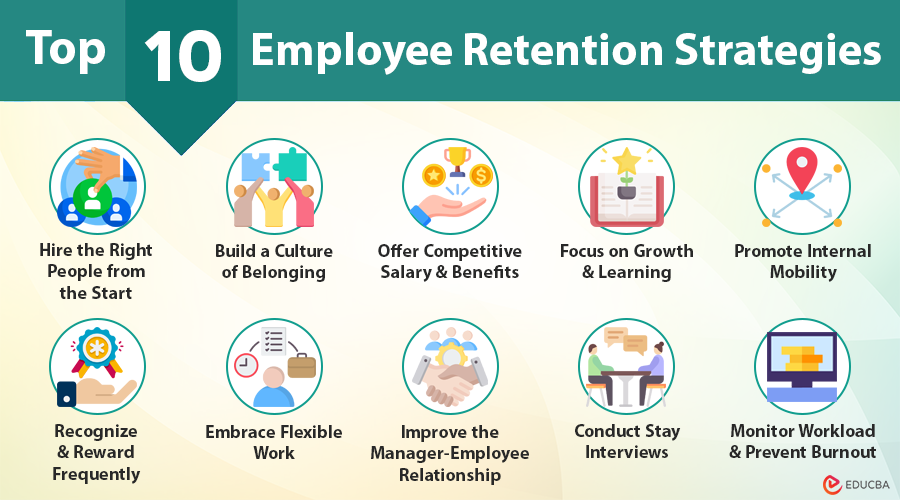
Image Source: EDUCBA
The relationship between employees and their direct managers determines whether they stay or leave, whatever other organizational benefits exist. Managers account for 70% of the variance in employee engagement scores. This makes manager quality the single most influential factor in employee retention strategies.
Why Manager Quality Drives Retention
The old adage holds true: people quit their bosses, not their jobs. Employees who trust their managers are 2.5x more likely to stay with the organization. Untrained managers create misunderstandings and poor morale. They build toxic environments. Well-trained managers build trust and solve conflict problems. They inspire team loyalty. 50% of employees leave because of their immediate manager rather than the company. Investing in manager effectiveness addresses the main driver of talent retention challenges facing large companies.
Essential Training Modules for Indian Context
Effective communication is the foundation of healthy workplace relationships. Training teaches managers to deliver constructive feedback and conduct regular check-ins. It helps them line up individual goals with company priorities. Emotional intelligence training gives leaders empathy and active listening skills. It introduces DEI principles and creates psychological safety where employees feel comfortable expressing ideas. Performance management training ensures managers understand employment law and HR policies. They learn documentation best practices that prevent favoritism and discrimination. InFeedo.ai supports these training initiatives by tracking sentiment shifts following manager interactions. This helps identify which leadership behaviors drive the strongest engagement responses.
Measuring Manager Impact on Team Attrition
Track team-specific turnover rates and high-performer resignation rates to measure manager effectiveness. High-performer resignation rates that exceed overall resignation rates signal a problem. Managers may be talent hogs holding back team members. Employee engagement scores by manager reveal whether specific leaders create engagement problems. Absenteeism patterns indicate which managers demand too much or face engagement challenges.
Scaling Training in Large Enterprises
Organizations that scale manager training use asynchronous-first design. This creates temporal flexibility for engagement during optimal working hours. Phased rollouts by geography or department catch problems at manageable scale before enterprise-wide deployment. Companies with structured leadership development programs experience 25% reduction in turnover. Scaled training investments deliver measurable retention improvements in distributed workforces.
Flexible Benefits and Compensation Management Platforms

Image Source: LinkedIn
Compensation packages drive 64% of job offer decisions among workers. About 61% think better work-life balance and benefits are just as critical. Total rewards management solutions address these expectations through integrated platforms. These platforms combine pay, benefits, wellbeing and career programs that incentivize performance while enabling retention.
Total Rewards Management Solutions
Total rewards cover five interconnected pillars: compensation (base salary, bonuses, equity), benefits (health insurance, retirement, paid leave), career development opportunities, recognition programs and work-life balance initiatives. Organizations that implement unified rewards strategies reallocate 15-20% of budgets toward higher-impact programs. They do this by eliminating redundancies. InFeedo.ai complements these platforms by capturing employee sentiment around compensation satisfaction through continuous listening. This helps organizations understand which rewards employees value most.
Flexible Benefits Administration
Benefits administration software automates enrollment, eligibility management and compliance tracking. It covers health, dental, vision, life and retirement plans. Platforms like ADP Benefits and Empyrean streamline processes through self-service portals. They reduce administrative effort while you retain regulatory compliance. Flexible benefits allow employees to tailor packages that match individual needs. This solves motivation barriers caused by health or financial worries.
Market Comparison Tools
Salary comparison ensures organizations offer competitive compensation that matches market rates. This reduces turnover caused by below-market salaries. Tools like Payfactors and CompAnalyst provide job pricing, market data analysis and compensation comparison capabilities. Robert Walters draws upon 50+ data sources and serves 361 organizations for market intelligence.
Retention Effect of Competitive Benefits
Competitive benefits packages create environments where employees feel valued and remain committed. Research shows 43% of employees cite current benefits packages as reasons they stay. Workers who believe pay is fair are 2.8x more likely to recommend their employer. This deepens employee retention strategies across large companies that manage the Indian workforce.
Exit Interview and Alumni Network Solutions

Image Source: AlmaShines
Departures don't have to mean lost investments. Strategic exit processes transform offboarding into retention tools and talent pipeline opportunities.
Structured Exit Interview Platforms
About 75% of companies employ exit interviews, though they do this ineffectively. Exit interview software automates distribution through HRIS integration and triggers surveys when departures are confirmed. HR teams don't need to chase employees. Third-party providers enable candid responses through confidentiality and trained interviewers. Timing is important. Surveys conducted within the first week of resignation capture honest feedback. Optional interviews 30-60 days post-departure work better as former employees feel freer to speak. Automated sentiment scoring surfaces language patterns behind attrition drivers and turns responses into practical insights.
Alumni Engagement Systems
Formal alumni programs exist in 75% of companies with 10,000+ employees. Simple actions like newsletters or LinkedIn messages maintain relationships without heavy resources. Platforms include alumni databases, communication tools, networking features and career resources.
Boomerang Hiring Programs
Boomerang employees constitute 28% of new hires. Organizations save about ₹42 lakhs per rehire through reduced headhunter fees and 50% lower training investment. These returning employees demonstrate 44% higher retention rates after three years.
Learning from Attrition Data
InFeedo.ai tracks sentiment patterns preceding departures. Organizations can identify systemic problems this way. Filtering exit data by demographics reveals microcultures within workforces and allows targeted interventions.
Wellbeing and Mental Health Support Platforms

Image Source: Samvedna Care
Wellbeing programs supporting physical, mental, emotional, and financial health reduce burnout and strengthen engagement. They improve retention in companies of all sizes.
Employee Wellbeing Solutions for India
Employee wellbeing solutions extend beyond physical wellness into mental, emotional, financial, and community support. These platforms include mobile apps, wearable devices, and dashboards that track health status. They offer on-demand instructional content, hosted events, and rewards. Gamification elements like leaderboards and challenges help employees participate. Reporting tools help organizations gage program effectiveness. Vantage Fit, Wellable Wellness Platform, and Personify Health illustrate solutions that enable activity tracking and wellness challenges. They provide health assessments and integration with wearable devices.
Mental Health Support Integration
Employee assistance programs provide 24/7 access to mental health services and counseling. They offer financial guidance and life management support. Optum's Emotional Wellbeing Solutions demonstrate measurable outcomes. 80% of people report feeling more confident when coping with issues. The program reduces absenteeism by 2.3 days and improves presenteeism by 4.2 days. Depression and anxiety cost the world 12 billion working days each year. Lost productivity amounts to $1 trillion.
Measuring Wellbeing Impact on Retention
Employees who strongly agree their organization cares about wellbeing are 54% less likely to search for new jobs. Organizations that prioritize wellbeing experience lower burnout and stronger engagement. They achieve greater retention. InFeedo.ai tracks sentiment shifts around wellbeing initiatives. This helps organizations understand which programs generate the strongest engagement responses.
Scaling for Distributed Workforces
Digital wellness platforms deliver programs through virtual services that are available anytime and anywhere. These systems address isolation challenges. 23% of remote workers struggle with loneliness. Asynchronous access and mobile-first design boost adoption in different time zones and locations.
HR Analytics and Workforce Planning Tools

Image Source: OrgMapper
Workforce data scattered across payroll, HRIS and engagement systems becomes strategic intelligence when analytics platforms transform it into retention insights. HR analytics turns workforce data into useful information, tracking metrics like turnover, engagement, time-to-hire and performance, then connecting those patterns to business outcomes.
People Analytics Platform Capabilities
Modern platforms combine data from recruiting, performance, payroll and surveys into unified views. SAP Analytics Cloud helps with extended planning and analysis, lining up workforce plans with financial and operational strategies. Platforms like Visier, One Model and Crunchr offer immediate dashboards covering turnover and engagement while supporting in-depth analytical analysis using advanced statistical methods and AI modeling. InFeedo.ai complements these systems by capturing employee sentiment in real time, enriching quantitative workforce data with qualitative insights that explain the 'why' behind attrition patterns.
Attrition Risk Dashboards
Flight risk scores identify employees who may be at risk of leaving. They analyze factors like tenure and engagement survey responses to flag potential departures. Immediate dashboards provide up-to-date metrics on employee performance, engagement and satisfaction. HR teams can make informed decisions quickly. Attrition risk analysis using predictive modeling examines historical data to predict attrition risks before they occur.
Predictive Workforce Models
Machine learning models far outperform conventional techniques. Artificial Neural Networks achieve 99% predictive accuracy compared to 74% for logistic regression. Organizations applying predictive HR analytics achieved a 20% reduction in turnover rates and a 30% improvement in retaining high-potential employees. Attrition forecasting predicts which roles or departments face turnover risk based on tenure, engagement scores and historical patterns.
Evidence-Based Retention Strategies
Predictive analytics and flight risk models help HR detect early signs of disengagement. They provide opportunities to intervene before top talent departs. InFeedo.ai makes this proactive approach possible by tracking sentiment shifts and providing AI-driven recommendations for targeted action plans. Retention budgets focus on high-impact interventions rather than reactive responses.
Performance Management and Feedback Systems
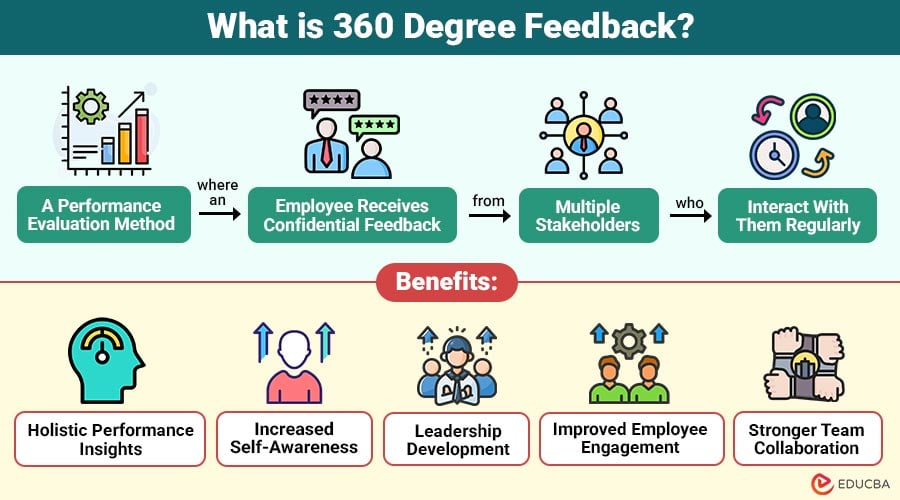
Image Source: EDUCBA
Annual performance reviews satisfy only 2% of CHROs. Large companies managing the Indian workforce need a performance management overhaul.
Continuous Performance Management Solutions
Continuous performance management replaces annual evaluations with ongoing feedback, coaching and goal tracking. Employees receiving consistent, practical feedback experience 3.6x increase in engagement and improve employee retention strategies. Organizations implementing continuous feedback systems demonstrate 58% better results in engaging the entire workforce compared to 37% for annual review companies. 92% of employees want feedback more often than just once a year. Performance conversations need to happen more frequently to retain talent.
360-Degree Feedback Integration
Multi-rater feedback collects input from peers, managers and direct reports. This reduces bias and provides complete performance views. Participants in 360 feedback programs connected to coaching improve performance by 10%. Organizations using 360 feedback as part of development see 23% higher engagement scores and 18% lower turnover among high performers.
Goal Alignment and Transparency
Employees with clear, arranged goals are twice as likely to be engaged at work. Individual objectives that connect to organizational priorities help employees understand how their contributions matter.
Effect on Employee Retention
Companies providing regular feedback report 14.9% lower turnover rates. InFeedo.ai tracks sentiment changes following performance conversations. This helps organizations understand which feedback approaches drive retention across the Indian workforce.
Stay Interview and Proactive Retention Frameworks

Image Source: iMocha
Organizations miss critical intervention windows when 62% of employees discuss leaving with colleagues before resigning. Stay interviews and proactive retention frameworks address this by identifying flight risks early and enable targeted action before departures occur.
Structured Stay Interview Methodology
Stay interviews are proactive conversations between managers and employees. They prevent turnover by addressing concerns before they escalate. Exit interviews capture feedback too late. Stay interviews uncover what motivates employees to stay and what might prompt them to leave. Effective methodology requires five essential questions: what employees look forward to daily, what they're learning, why they stay, when they last considered leaving, and what would improve their experience. Managers should listen 80% of the time, probe deeper with follow-up questions and take detailed notes. InFeedo.ai boosts this process by tracking sentiment patterns during stay conversations. This helps identify which concerns require immediate intervention.
Flight Risk Detection Systems
Flight risk assessment combines quantitative HR data with qualitative insights from stay conversations. 75% of industries report increased turnover among high-potential employees. Early detection becomes essential for employee retention strategies. Flight risk models analyze compensation, tenure, performance ratings, engagement survey responses and career development opportunities to assign risk scores. Organizations then use flight risk matrices that prioritize interventions based on employee value and departure probability.
Automated Retention Action Plans
Structured retention planning improves workforce stability by up to 30%. Automated platforms route retention cases through approval workflows, from manager recommendations to HR validation and leadership sign-off. Systems suggest relevant retention strategies like salary adjustments or flexible schedules based on employee data and risk triggers. Built-in policy rules ensure compliance with budget limits and eligibility requirements.
Success Metrics and KPIs
Track flight risk prediction accuracy by comparing model forecasts against actual turnover outcomes. Monitor retention rate improvements, high-performer resignation rates and time-to-intervention for at-risk employees. Organizations that implement proactive retention frameworks through stay interviews see measurable improvements in talent retention across large companies with Indian workforce.
Conclusion
Tackling employee retention across large Indian enterprises doesn't require implementing all 13 solutions at once. Begin by understanding where your organization bleeds talent most. Use predictive analytics and continuous listening to identify the mechanisms, then layer in targeted interventions that address your specific attrition drivers.
InFeedo.ai provides a solid foundation by combining predictive attrition analytics and continuous listening with AI-driven retention recommendations in one platform. Organizations using it report 2x higher retention among engaged employees.
Pick two or three solutions that match your biggest retention gaps and measure their effect. Then expand from there. Small, informed improvements compound into most important talent retention gains over time.
Key Takeaways
Large Indian enterprises face critical retention challenges, with IT companies losing 20-28% of their workforce annually and replacement costs reaching 1.5-2x annual salary. However, strategic retention solutions can reduce attrition by up to 15%.
Essential retention solutions that deliver measurable impact:
• AI-powered predictive analytics identify flight risks with 90%+ accuracy, enabling proactive interventions before employees resign—organizations see 10-25% reduction in avoidable turnover.
• Continuous listening and pulse surveys capture real-time sentiment, replacing outdated annual reviews. Employees who engage with these platforms are 2x more likely to stay.
• Internal mobility and career development platforms reduce turnover by 18%. Employees who move internally stay 73% longer (three years) compared to 56% who don't.
• Manager effectiveness training delivers 25% lower turnover since managers account for 70% of engagement variance and employees who trust their managers are 2.5x more likely to stay.
• Recognition programs create 45% lower attrition after two years. Well-recognized employees meeting strategic recognition pillars are 65% less likely to actively job search.
• Competitive benefits and compensation drive 64% of job decisions. Employees believing pay is fair are 2.8x more likely to recommend their employer, strengthening retention.
The winning approach: Don't implement all solutions at once. Start with predictive analytics and continuous listening to identify your specific attrition drivers, then layer targeted interventions that address root causes. Data-driven improvements compound into significant retention gains over time.
FAQs
Q1. What are the most effective employee retention strategies for large organizations? The most impactful strategies include AI-powered predictive analytics to identify at-risk employees, continuous listening through pulse surveys, internal mobility programs, manager effectiveness training, and recognition systems. Organizations implementing these approaches see 10-25% reductions in turnover, with employees who engage with retention platforms being twice as likely to stay.
Q2. How can companies predict which employees are likely to leave? Predictive attrition platforms use machine learning to analyze workforce data including tenure, engagement scores, performance metrics, and behavioral patterns. These systems can identify flight risks with over 90% accuracy, allowing organizations to intervene proactively before employees resign. Advanced models achieve up to 99% accuracy when trained on quality data.
Q3. Why do managers play such a critical role in employee retention? Managers account for 70% of the variance in employee engagement scores, making them the single most influential factor in retention. Research shows that 50% of employees leave because of their immediate manager rather than the company itself. Employees who trust their managers are 2.5x more likely to stay, which is why manager training programs can reduce turnover by 25%.
Q4. How do internal mobility programs improve employee retention? Internal mobility platforms allow employees to explore new roles, projects, and development opportunities within the organization. Employees who move internally stay 73% longer (three years) compared to 56% who don't move. Organizations with strong internal mobility programs see 18% improvement in retention rates because they address career growth, the second-most common reason for resignation.
Q5. What impact do recognition programs have on reducing employee turnover? Well-designed recognition programs significantly reduce attrition, with recognized employees being 45% less likely to leave after two years. Employees receiving high-quality recognition that meets strategic criteria are 65% less likely to actively search for new opportunities. Recognition programs create measurable retention improvements because they make employees feel valued and appreciated for their contributions.
Trusted by 330+ CHROs
See why global HR teams rely on Amber to listen, act, and retain their best people.
