12 min read
Last Updated: 24 November 2025
A surprising 12% to 28% of organizations still use paper-based methods for data management. AI workflow automation provides a promising solution to modernize these outdated HR processes.
AI adoption in HR has grown rapidly, but governance frameworks lag behind implementation. AI technology speeds up hiring processes, matches candidates better, and streamlines administrative tasks to make HR departments more productive. Organizations that implement strong governance measures to protect efficiency and compliance see the best results with AI workflow automation platforms.
AI-driven HR decisions can create legal, ethical, and reputational risks without proper oversight. A recent survey reveals that 65% of compliance professionals believe automated manual processes would reduce risk management complexity and costs. AI compliance ensures these tools follow existing laws, emerging regulations, ethical standards, and organizational policies.
This piece shows you how to design AI workflow automation systems for HR that build trust while prioritizing compliance. We'll provide a detailed guide to implementing AI that increases rather than replaces human judgment in HR processes, covering human-in-the-loop design approaches, governance frameworks, and regulatory alignment.
Why HR Needs AI Workflow Automation Now
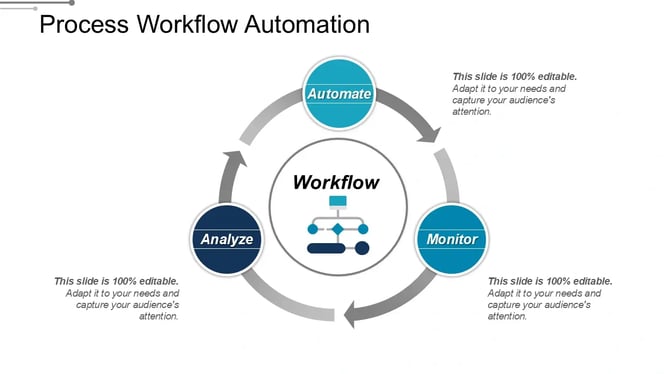
Image Source: SlideTeam
HR departments face growing pressures as organizations expand, yet many still use outdated manual processes that create bottlenecks and slow things down. Old-school approaches no longer work well, and AI technologies are advancing quickly. The time has come for HR teams to accept new ideas in workflow automation.
Manual HR workflows and their limitations
Today's HR departments often drown in paperwork, spreadsheets, and email chains. These manual processes create some of the most important challenges that affect how well organizations work:
Administrative tasks eat up too much time. HR professionals spend hours each week answering the same questions about leave balances, benefits enrollment, and policy approvals. This burden keeps HR teams from working on what really matters - workforce planning and getting employees to participate.
The work also comes with big error risks. Wrong data entries, calculation mistakes, and lost documents can spell trouble, especially in payroll processing. One study points out that "Many organizations are maintaining tons of paperwork with the manual payroll system, which causes a higher risk of human error".
Manual approaches break down as companies grow. Small businesses might handle manual HR tasks at first, but problems show up quickly as the workforce expands. What works for a 10-person startup becomes a nightmare for a 200-person company, and HR teams can't keep up.
Companies also face higher operating costs from doing work twice, security risks from poor data protection, and frustrated employees who wait too long for responses.
What is AI workflow automation in HR?
AI workflow automation in HR employs artificial intelligence to turn repetitive, manual HR tasks into smooth digital workflows. Companies can set up systems that automate these processes instead of chasing forms through email or managing scattered spreadsheets.
These solutions employ machine learning and natural language processing to help with HR work like analysis, documentation, and case handling. HR professionals can then focus on strategic, people-centered activities instead of paperwork.
More HR leaders are jumping on the AI bandwagon. GenAI use doubled from 19% to 38% between June 2023 and January 2024. By 2025, 80% of organizations will use AI just for workforce planning.
The results speak for themselves. Studies show that 85% of employers using automation or AI for HR activities save time or work faster. Companies that use AI workflow automation can cut processing time from 40-45 days to just 1-2 days for some tasks.
Examples of AI workflow automation in employee relations
Employee relations offers some exciting chances to use AI workflow automation:
Case handling and documentation: AI can analyze cases, create interview questions, and write case summaries while keeping everything confidential. Employee relations specialists can handle more cases quickly without cutting corners.
Policy management: AI makes policy work easier by automating how HR policies are created, updated, and shared. This cuts down on paperwork and helps companies follow legal rules better.
Analytics and insights: Leaders can spot potential issues early because AI pulls together employee feedback and predictive analytics. To name just one example, AI-powered tools like Employee Experience Insights can process thousands of support requests automatically.
Intake and self-service: AI assistants and chatbots answer employee questions instantly, any time of day, which makes communication better for everyone. Palo Alto Networks saved thousands of support hours each quarter for their 15,000 employees by using an AI Assistant for routine HR requests.
Onboarding optimization: loanDepot showed how AI can change onboarding completely. They cut their software and systems processing time from 3-5 days to under five minutes.
HR departments that use AI workflow automation gain a real edge as workplace needs change. They deliver better experiences for employees, run more efficiently, and stay compliant all at once.
Compliance Risks in AI Workflow Automation for HR
AI workflow automation brings great benefits to HR departments but creates several compliance risks. Companies using these technologies need to tackle these challenges to stay legally compliant and keep their employees' trust.
Bias amplification in case triage and resolution
AI systems can make existing biases worse. These tools learn from historical data that contains human biases, which can result in discriminatory outcomes in key HR processes. AI's bias comes from the human behavior it copies, including training datasets, algorithm design, and human decisions during development.
Two main cognitive biases show up often in AI-powered HR systems:
- Similar-to-me bias: Systems prefer candidates or employees who look like past successful hires
- Stereotype bias: Fixed points of view based on social categories like ethnicity, age, or gender
These biases can demonstrate themselves through unequal case grouping or inconsistent suggestions in employee relations. AI systems trained on neutral data can make random connections—like picking candidates named "Jared" as successful—which guides wrong decisions.
Privacy concerns with employee data processing
AI workflow automation platforms handle sensitive employee information, which creates major privacy issues. HR departments that don't set strict limits risk using sensitive data wrongly, leading to compliance failures.
Privacy risks in AI-powered HR workflows include:
Data collection overreach: AI HR tools gather information way beyond what employees expect or agree to, such as keystrokes, communication patterns, and off-duty social media activity. This mix of work and personal life hurts trust.
Data security risks: Large amounts of sensitive employee data in one place attract cybercriminals. Global laws like GDPR and CCPA give employees rights over their personal information use, including automated processing and AI decisions.
Data repurposing concerns: Using old datasets to train AI models can break privacy laws if the data wasn't meant for that purpose, breaking GDPR's purpose limitation rule. Companies that don't put proper safeguards in place face big fines, as BNSF Railway's $6.3 million settlement for breaking biometric privacy laws shows.
Opaque decision-making and lack of explainability
The "black box" problem creates another big challenge. Advanced AI systems make accurate predictions but don't explain their reasoning. This makes it hard to check or fix errors effectively.
This lack of clarity becomes a problem when candidates or employees question results. HR teams that can't explain why an AI system rejected a resume or gave a specific performance rating face frustration and claims of unfairness. Without doubt, this creates distrust and makes defending decisions difficult.
Retaliation risks from misclassified cases
Poor AI systems can increase retaliation risks by wrongly grouping cases, missing documentation signals, or flawed sorting. These mistakes can delay needed action and let problems get worse.
For employee relations, AI should help spot issues early instead of making decisions automatically. Organizations must have humans check AI recommendations before taking action.
AI workflow automation software can streamline HR processes greatly, but organizations must spot and reduce these compliance risks. Without good governance frameworks, these platforms can make bias worse, put privacy at risk, make unexplainable decisions, and increase retaliation exposure—hurting the efficiency they promise to deliver.
Designing a Compliant AI Workflow Builder Architecture
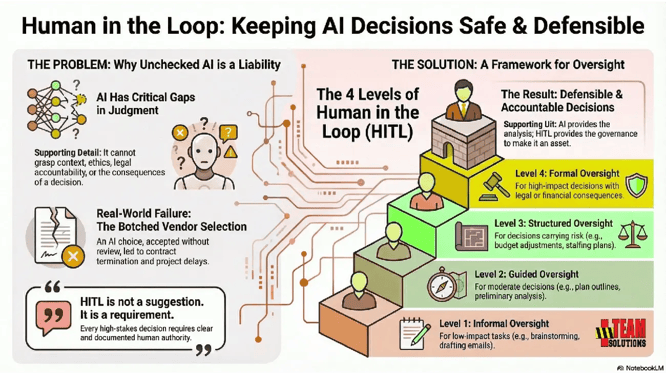
Image Source: TEAM Solutions
AI workflow automation needs a solid architectural design to work properly. Organizations must balance efficiency with legal and ethical requirements. They need three vital elements: human oversight, detailed audit trails, and data security practices.
Human-in-the-loop (HITL) design for decision control
Human-in-the-loop means people actively take part in running, supervising, or making decisions in automated processes. This approach treats AI as a teammate that has specific duties rather than something that replaces human judgment.
HITL design gives several big advantages:
-
Better accuracy and reliability - Experts can verify outputs and fix errors, which helps organizations improve system performance by a lot. Research shows that human oversight at key checkpoints raises error detection to 91.5%.
-
Ethical accountability - People review AI recommendations before they're used, so algorithms don't carry all the responsibility. This oversight will give a way to follow rules like the EU AI Act, which requires human supervision for high-risk systems.
-
Transparency and trust - Companies using HITL see 67% higher adoption rates because employees know humans still make the final call on important decisions.
HITL design works by sorting outputs based on risk level. High-risk cases go to human reviewers while low-risk decisions happen automatically. Take an employee relations case about discrimination - it would need human review. A simple leave request could be processed by the system.
Auditability and traceability of AI outputs
Auditability means keeping detailed logs and documents that let people trace and verify how AI systems work. HR teams can't figure out who's responsible without this capability, especially in sensitive areas.
A newer study, published by IBM shows 78% of organizations using AI think transparency and auditability are top priorities. As AI becomes part of core HR operations, being ready for audits turns from optional to essential.
AI workflow systems need these key parts to be auditable:
- Data lineage tracking - Recording where data comes from and how it's used
- Model versioning - Noting what changes happened, who made them, and why
- Decision logging - Tracking inputs and results
- Override mechanisms - Recording when people step in to change AI decisions
These steps turn hard-to-understand "black box" models into systems people can check, which builds trust and meets regulatory requirements.
Data minimization and secure storage practices
Data minimization is the life-blood of responsible HR data management. You should only collect information you really need. This approach helps follow rules like GDPR and makes operations smoother while reducing security risks.
Start by checking all HR data you collect and process now. Look for duplicate information, data you're keeping just in case, or data that doesn't serve any current purpose.
After this review, rebuild HR processes with data minimization in mind. Question whether you truly need each piece of information you ask for. Set up HR systems to collect only required data and give staff access based on their roles.
Security-wise, encrypt all sensitive HR information using current standards like AES-256. Keep files off local desktops or shared drives where unauthorized people might access them.
These architectural elements - human oversight, auditability, and data minimization - help create AI workflow automation systems that work well and follow the rules. HR teams can invent new solutions while staying within clear ethical boundaries.
Governance Frameworks for AI Workflow Automation Platforms
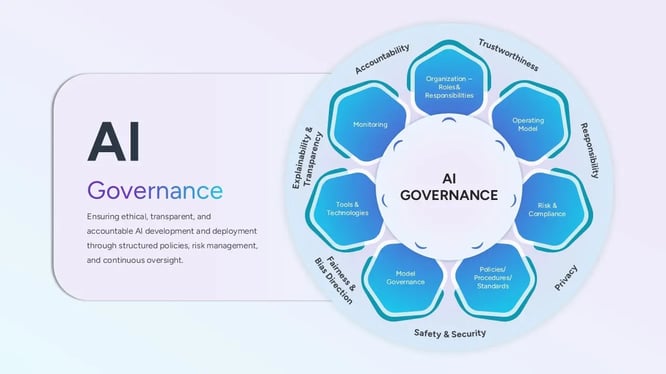
Image Source: SlideBazaar
Strong governance frameworks act as the backbone of responsible AI workflow automation in HR. Companies that put these frameworks in place protect employee data better, stay compliant, and keep trust while getting the efficiency benefits of automation.
Cross-functional governance committee setup
A dedicated AI governance committee with members from different departments provides key oversight for HR automation systems. The best committees have stakeholders from HR, Legal, IT, Operations, Compliance, and DEI teams. Employee or union representatives make governance more legitimate in unionized settings.
The committee needs to handle several key tasks:
- Review new AI use cases before deployment
- Check performance metrics and incident reports regularly
- Monitor bias testing and adverse impacts
- Create clear accountability structures for AI outcomes
Companies like Accenture and Deloitte have created complete governance models that focus on transparency, accountability, and system audits. These committees work like an "AI HR Council" that approves new AI systems and checks how they perform.
Policy documentation and escalation paths
Complete policy documentation is the life-blood of good governance. Clear AI policies help employees understand how they should use AI tools in their work. Teams across departments can then use these systems the right way.
Documentation needs to spell out:
- AI usage locations and methods throughout the company
- Ways to check fairness, accuracy, and reliability
- Steps to request accommodations or human review
- Rules for telling candidates and employees about AI usage
Companies must also document clear escalation paths when AI outputs raise fairness concerns. This means keeping track of overrides and reasons behind them. Companies risk legal issues and lose employee trust without this organized approach.
Vendor accountability and model transparency
Companies must hold third-party vendors providing AI workflow automation platforms to high standards. Vendors should explain their model's purpose, data sources, update schedule, and limits. These requirements belong in contracts that spell out:
- The company's rights to audit or review
- Rules for bias testing and performance reports
- Security and data handling duties
- Who takes responsibility for errors or breaches
Vendor transparency isn't optional anymore. Industry experts say "Regulatory scrutiny, employee trust, and brand risk are forcing providers to operationalize responsible AI across their products rather than bolt it on". Companies should also make sure AI tools explain their outputs and vendors can describe how their models make decisions.
Strong governance frameworks let companies control AI workflow automation benefits while keeping the human oversight needed for responsible HR technology use.
Aligning with Global and Regional AI Regulations
Organizations face a tough challenge as they try to navigate regulations while implementing AI workflow automation in HR. Governments worldwide are setting up guidelines for algorithmic decision-making. Understanding compliance requirements is crucial for successful deployment.
EEOC and Title VII compliance in automated decisions
The Equal Employment Opportunity Commission (EEOC) has made it clear that employers can't just trust vendor claims about their AI tools' Title VII compliance. Yes, it is the employer who might be liable if an AI system causes discrimination, whatever company developed the tool. The EEOC's technical assistance states that disparate impact analysis covers algorithmic decision-making tools.
Companies should use the "four-fifths rule" to check if their AI workflow automation platforms create negative impacts. This rule says discrimination might exist if one protected group's selection rate falls below 80% of another group's rate. The employer stays responsible under Title VII even when a vendor runs the selection process.
EU AI Act requirements for high-risk HR systems
The EU AI Act puts most HR-related AI applications in the "high-risk" category that needs strict oversight. This covers AI used in hiring, selection, promotions, task assignments, and performance reviews. Companies must set up full risk management systems and make sure humans oversee AI-driven decisions.
Organizations using high-risk AI systems must take proper technical steps to ensure the AI follows instructions. They need qualified staff supervision and compliance monitoring. The core team must develop "AI literacy" to oversee these high-risk systems properly.
California and Colorado AI disclosure mandates
State regulations are changing faster. Colorado's groundbreaking AI law (SB 205) takes effect February 2026. It requires developers to use "reasonable care to avoid algorithmic discrimination". The law defines systems that affect employment decisions by a lot as "high-risk." Companies must create risk management programs and review impacts.
California rules say employers must keep "automated-decision system data" records for at least four years. These include information from AI applications. This means documenting any data used to develop or customize AI for job-related decisions.
Both states focus on transparency. Colorado requires public disclosure when AI helps make high-risk decisions. People negatively affected must receive detailed notices. Companies need to prepare for stricter disclosure and documentation rules as more states create similar laws.
Building Trust Through Transparency and Oversight
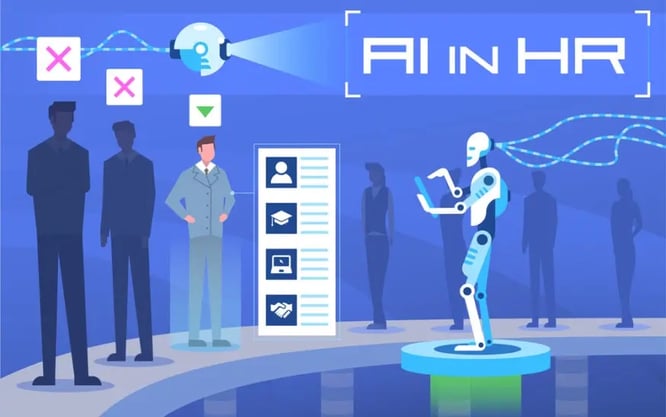
Image Source: Rochester Business Journal
AI workflow automation's success relies on more than technical excellence—organizations must build employee trust through well-planned transparency. Companies that encourage open communication about their AI systems see better adoption rates and compliance results.
Employee notification and consent mechanisms
Clear communication sits at the heart of transparent AI deployment. Research shows an interesting contrast: about 75% of users feel comfortable with AI documentation, but this drops to 55% if they get overwhelmed by technical details. A user-friendly consent process should explain data processing simply. Companies should use multiple approaches that blend verbal explanations, digital education, and printed materials while offering clear opt-out choices.
Bias audits and fairness reporting
Bias testing serves as the life-blood of ethical AI workflow automation platforms. AI systems change as they interact with new data, and tools that start without bias might develop unfair patterns over time. NYC Local Law 144 requires yearly audits of automated employment decision tools. Employers must prove their systems treat all protected characteristics fairly. These audits should look at both negative effects and benefits—measuring if the tool actually improves decision quality.
Training HR teams on interpreting AI outputs
The best AI workflow automation software still needs well-trained humans to operate it. Good training programs give HR professionals real-life scenarios: "You receive a biased-looking shortlist from an AI tool; what do you do?". Organizations that mix technical lessons with practical governance training help their HR teams maintain proper oversight while using automation wisely.
Conclusion
AI workflow automation gives HR departments a chance to transform their outdated processes while following regulations. This piece explores how companies can use AI systems to boost efficiency without compromising ethical standards or legal requirements.
Companies need AI workflow automation because manual HR work creates bottlenecks and errors. Teams can't focus on strategy when buried in paperwork. AI automation proves promising, as 85% of employers report saving substantial time after putting it to use.
These benefits come with challenges that need attention. Bias can grow larger, employee data privacy faces risks, and unclear decision-making breaks trust. Companies should find the right balance between automation and protective measures.
Human-in-the-loop design is the life-blood of responsible AI workflow systems. Teams should treat AI as a teammate rather than a replacement. Human judgment stays central to key decisions. On top of that, detailed audit trails and data protection methods make systems more secure and compliant.
Governance frameworks give these systems the structure they need. Teams can prevent compliance issues through cross-functional committees, clear policies, and vendor accountability. These frameworks must adapt as regulations change across different regions.
The rules keep changing faster in the digital world. Companies using AI in HR must follow Title VII rules, EU AI Act requirements, and state laws from Colorado and California. Staying current with these regulations needs constant alertness.
Trust determines whether AI implementation succeeds. Companies should notify employees, check for bias regularly, and train staff properly to create transparency. Even the best AI workflow automation fails without employee trust in its fairness.
Companies that guide themselves through these challenges will lead in a competitive market. Careful planning helps create AI workflow systems that balance efficiency, compliance, and trust. This approach builds lasting value for both employers and workers.
Key Takeaways
Building compliant AI workflow automation for HR requires balancing efficiency gains with robust governance frameworks that protect both legal compliance and employee trust.
• Implement human-in-the-loop design - Keep humans in control of critical decisions while using AI as a teammate, not replacement, to maintain accountability and improve accuracy by 91.5%.
• Establish cross-functional governance committees - Include HR, Legal, IT, and Compliance teams to oversee AI deployment, conduct bias audits, and ensure transparent decision-making processes.
• Prioritize data minimization and audit trails - Collect only necessary employee data, encrypt sensitive information, and maintain comprehensive logs to enable regulatory compliance and system transparency.
• Stay ahead of evolving regulations - Comply with EEOC guidelines, EU AI Act requirements, and state-level mandates like Colorado's SB 205 through proactive legal alignment and documentation.
• Build trust through transparency - Provide clear employee notifications, conduct regular bias testing, and train HR teams to interpret AI outputs while maintaining ethical oversight.
The most successful AI workflow automation implementations combine technological innovation with strong ethical foundations, creating systems that enhance HR efficiency while preserving the human judgment essential for fair and compliant decision-making.
FAQs
Q1. How can AI workflow automation benefit HR departments? AI workflow automation can significantly improve HR efficiency by streamlining repetitive tasks, reducing errors, and freeing up time for strategic activities. Studies show that 85% of employers using AI for HR report time savings and increased efficiency.
Q2. What are the main compliance risks associated with AI in HR? The primary compliance risks include bias amplification in decision-making, privacy concerns with employee data processing, lack of transparency in AI-driven decisions, and potential misclassification of employee relations cases leading to retaliation risks.
Q3. What is human-in-the-loop (HITL) design and why is it important? HITL design involves active human participation in AI-driven processes. It's crucial because it enhances accuracy, ensures ethical accountability, and builds trust. Organizations implementing HITL achieve 67% higher adoption rates for AI systems.
Q4. How can organizations ensure their AI workflow automation aligns with regulations? Organizations should stay updated on regulations like the EEOC guidelines, EU AI Act, and state-level mandates. They should conduct regular bias audits, maintain comprehensive documentation, and implement strong governance frameworks to ensure compliance.
Q5. What steps can HR teams take to build trust in AI workflow automation? To build trust, HR teams should implement clear employee notification and consent mechanisms, conduct regular bias audits, provide transparent reporting on AI system performance, and train HR staff on properly interpreting and overseeing AI outputs.
Trusted by 330+ CHROs
See why global HR teams rely on Amber to listen, act, and retain their best people.
