7 min read
Last Updated: 27 November 2025
Digital HR transformation has become crucial for survival as workplaces change faster than ever. The path to successful implementation remains challenging, even though employees managed an average of 2.5 simultaneous changes back in 2012. This complexity has grown over the last several years.
The stakes couldn't be higher for HR departments facing digital transformation challenges. Statistics show 50% of jobs could disappear over the next 20 years due to automation. Organizations that adopt digital HR strategies are 1.8x more likely to achieve productivity growth. These numbers make the transformation impossible to ignore. Digital HR transformation goes beyond implementing new technologies - it requires a complete rethinking of HR's value delivery.
This piece will get into why most digital HR projects fail and provide solutions to fix these common pitfalls. We'll explore practical solutions that deliver ground results by lining up with business goals and building a digital-first culture. The benefits speak for themselves: companies using AI assistants see an average ROI of 55% within six months. Organizations with strong digital onboarding processes show an 82% improvement in retention. These results prove that successful implementation brings substantial rewards.
Why digital HR transformation often fails
Organizations have invested billions in HR technology, yet digital transformation initiatives rarely meet expectations. BCG's research shows that 80% of digital transformation efforts don't deliver what they promise. A study by Josh Bersin reveals that 42% of organizations see their HR systems implementation as a complete or partial failure.
Business goals and HR strategies don't match
HR digital projects often fail because they don't connect with the company's bigger picture. HR leaders spend a lot of time arranging strategies, but the business team remains unaware of how HR priorities affect company goals. This creates a real challenge - money goes to projects the business doesn't care about. HR's influence and budget start to shrink when their work doesn't clearly tie to business results like better sales or state-of-the-art solutions.
Too much focus on tech, not enough on people
Companies keep making a basic mistake. They put too much emphasis on technical tools instead of understanding what changes mean for their staff. Many see digital transformation as just a tech upgrade rather than a complete organizational shift. So when these projects stumble, it's usually because they chase fancy tools instead of putting employees first. A newer study, published in 2023 by researchers found that 70% of digital projects fail exactly because they focus too much on technology and ignore business processes and people.
Staff and managers push back against changes
Employee pushback stands as one of the most important roadblocks to successful transformation. Gartner's research shows that 46% of employees resist new HR technology because they:
- Fear losing their jobs and security
- Don't get enough training and support
- Worry about privacy and data protection
- Feel concerned about losing human interaction
People resist because they're uncertain how these changes will affect their daily work and job security.
Old HR processes don't fit the digital age
Just turning paper forms into digital ones doesn't improve anything. Many companies make a crucial mistake - they buy new technology but don't redesign how work gets done. Success requires a fresh look at processes before adding automation. On top of that, companies often underestimate how long projects will take, which leads to rushed rollouts without proper planning.
Cultural and leadership gaps in digital HR
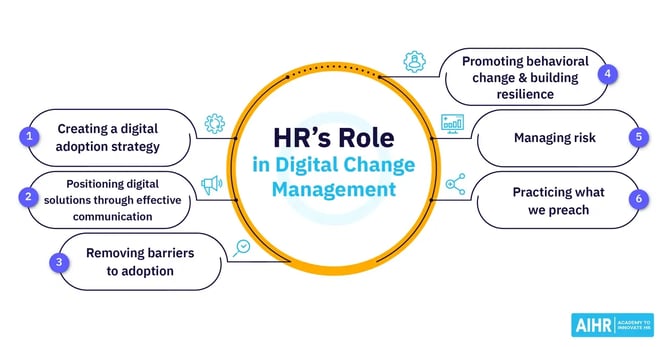
Image Source: AIHR
Successful digital HR initiatives need more than just technology—they demand a cultural transformation. BCG research shows that 70% of digital transformations fail, mainly due to management and employee resistance or indifference. This shows a key gap in how organizations handle these initiatives.
What is digital HR transformation really about?
Digital HR transformation goes way beyond new software implementation. It redefines how HR creates value through a complete overhaul of processes, culture, and mindset. True transformation changes HR's role from administrative support to strategic driver. Organizations need to rethink their culture to support change. Many companies still focus only on technology and miss the human elements that lead to success.
The role of leadership in driving change
Leaders must start the transformation by creating a clear vision that links people strategy to business outcomes. Senior management should champion these initiatives as visible promoters who direct organizational politics and keep the momentum going. The most sophisticated technology implementations fail without strong leadership support and clear communication. Yes, it is crucial that executives who demonstrate digital adoption—from using collaboration platforms to participating in virtual training—show that technology drives future growth.
Building a digital-first mindset across teams
A digital-first culture needs psychological safety, rewards for experimentation, and normalized continuous learning. HR teams can build enthusiasm for digital adoption through regular updates about benefits, training programs, and technology experimentation. Successful organizations create environments where state-of-the-art ideas and teamwork thrive. They recognize digital behaviors and enable leaders to demonstrate new approaches. This requires upskilling HR professionals in data literacy, digital platform fluency, AI awareness, and change management.
Fixing the foundation: people, process, and planning
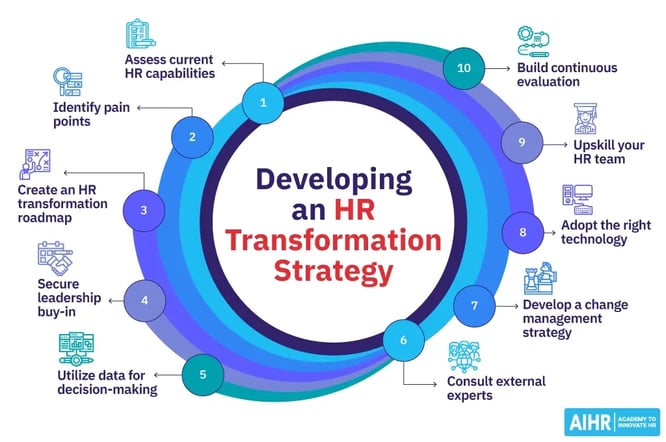
Image Source: AIHR
A successful digital HR transformation needs rebuilt core foundations that many failed initiatives overlook. Research reveals that 70% of digital transformations fail because employees resist change. These foundations need four critical elements to work.
Getting employees on board early
Employees who help create change accept it more readily. Organizations should prioritize enthusiastic participation from all stakeholders. Human-centered design principles throughout the transformation process ranked highest in increasing employee satisfaction. Creating safe spaces for feedback and clear communication about changing roles and responsibilities matters just as much. New processes must meet employee expectations, which regular surveys and focus groups help ensure.
Building digital skills in HR teams
Today's HR professionals must develop new capabilities: data literacy, digital platform fluency, AI awareness, and change management expertise. Henkel's dedicated HR Learning Academies develop digital skills for their top HR talent. These skills help HR teams move resources toward strategic activities like business partnering and employee engagement. Learning becomes more effective when it fits naturally into daily work routines.
Making HR processes more agile
The first step examines which HR processes need digital updates—recruitment, onboarding, learning, and payroll management. Notwithstanding that, digitizing outdated processes brings no improvement. Successful organizations choose ideas based on their effect and effort. They focus on redesigning structures (from rigid hierarchies to fluid teams), skills, and processes. Organization design becomes a crucial skill in this process.
Planning ahead for workforce changes
Strategic workforce planning (SWP) provides organizations with solid data for talent decisions and helps them respond better to market changes. Companies can compare their workforce against competitors and research talent pools to align priorities with market realities. An Asian manufacturer showed this approach by examining talent scenarios alongside financial ones while planning plant expansions. This planning helps companies redeploy resources quickly and move away from traditional hire-fire cycles toward sustainable capacity management.
Leveraging digital HR technologies for performance
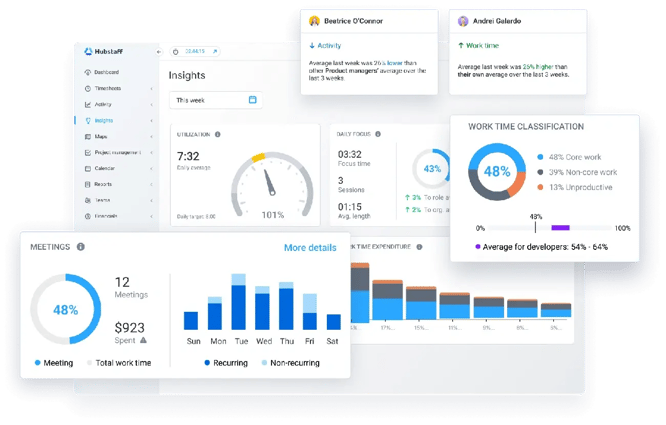
Image Source: Hubstaff
Modern technologies reshape HR capabilities well beyond basic efficiency improvements. Digital tools focused on performance create strategic advantages that help solve the challenges discussed earlier.
AI and automation in HR operations
AI in HR creates major productivity gains by automating routine tasks. HR professionals can focus on high-value activities. Companies that use AI assistants see dramatic decreases in processing times. Retail businesses using AI in their HR functions saw a 33% reduction in function calls and their process resolution time dropped by 75%. AI also speeds up processing while reducing paper-based workflows.
Data-driven decision making with HR analytics
HR analytics turns gut-feeling decisions into fact-based strategies. Better decisions emerge through systematic data analysis that creates targeted employee development programs and tracks key metrics like turnover. Many organizations still face challenges with implementation. A survey revealed that only 26% of HR executives use technology and analytics effectively.
Improving employee experience with self-service tools
Self-service portals enable employees and free HR teams from administrative tasks. Team members can update their personal information, access payslips, manage leave requests, and handle benefits enrollment on their own. These platforms started as tools for administrative efficiency but now provide consumer-like experiences throughout the employee lifecycle.
Ensuring compliance and data security in digital HR
Digital HR security grows more critical as regulations evolve. Strong measures like encryption, access controls, and regular security audits protect employee data. Companies implement transport-layer security, HTTP strict transport security, and AES 256 encryption to keep sensitive information safe.
Conclusion
Digital HR transformation goes beyond a tech upgrade. It changes how organizations create value through their people processes. Organizations must tackle why transformations fail before they begin this trip.
People, not technology, should be the focus of successful transformations. Companies see much better adoption rates when they bring employees on board early, stay transparent in communication, and build psychological safety. On top of that, digital initiatives must line up with business goals to make a real difference and keep executives invested.
There's another reason why process redesign matters so much. Making old workflows digital brings few benefits. HR teams should rethink their processes to be more agile before they add new tech solutions. This approach combined with smart workforce planning helps build organizations that adapt well to market changes.
Culture plays a vital role. Leaders must drive digital initiatives, show the way forward, and foster a digital-first mindset in their teams. Even the best tech will fall short of expectations without these cultural foundations.
Data security and compliance need attention during implementation. HR systems now handle more sensitive information than ever, so strong protection measures are essential parts of any digital strategy.
Moving forward means finding the right balance between tech possibilities and human needs. While challenges exist, organizations that solve these core problems set themselves up for future success. HR's future isn't just about new tech - it's about building systems where technology improves human capabilities instead of replacing them.
Key Takeaways
Digital HR transformation success hinges on addressing fundamental people and process issues rather than just implementing new technology. Here are the critical insights for avoiding common pitfalls:
• Put people before technology - 70% of digital transformations fail because organizations focus on tools over employee needs and change management.
• Align HR initiatives with business goals - Disconnect between HR priorities and company objectives leads to resource misallocation and reduced credibility.
• Involve employees early as co-creators - Active participation and feedback from stakeholders increases acceptance and reduces the 46% resistance rate to new HR technology.
• Redesign processes before digitizing - Simply automating outdated workflows yields no improvement; reimagine for agility first, then implement technology.
• Build leadership commitment and digital-first culture - Senior management must champion initiatives and model digital adoption to drive organization-wide transformation
Organizations implementing AI assistants see 55% ROI within six months, while those with strong digital onboarding improve retention by 82%. The key is balancing technological capabilities with human-centered design to create systems that enhance rather than replace human capabilities.
FAQs
Q1. Why do most digital HR transformation projects fail? Digital HR transformations often fail due to a lack of alignment with business goals, overemphasis on technology rather than people, resistance to change from employees and managers, and failure to adapt HR processes to digital needs. Successful transformations require a holistic approach that balances technological implementation with cultural and process changes.
Q2. How can organizations improve the success rate of their digital HR initiatives? Organizations can improve success rates by involving employees early in the transformation process, upskilling HR teams for digital readiness, redesigning HR processes for agility, and using strategic workforce planning to anticipate changes. Additionally, aligning digital initiatives with broader business objectives and fostering a digital-first culture are crucial for success.
Q3. What role does leadership play in digital HR transformation? Leadership plays a critical role in driving successful digital HR transformation. Leaders must articulate a clear vision connecting people strategy to business outcomes, champion initiatives, and serve as visible advocates for change. Executives who model digital adoption signal that technology is central to future growth and help overcome resistance within the organization.
Q4. How can HR leverage AI and automation to improve performance? HR can leverage AI and automation to significantly improve productivity by automating routine tasks, enabling professionals to focus on high-value activities. AI implementation in HR functions can reduce process resolution time, decrease function calls, and enable faster processing capabilities. This allows HR teams to shift resources to more strategic activities like business partnering and improving employee engagement.
Q5. What are the key considerations for data security in digital HR? As HR systems handle increasingly sensitive information, robust data security measures are essential. Key considerations include implementing encryption, access controls, and regular security audits. Organizations should use transport-layer security, HTTP strict transport security, and AES 256 encryption to safeguard sensitive employee data. Compliance with evolving regulations is also crucial in maintaining data security in digital HR systems.
Trusted by 330+ CHROs
See why global HR teams rely on Amber to listen, act, and retain their best people.
