AI use has grown by a staggering 270% across industries, which has fundamentally changed hr operations roles and responsibilities. This tech revolution has HR professionals worried about their future. The concern is valid - automation could severely affect 34% of jobs, and 12 million positions might disappear by 2040.
Today's digital world has redefined HR operations' meaning beyond its traditional administrative role. The numbers tell the story - 73% of businesses now use generative AI, and this trend will spread to HR departments everywhere. Technology handles routine tasks while HR teams focus on strategic initiatives, which has led to reimagined department roles.
The shift isn't just about machines replacing humans. We've reached a turning point where 88% of job seekers say company culture ranks among their top priorities for success. So while automation threatens nearly a third of HR positions, skills like empathy, judgment, and cultural development remain uniquely human.
This piece will show you how tomorrow's HR operations can balance tech efficiency with human capabilities. You'll learn which roles face the biggest automation risks, what functions need human expertise, and how HR professionals can build future-proof careers in this new era.
The evolving meaning of HR operations
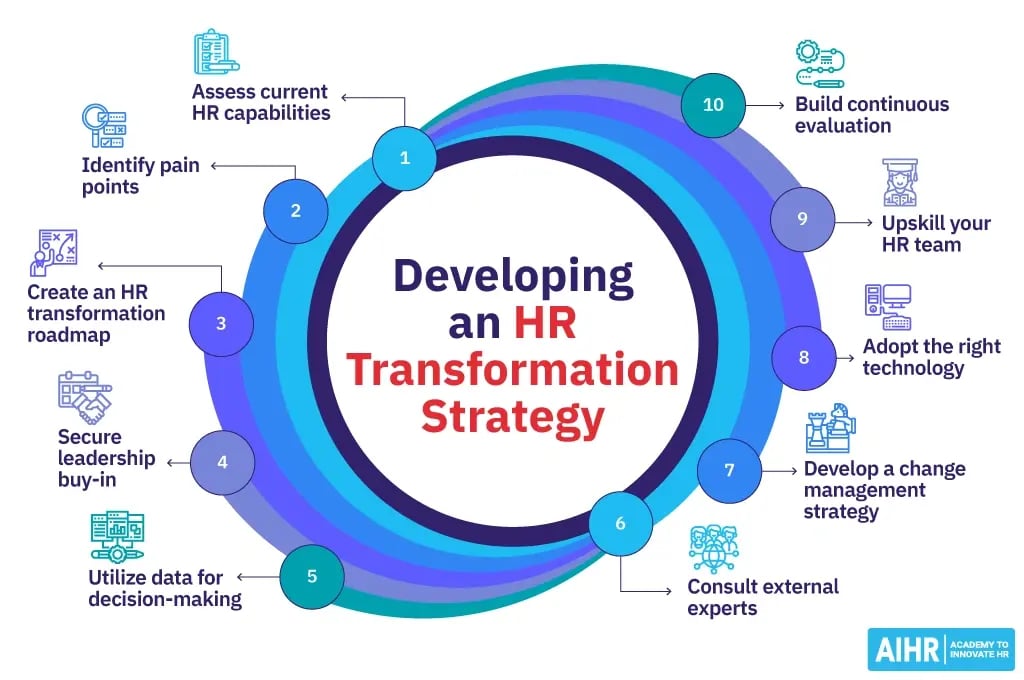
Image Source: AIHR
HR operations has grown way beyond its traditional administrative roots. The last decade saw HR operations move from paperwork to becoming a strategic business partner that optimizes organizational success. 26% of HR leaders now implement AI-first operating models, which shows a major change in HR functions.
What is HR operations today?
HR operations forms the backbone of activities that keep organizations running smoothly. The department manages recruitment, onboarding, payroll administration, compliance, and employee relations. Modern HR operations plays a vital role to develop company's people strategy and achieve business goals.
The role now covers strategic improvements like process optimization, new technology implementation, and reduced administrative work. HR operations has become a multi-faceted function that supports the entire employee lifecycle while helping teams with their daily tasks.
Technology integration stands out as one of the biggest changes in HR. These solutions automate routine tasks, maintain data accuracy, make compliance easier through centralized systems, and provide self-service portals that optimize operations. This tech foundation has helped HR operations professionals become strategic business partners rather than administrators.
How AI is reshaping traditional HR roles
Generative AI in HR adoption is changing traditional roles at an unprecedented speed. HR leaders actively planning or deploying GenAI jumped from 19% in June 2023 to 61% by January 2025. This dramatic rise emphasizes how AI has become vital to HR functions.
AI transforms HR operations roles and responsibilities in several ways:
- AI now handles administrative tasks like resume screening, payroll validation, and employee query management
- Traditional HR Business Partners now work as strategic talent leaders focused on workforce planning and capability building
- Companies need new AI-specific roles, including product leaders for AI in HR, GenAI experts, and digital HR operations leads
These changes require HR professionals to move from transactional management to enterprise strategy. They must balance immediate operational needs while building long-term workforce resilience and making informed decisions across all HR functions.
Why balancing tech and human skills matters
Human capabilities remain essential despite the tech revolution. A Deloitte survey shows 87% of workers consider human skills like adaptability, leadership, and communications vital for career growth. About 94% worry that future generations might start working without needed human skills.
Organizations should use AI for consistency, scale, and speed, while people handle connection, nuance, and trust. To name just one example, AI excels at data tasks like resume screening and trend identification but struggles with empathy and emotional intelligence.
Jobs needing soft skills grow 2.5 times faster than others and will make up two-thirds of all roles by 2030. HR has a unique duty to arrange technology with people and balance organizational priorities with workforce wellbeing.
The best approach combines AI and human capabilities rather than choosing between them. This lets AI handle routine tasks while humans manage complex interactions that need judgment, creativity, and emotional intelligence.
HR roles most impacted by automation

Image Source: Quixy
AI adoption in HR has grown remarkably. About 43% of organizations now exploit AI for HR tasks, up from 26% in 2024. This radical alteration reshapes HR operations and responsibilities, with some functions changing faster than others.
Administrative and support roles
AI automation technologies have changed administrative HR functions. HR staff spends 57% of their time on administrative tasks. This creates a perfect chance for automation. AI-powered chatbots and virtual assistants now handle routine questions. IBM's AskHR processed 11.5 million interactions in 2024. Managers complete HR transactions 75% faster with these tools.
These technologies excel at:
- Processing employee data that once needed manual entry
- Managing time-off requests and attendance tracking
- Generating standard HR documentation and reports
- Providing round-the-clock employee support for common questions
Automation has reshaped HR operations' administrative foundation. HR professionals can now concentrate on strategic initiatives.
Payroll and compliance functions
Traditional HR roles spend considerable time on payroll processing. Modern automated payroll systems handle complex calculations, tax withholding, and compliance reporting with little human input. This advancement helps prevent costly compliance risks from incorrect tax calculations.
Payroll and compliance automation delivers clear benefits. Companies using robotic process automation (RPA) report lower costs. About 90% mention improved accuracy as their biggest gain. Norfolk County Council saved 133 hours each month on payroll tasks after implementing digital workers.
Recruitment and onboarding tasks
AI tools have revolutionized recruitment. About 51% of companies use AI to support hiring efforts. AI-powered recruitment cuts the hiring timeline by weeks.
AI now screens resumes (44% of organizations), writes job descriptions (66%), automates candidate searches (32%), and communicates with applicants (29%). Almost 9 in 10 HR professionals who use AI for recruitment save time and work more efficiently.
Onboarding processes have also improved through automation. Hitachi cut its onboarding time by four days. The core team's involvement dropped from 20 hours to 12 per new hire with an AI assistant. Texans Credit Union used robotic process automation to grant system access in under a minute instead of the previous 15-20 minutes.
These automation advances have redefined HR operations. AI handles routine tasks while HR professionals focus on strategic work.
Roles in HR department that require human strengths

Image Source: BMC Training
Technology keeps changing HR processes, but some roles in the hr department still depend on human skills. Managers dedicate more than 4 hours every week to handle workplace conflicts. This shows why we need people-focused HR operations roles.
Employee relations and conflict resolution
Human interaction remains crucial in employee relations where emotional intelligence leads to better outcomes. Of course, AI can't match human abilities in conflict resolution—like active listening, empathy, and negotiation. HR professionals who excel at human relations help create constructive teamwork. They build environments where employees know their voices matter.
Humans are better than automated systems at picking up subtle details in complex workplace issues. HR specialists need business sense while staying neutral. They balance what leadership wants with what employees need. This balance matters even more now since one-third of U.S. employees think workplace conflicts will increase next year.
Organizational development and culture building
Organizational development (OD) needs human strengths. OD uses science to help organizations change and succeed. HR professionals lead cultural changes through employee participation, leadership growth, and better processes.
Building culture needs real human connections. Research shows that employees who feel disconnected at work are more likely to quit. HR leaders need to focus on people by creating chances for meaningful relationships. They should promote environments where team members can be themselves.
Strategic HR leadership and planning
Strategic HR leaders turn vision into people strategies. They connect talent with purpose and make sure the organization has the right skills. Leaders must understand business operations, financial drivers, and how to line up people strategies with company goals.
Whatever technology brings, HR leaders must build trust—it's what makes leadership work. They support fairness, inclusion, and wellbeing while managing both people and business needs. Data-smart HR leaders look at employee engagement data to find and fix problems where needed.
The best HR approaches combine AI and human skills. They let machines handle routine work while people manage important situations that need judgment, creativity, and emotional intelligence.
How to future-proof your HR career
Image Source: IMD Business School
HR professionals should embrace AI instead of fearing it to future-proof their careers. Research shows 34% of jobs face automation risks, but evidence suggests AI won't completely replace HR professionals. AI transforms certain HR operations and responsibilities by handling time-consuming tasks.
Identify transferable skills
Your transferable skills are the foundation of career adaptability. HR professionals have many valuable capabilities that remain relevant in any discipline:
- Communication and coaching abilities
- Strategic thinking and research skills
- Project management expertise
- Data analysis and reporting capabilities
- Conflict management and negotiation skills
These transferable skills create opportunities in project management, product management at HR tech companies, operations roles, career coaching, or business analysis. HR skills add value to business functions and industries of all sizes.
Upskill in data and digital tools
HR professionals must be digitally fluent today. LinkedIn predicts "HR Tech Savviness & Data Analysis" will become one of the most valuable skills beyond 2025. The World Economic Forum estimates AI could disrupt 44% of skills within five years.
Success requires you to:
- Experiment with AI tools in your area of responsibility
- Make mutually beneficial alliances with data specialists to learn
- Build simple data analysis skills through Excel proficiency
- Share analytical insights during meetings to show value
T-shaped HR professionals who combine specialized expertise with digital savviness, data literacy, people advocacy, and business acumen will have a strategic advantage.
Develop critical thinking and stakeholder management
Critical thinking helps HR professionals analyze complex situations objectively and make better decisions. This skill works especially when you have employee conflicts, engagement data analysis, or new policy implementation.
Stakeholder management has become crucial as HR works with internal and external parties. Good stakeholder management helps you:
- Build trust and credibility throughout the organization
- Set expectations and minimize conflicts
- Find growth opportunities through feedback
- Make better decisions by including different views
These skills position you as a strategic business partner rather than an administrative function. You'll secure your place at the leadership table.
Building synergy between AI tools and human skills
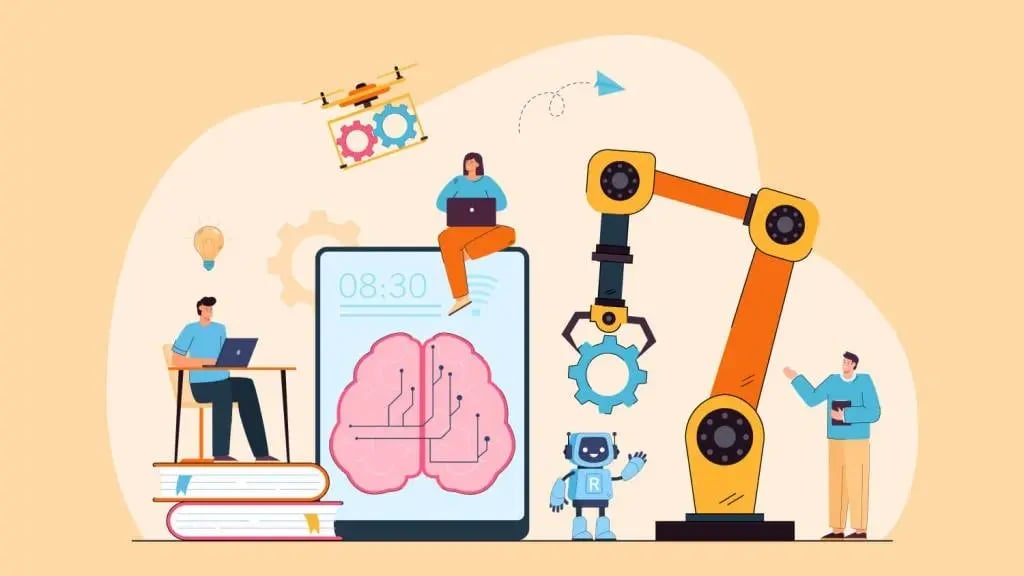
Image Source: Salesforce
Modern HR operations now focus on building effective human-AI partnerships. Recent statistics show a remarkable shift - HR leaders planning or implementing generative AI increased from 19% in June 2023 to 61% by January 2025. This highlights the need to create meaningful connections between technology's capabilities and human expertise.
Using AI for decision support, not decision making
AI should enhance human judgment rather than replace it. Companies that used human oversight with AI saw 45% fewer biased decisions compared to human-only judgment. The best approach lets AI provide ranked recommendations and confidence scores while humans make the final decisions.
Creating AI-enhanced workflows
HR leaders need to redesign roles, workflows, and service delivery models to get the most value from AI. This involves analyzing current processes and finding bottlenecks. The goal is to build systems where AI handles routine tasks and humans manage complex situations that need careful judgment.
Ensuring ethical and bias-free automation
Regular algorithm audits help prevent bias proactively. Teams should test AI outputs to spot discriminatory patterns. They need diverse training data and fairness-aware algorithms to reduce systemic disadvantages.
Training HR teams to work with AI
Companies should focus on AI literacy through practical, role-based training. Most HR professionals don't feel ready to use AI or add it to their daily work. This makes skill development vital for future success.
Conclusion
The rise of HR operations shows a fundamental change toward AI integration. Success comes from creating powerful partnerships between technology and people rather than replacing human professionals. This technological revolution shows that while AI handles administrative tasks, payroll functions, and recruitment processes, human capabilities remain irreplaceable.
Today's HR professionals face a crucial turning point. The data shows 34% of jobs might be automated, yet this change creates opportunities for adaptable professionals. The future belongs to HR practitioners who can use technological advances while applying human strengths like empathy, strategic thinking, and cultural development.
To future-proof your HR career, you need to embrace this dual reality. Building transferable skills, understanding data, improving critical thinking, and becoming skilled at stakeholder management will make you a strategic business partner. This approach sets you apart from those doing administrative work that AI could easily handle.
Successful organizations will thoughtfully design systems where AI manages routine tasks. Meanwhile, humans will handle high-stakes interactions that need judgment and emotional intelligence. The core principle remains unchanged despite technological advances - effective HR balances organizational needs with human wellbeing.
HR operations have moved beyond administrative management. They now represent a strategic function that powers organizational success through people. Professionals who see AI as a powerful tool rather than a threat will find new ways to create value. They will solve complex problems and build workplace cultures where technology and humanity thrive together.
Trusted by 330+ CHROs
See why global HR teams rely on Amber to listen, act, and retain their best people.
