Artificial intelligence in HR has become a game-changing reality that reduces operational costs by 30-40% and improves both employee experience and data accuracy. AI has evolved from a passive tool to an active partner in managing human capital as the digital world continues to evolve.
IDC's Future of Work research reveals that 60% of global 2000 businesses now deploy AI and machine learning tools to enhance the employee lifecycle experience. The momentum of AI in human resource management continues to build, with projections showing 80% of these organizations will use AI/ML-enabled "managers" for critical tasks like hiring, firing, and employee training by 2024. Many professionals still question the inner workings of artificial intelligence implementation in human resources.
Startups adopt autonomous HR software three times faster than enterprises. This quick adoption gives early adopters an 18-month competitive advantage in talent acquisition and retention. This piece delves into real-life artificial intelligence examples in HR through case studies that reveal the true impact of algorithms on human resources functions.
What AI in HR Really Means Today
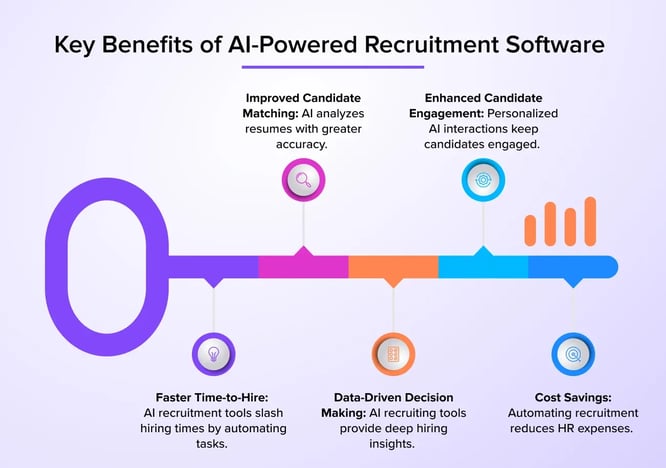
Image Source: H2R.ai
AI in HR has moved past the hype to become a practical tool that changes how HR teams work. The AI-driven HR landscape now combines several technologies like machine learning, natural language processing, and generative AI. These tools work together to help make better decisions throughout an employee's time with a company.
The adoption rates paint a clear picture. HR leaders have embraced AI, with 26% already using an AI-first model. Generative AI use has grown dramatically from 19% in June 2023 and will reach 61% by January 2025. These numbers show that AI tools have become a key part of modern HR operations.
AI in human resource management focuses on smart automation and better decision-making support. The systems handle routine tasks while HR professionals focus on strategic work. AI takes care of resume screening, which cuts hiring time by 30-40%. It also manages benefits checks and ensures policy compliance.
AI now helps create individual-specific employee experiences. It builds custom onboarding programs and learning paths based on each person's skills and goals. The tools analyze workforce data to spot potential turnover risks and suggest internal job moves. Managers receive coaching suggestions that lead to analytical insights in people management.
What Happens Behind the Scenes of AI-Driven HR
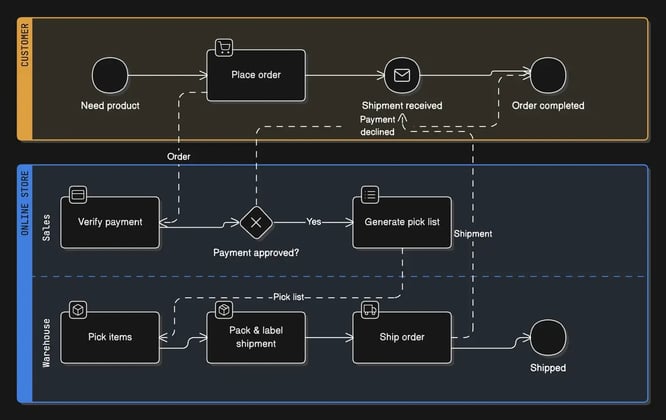
Image Source: Eraser
Modern HR platforms look sleek on the surface, but they hide a complex network of AI algorithms that process employee data. These systems gather information from many sources. They look at performance reviews, communication patterns, surveys about employee participation, and work outputs to turn raw data into applicable information.
AI first cleans the data by removing errors and inconsistencies. Then it applies statistical models and machine learning algorithms to find meaningful patterns. To name just one example, AI tools scan resumes and review candidates against specific criteria. This has cut screening time by up to 70% and helps remove unconscious bias.
AI analyzes an employee's work product in performance management systems. It looks at emails, customer interactions, and completed tasks, then compares results to set standards. Managers can now give more objective feedback based on complete data sets instead of occasional observations.
On top of that, sentiment analysis algorithms watch communication channels to spot early signs of burnout. These systems detect subtle changes in how people write or speak. HR teams can step in before problems lead to employee departures.
AI tools keep track of regulatory changes in different jurisdictions. They flag possible violations and create audit-ready reports. The system's predictive analytics can also show which employees might leave. This helps companies focus their retention efforts, which has cut turnover by up to 50%.
Why Startups Are Leading the AI HR Revolution

Image Source: Sorour Bros Digital Transformation and Innovation
Venture capital firms have recognized AI's potential in HR. Global VC investments in HR tech reached INR 476.75bn in 2024, with a 16% year-over-year growth. The sector bounced back strongly after funding hit a three-year low, which shows renewed trust in AI-powered HR solutions.
Startups thrive in this space by targeting specific HR challenges with focused solutions. These companies become skilled at particular areas where AI in human resource management can affect outcomes meaningfully. AI chatbots engage employees around the clock while sophisticated algorithms enhance recruitment processes.
Small companies have natural advantages over larger enterprises. Their agile structure lets them target specific markets or niches effectively. Luppa chose to think over its approach carefully and focused on Southeast and Eastern Europe. The company built strong competitive advantages through market-specific measures and culturally adapted experiences.
Modern AI platforms from startups have evolved beyond basic chatbots. These systems now summarize candidate interviews, create compelling job descriptions, and identify performance patterns. The most effective solutions blend three capability layers: conversational assistants, workflow automation, and predictive insights.
Growing companies use these AI tools to stay nimble while maintaining compliance and data security. Innovative startups continue to reshape core HR functions through AI advancement, leading this transformation in human resources.
Conclusion
AI's rapid rise in HR means more than just new technology—it marks a complete change in how organizations handle talent management. The technology has grown from simple automation into sophisticated systems that improve decision-making throughout the employee lifecycle. These tools deliver clear results: 30-40% cost reductions, faster hiring processes, and up to 50% lower attrition rates.
The practical reality behind the AI revolution stands out. These tools don't replace human expertise but magnify HR professionals' capabilities. They handle routine tasks and provide evidence-based insights that were impossible to get before. Human judgment combined with algorithmic analysis creates a powerful system to tackle complex workforce challenges.
Startups lead this transformation. They know how to create targeted solutions for specific HR problems, which speeds up adoption across industries. Their flexible structure helps them build specialized capabilities that meet unique market needs precisely.
The gap between AI-enabled and traditional HR departments will grow wider. Companies that adopted early already have an 18-month competitive advantage in talent acquisition and retention. This advantage might increase as these technologies become more sophisticated. Organizations must think over their AI strategy as an immediate priority, not a future concern.
AI in HR has surpassed its original promise to become vital for modern workforce management. Companies that embrace these tools today will be better equipped to direct the complex talent landscape of tomorrow. The question isn't whether AI belongs in human resources anymore—it's about how fast organizations can adapt to this new reality.
Key Takeaways
AI in HR has evolved from experimental technology to essential business infrastructure, delivering measurable results that transform how organizations manage their workforce.
• AI reduces HR operational costs by 30-40% while improving employee experience through intelligent automation of repetitive tasks like resume screening and compliance monitoring.
• Behind the scenes, AI processes vast employee datasets from multiple sources to provide predictive insights, detect early burnout signs, and enable data-driven people decisions.
• Startups are driving the AI HR revolution with targeted solutions and nimble implementation, creating an 18-month competitive advantage over traditional enterprises.
• 60% of global businesses now deploy AI/ML tools across the entire employee lifecycle, with generative AI adoption skyrocketing from 19% to 61% in just 18 months.
• AI enhances rather than replaces HR professionals by handling time-consuming activities while providing sophisticated decision support for complex workforce challenges.
The distinction between AI-enabled and traditional HR departments continues to widen, making immediate AI strategy development crucial for maintaining competitive advantage in talent acquisition and retention.
FAQs
Q1. How is AI transforming HR operations? AI is revolutionizing HR by reducing operational costs by 30-40% while improving employee experience. It automates repetitive tasks like resume screening, enables data-driven decision-making, and provides personalized employee experiences throughout the entire employee lifecycle.
Q2. What happens behind the scenes in AI-driven HR systems? AI-driven HR systems process vast amounts of employee data from multiple sources, clean it, and apply machine learning algorithms to identify meaningful patterns. They analyze performance, monitor sentiment, predict turnover, and ensure compliance, providing actionable insights for HR professionals.
Q3. Why are startups leading the AI HR revolution? Startups are at the forefront of AI in HR because they can create targeted solutions for specific HR challenges without legacy system constraints. Their nimble nature allows them to focus on niche markets and adapt quickly, giving them a competitive advantage in developing and implementing AI-powered HR tools.
Q4. Will AI replace HR professionals? No, AI is not replacing HR professionals. Instead, it's enhancing their capabilities by handling time-consuming tasks and providing data-driven insights. This allows HR professionals to focus on more complex, strategic aspects of workforce management that require human judgment and creativity.
Q5. What are the key benefits of implementing AI in HR? Implementing AI in HR leads to faster hiring processes, reduced time-to-hire by 30-40%, improved candidate matching, data-driven decision-making, enhanced employee engagement, and cost savings. It also enables predictive analytics for turnover prevention and performance management, potentially reducing attrition by up to 50%.
Trusted by 330+ CHROs
See why global HR teams rely on Amber to listen, act, and retain their best people.
