10 min read
Last Updated: 11 November 2025
Multi-agent AI revolutionizes HR departments' operations, with adoption rates skyrocketing from 19% in 2023 to a projected 61% by 2025. This major change goes beyond just adding new technology—it completely reimagines workflows. These systems, used properly, have showed remarkable results. Companies report a 65% improvement in hiring duration while maintaining 91% agreement with human expert evaluations.
Multi-agent AI systems create shared workflows that surpass traditional automation tools. Specialized AI agents handle distinct HR functions. The systems mirror ground talent acquisition processes by assigning specific responsibilities to different agents. Tasks range from sourcing and screening to engagement and market intelligence. Organizations using multi-agent AI workflow automation tools see comprehensive benefits. Teams achieve end-to-end HR automation, better accuracy, improved decision-making, and customized candidate experiences. HR teams can now skip repetitive administrative tasks and focus on key priorities like boosting employee engagement and developing talent.
Let's get into how multi-agent AI works behind the scenes to power automated team decisions. We'll review the agent roles within these systems and help you pick the right solution for your organization's needs.
Understanding Multi-Agent AI in HR Context
Modern HR departments now rely on specialized AI systems that work together instead of using separate tools. These systems work just like real HR teams do - they split up tasks and solve problems as a group.
Definition of Multi-Agent AI Systems in HR
Multi-agent AI describes systems where multiple AI agents work together to handle complex tasks, rather than using one "god-mode" model to do everything. HR teams use these systems with multiple agents, each doing specific jobs like sourcing, screening, scheduling or assessment. IBM describes multi-agent systems as "multiple artificial intelligence agents working collectively to perform tasks on behalf of a user or another system".
These systems learn about context, plan steps, use tools, take action, and improve from results. To cite an instance, see how an HR multi-agent system might use one agent to review resumes, another to check cultural fit, and a third to talk to candidates - all working as one to create a smooth, data-driven hiring experience.
Difference Between Single-Agent and Multi-Agent AI
The difference between single and multi-agent AI matters a lot. Single-agent systems work alone on specific tasks without talking to other agents. They're like individual parts in a bigger machine, each doing their own thing.
Multi-agent systems offer:
- Collaborative intelligence: Agents share context, insights, and decisions
- Distributed task execution: Each agent handles its part while sharing results
- Adaptive coordination: Agents adjust to changes and work better together
- Parallel processing: Multiple agents tackle different parts of complex problems at once
- Fault tolerance: The system keeps running even if one agent fails
This setup works like having a team of specialists instead of one person managing everything. Microsoft suggests teams should "start with multi-agent architecture only when specific criteria mandate separation," such as security boundaries, specialized teams, or future growth plans.
Why HR Workflows Need Multi-Agent Collaboration
HR processes work well with multi-agent systems because hiring already happens in specialized steps. Each stage needs different things and carries different risks. Multi-agent systems shine here while traditional automation tools often fail because they work alone.
HR workflows need smart decisions and understanding that single agents can't provide. Workday points out that "Agentic AI fills the gap. It can interpret nuance, make decisions dynamically, and take initiative across multi-step processes, offloading the complexity that Business Process Automation wasn't built to handle".
Multi-agent systems help HR teams tackle complex challenges that would be too much for one agent. LinkedIn found their recruitment agents save human recruiters "an entire workday every week." This lets recruiters focus on building relationships and strategic work. These systems also excel at coordinating connected processes like onboarding, tracking employee engagement, and planning the workforce.
Key Agent Roles in HR Multi-Agent Systems
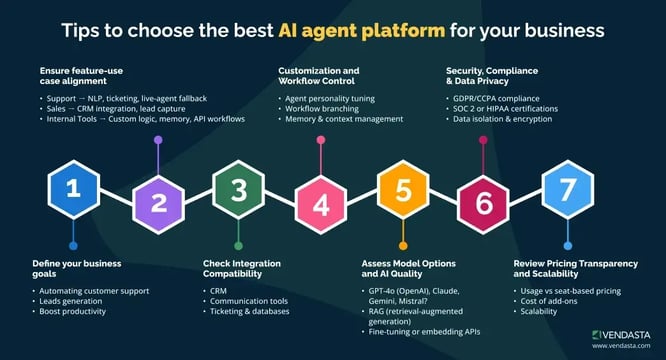
Image Source: Vendasta
Multi-agent AI systems in HR work best when specialized agents handle specific tasks. This creates a smooth workflow throughout the talent acquisition process. Let's get into the core team in this technological ecosystem.
Sourcing Agent: Rediscovery and External Talent Search
Sourcing agents excel at finding qualified candidates both internally and externally. The original focus on rediscovery helps these agents scan existing applicant tracking systems. They uncover previously engaged talent and reduce external sourcing needs by up to 44%. This approach revolutionizes existing candidate databases from "graveyards" into "goldmines" of pre-vetted talent. These agents automatically scan platforms to match candidates with job roles. They analyze hundreds of data points instead of simple keyword matching. The agents handle the heavy lifting of talent discovery so recruiters can focus on building relationships.
Screening Agent: Attribute-Based Candidate Evaluation
Screening agents make the resume evaluation process automatic through consistent, criteria-based assessments. They evaluate candidates based on:
- Predefined criteria tailored to specific job roles
- Skills, experience, and qualification alignment
- Employment gaps and career progression
These agents reduce subjective biases in the screening process while ensuring a full picture of each applicant's strengths. Companies that use them can reduce manual work for recruiters by 80%, which allows focus on strategic tasks.
Engagement Agent: Personalized Outreach and Follow-ups
Engagement agents make candidate communication more personal. They create unique messages based on candidates' profiles, interests, and career backgrounds. The agents arrange multi-channel outreach across email, LinkedIn, and other platforms for maximum engagement. They learn from response patterns to improve messaging effectiveness and timing. Organizations using these agents see up to 5x higher response rates and save 80% time in outreach activities.
Market Intelligence Agent: Competitor and Talent Pool Analysis
Market intelligence agents provide vital insights into talent landscapes and competitive positioning. They analyze talent supply and demand across locations to help organizations choose optimal sites for operations. On top of that, they track competitor job descriptions, hiring activities, and salary rates. These agents help with proactive workforce planning by forecasting potential talent shortages. Organizations can change from reactive to strategic hiring approaches and reduce recruitment expenses through better forecasting.
Workflow Coordinator Agent: System Integration and Notifications
Workflow coordination agents connect systems and stakeholders. They ensure work flows smoothly across platforms without adding complexity to decision-making. These agents move candidates between systems, notify hiring managers of status changes, and create dashboards for visibility. They automate administrative HR tasks like payroll coverage and reconciliations. This streamlines processes across organizational boundaries. Most importantly, they enable smooth integration across HR systems without complex coding.
How Multi-Agent AI Systems Collaborate Across Workflows
A sophisticated collaboration mechanism powers every successful multi-agent AI system and ensures efficient workflow execution. The way these specialized agents connect with each other shows the real strength of multi-agent AI systems in HR.
Sequential vs Parallel Agent Execution
HR multi-agent systems typically work in sequence, where agents complete tasks one after another in traditional workflows. This creates a chain of dependencies that increases the total execution time. Picture a sequential process where one agent must finish analyzing resumes before another can schedule interviews - each step waits its turn.
The parallel execution method offers a better solution. Multiple agents can work on independent tasks at the same time. This approach cuts down processing time by 70-75% in complex workflows. Multiple AI agents can work simultaneously without waiting:
- Extract data from various HR systems
- Analyze candidate profiles in different ways
- Process documentation from multiple sources
HR departments can now handle complex tasks like employee onboarding or compensation reviews immediately instead of waiting for batch processes.
Role of Orchestrator Agents in Workflow Automation
Orchestrator agents act as conductors in multi-agent systems and ensure smooth collaboration. These specialized agents work like a digital symphony. They decide which agent should act next and direct the workflow between them.
The orchestrator picks the best AI agents for each task based on immediate data and set rules. It manages task sequences by splitting complex processes into smaller tasks. Then it assigns the right agents and handles dependencies.
Several orchestration patterns exist with their own benefits. The supervisor pattern uses a hierarchical structure where a main orchestrator manages all interactions. This works best for complex workflows that need tracking. On the flip side, adaptive agent networks remove central control. Agents can work together directly - perfect for systems that need quick responses.
Maintaining Context Across Multi-Agent Pipelines
Multi-agent systems, particularly those with hierarchical orchestration, can lose context as tasks move between agents. These systems might struggle with fragmented understanding if they lack proper safeguards.
Modern architectures fix this problem through shared memory and storage that all agents can access. They might use vector databases for embedding-based memory that helps find relevant context through meaning. Structured knowledge exchanges help agents stay aligned through ontologies or knowledge graphs.
Smart context management uses several techniques. These include hybrid search that combines keywords, meaning, and connections, smart routing that sends queries to the right data sources, and re-ranking that finds the most useful context for each interaction.
Benefits and Risks of Multi-Agent AI in HR
Multi-agent AI in HR departments brings major benefits and risks that need careful thought.
Operational Efficiency and Time Savings
Multi-agent AI systems cut down administrative work in HR departments significantly. IBM's AskHR tool, to name just one example, resolves 10.1 million interactions annually. This saves 50,000 hours and $5 million each year. These systems can cut HR workloads by more than 50%, which lets teams focus on strategic initiatives. Manual candidate review used to take days, but AI now completes the same task in seconds with 87% accuracy compared to manual reviews. Recruiters can now spend more time building relationships instead of doing paperwork.
Improved Candidate Quality Through Rediscovery
Multi-agent AI excels at turning inactive talent pools into active sourcing channels. These systems find past applicants with over 90% accuracy. What was once a forgotten archive becomes a goldmine of pre-vetted talent. Companies save on external recruitment costs and identify candidates who were strong contenders in previous hiring rounds. Rediscovered applicants feel valued when they receive new opportunities that match their growing skillsets.
Risk of Workflow Error Propagation
The benefits are impressive, but multi-agent systems come with unique risks. Errors in early automated hiring processes can spread through downstream agents, which multiplies their effect throughout the system. Mistakes grow as one agent passes information to another. Bad data quality leads to questionable decisions, especially in systems that rely only on resume data. Multi-agent coordination might boost candidate quality but can fail without proper oversight.
Compliance and Explainability Challenges
AI systems' "black box" nature raises concerns about transparency and fairness in HR decision-making. Career-shaping decisions influenced by algorithms need extra attention to fairness and explanation. Most organizations have quickly adopted AI tools without redesigning their decision architecture. AI becomes a risk multiplier instead of a solution without structured oversight and bias audits. Employees want explanations about AI-influenced decisions. They need to know what data was used, which variables affected outputs, and if they can challenge decisions.
Evaluating Multi-Agent AI Platforms for HR Teams
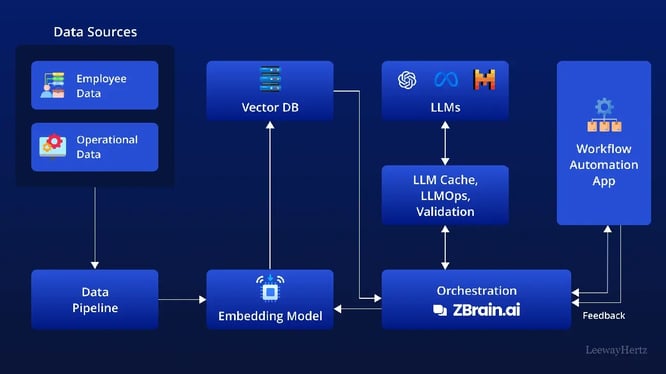
Image Source: LeewayHertz
Choosing the right multi-agent AI platform for HR needs a deeper look beyond feature lists to learn about core capabilities that create real value.
Data Foundation: Resume-Based vs Multidimensional Talent Data
The success of HR multi-agent systems depends on their data foundation. Agents working with resume-only data give shallow, keyword-driven results. Platforms using multidimensional talent insights create better matches. Companies that use AI-powered 3D candidate assessment technology report dramatic improvements in hire quality and time-to-fill.
Agent Specialization for HR-Specific Tasks
Generic agents rarely understand HR workflow's domain-specific risks. You need proof that agents grasp career trajectories and hiring signals—beyond just job titles or keywords. Purpose-built HR agents show better results in understanding experience quality and context over time.
Workflow Depth: Drafting vs Full Execution
The difference between platforms that just create content and those that run complete workflows comes down to real ROI. While assessing multi-agent ai workflow automation tools, check if agents handle end-to-end processes or just make recommendations that need human completion.
Transparency, Control, and Human Oversight
HR teams need more than black-box automation. Good platforms show which agent did what action and let humans take control when needed. Research shows 72% of professionals believe human validation remains essential in AI-driven decisions.
Compliance Readiness and Auditability
Employers face increasing compliance risk as AI regulation evolves. Look for platforms with complete audit trails covering 99%+ of agent actions. They should have clear decision logic and set boundaries between automation and human judgment.
Proof of ROI: Time, Cost, and Funnel Metrics
Results matter most when it comes to credibility. The ROI calculation uses this formula: (Benefits - Costs) / Costs × 100. Vendors must show specific improvements in:
- Time savings through automation
- Quality of sourcing and rediscovery results
- Better funnel efficiency and conversion rates
Conclusion
Multi-agent AI has reshaped the scene in HR operations in a variety of industries. This article explores how these sophisticated systems work behind the scenes. They create shared workflows that mirror real-life talent acquisition processes. Organizations no longer rely on isolated tools. They now benefit from interconnected agents that handle specialized functions from sourcing to participation.
The numbers tell the story. Adoption rates have jumped from 19% to a projected 61% in just two years, showing the system's value. These systems cut hiring time by 65% while maintaining 91% agreement with human expert reviews. This proves how well they work when properly implemented.
The system's agents have unique roles but work together smoothly. Sourcing agents find qualified candidates both inside and outside the organization. Screening agents review candidates using set criteria. Engagement agents create personal outreach messages. Market intelligence agents study talent pools, while workflow coordinators ensure smooth platform integration.
These benefits come with challenges that organizations must think over. Automated workflows can spread errors. Data quality problems and compliance risks need careful planning to address. The right platform choice becomes vital for success.
Your HR team needs strong foundations to tap into the full potential of multi-agent AI solutions. Look for complete data that goes beyond resumes. Choose specialized agents built for HR tasks. Make sure you have full workflow control and clear oversight of operations. Check for proven ROI metrics.
Remember that multi-agent AI should increase human capabilities, not replace them. These systems handle repetitive admin work so HR teams can focus on what matters most - improving employee engagement and developing talent. HR's future lies in this balanced partnership between human expertise and AI.
Key Takeaways
Multi-agent AI is revolutionizing HR operations by creating collaborative workflows where specialized AI agents handle distinct functions, delivering measurable results and freeing teams for strategic work.
• Multi-agent systems outperform single agents by enabling specialized AI agents to collaborate on complex HR workflows, reducing hiring duration by 65% while maintaining 91% accuracy.
• Five key agent types drive HR automation: sourcing agents for talent discovery, screening agents for evaluation, engagement agents for outreach, market intelligence agents for analysis, and workflow coordinators for integration.
• Parallel execution dramatically improves efficiency by allowing multiple agents to work simultaneously rather than sequentially, reducing processing time by 70-75% in complex workflows.
• Data foundation determines success - platforms using multidimensional talent data significantly outperform those relying solely on resume-based information for candidate matching and assessment.
• Transparency and human oversight remain critical to prevent error propagation, ensure compliance, and maintain explainable decision-making in AI-driven HR processes.
The key to successful implementation lies in selecting platforms that offer complete workflow execution, audit trails, and proven ROI metrics while maintaining the essential balance between automation and human judgment.
FAQs
Q1. What is multi-agent AI in HR and how does it differ from traditional HR tools? Multi-agent AI in HR refers to systems where multiple specialized AI agents collaborate to handle different aspects of HR processes. Unlike traditional tools that operate in isolation, these agents work together to perform complex tasks like sourcing, screening, and engaging candidates, mimicking how real HR teams function.
Q2. How can multi-agent AI improve the efficiency of HR operations? Multi-agent AI can significantly improve HR efficiency by automating administrative tasks, reducing hiring duration, and enabling parallel processing of complex workflows. For example, it can reduce manual work for recruiters by up to 80% and improve hiring duration by 65% while maintaining high accuracy.
Q3. What are the key roles of AI agents in HR multi-agent systems? The key roles include sourcing agents for talent discovery, screening agents for candidate evaluation, engagement agents for personalized outreach, market intelligence agents for competitor and talent pool analysis, and workflow coordinator agents for system integration and notifications.
Q4. What are the potential risks associated with using multi-agent AI in HR? Potential risks include workflow error propagation, where mistakes can cascade through the system, compliance and explainability challenges due to the "black box" nature of AI decision-making, and issues arising from poor data quality, particularly in systems built on resume-only data.
Q5. How should HR teams evaluate multi-agent AI platforms? When evaluating multi-agent AI platforms, HR teams should consider factors such as the data foundation (multidimensional talent data vs. resume-only), agent specialization for HR-specific tasks, workflow execution capabilities, transparency and human oversight features, compliance readiness, and proven ROI metrics in terms of time savings and improved hiring outcomes.
Trusted by 330+ CHROs
See why global HR teams rely on Amber to listen, act, and retain their best people.
