16 min read
Last Updated: 15 October 2026
Employee engagement platforms promise to reshape workplace culture, yet only 21% of employees globally are engaged. Low engagement costs the global economy $8.8 trillion annually. We've seen countless organizations invest in top employee engagement platforms only to face poor adoption and minimal results. The problem isn't the technology itself but how companies implement it. This piece walks you through 11 critical platform adoption challenges that derail even the best employee engagement software platforms and how to avoid them.
Mistake 1: Relying Only on Internal Survey Channels
Most engagement strategies stumble at the starting line. Organizations deploy internal survey channels and expect honest feedback, yet 80% of employees worldwide remain not engaged or actively disengaged. The root cause isn't employee apathy but a fundamental trust problem with how feedback gets collected.
Why Employees Don't Trust Internal Systems
Internal survey systems carry an invisible barrier that organizations consistently underestimate. Only 29% of employees trust their organizations with data collected through common feedback processes. This mistrust stems from valid concerns about how these systems work.
Employees understand that internal platforms collect more than just their responses. IP addresses, login credentials and response timestamps create digital footprints. Even anonymous surveys become identification exercises through the process of elimination in small teams. Writing style, vocabulary choices and specific examples mentioned can reveal identity faster than any metadata.
The fear of retaliation shapes every response. Only 47% of employees admit to being fully honest when giving feedback directly to HR. The problem extends beyond survey design. Employees have witnessed or experienced subtle consequences for candor: being labeled negative, receiving less desirable assignments or noticing changed dynamics with managers. These quiet signals teach a clear lesson. Honesty carries risk.
The Anonymity Paradox
True anonymity requires more than technical safeguards. Organizations implement systems that strip identifying information, yet employees remain skeptical. The perception that anonymity could be compromised creates as much fear as tracking itself.
This paradox deepens when organizations ask demographic questions to segment data. Each additional filter narrows the pool of potential respondents. A survey asking for department, tenure and role can identify individuals in smaller teams without accessing any metadata.
The measurement gap compounds the problem. Employee engagement survey platforms become score-chasing exercises rather than genuine listening tools. Employees recognize the performance theater. Leaders overuse pulse surveys for immediate feedback but rarely translate results into action. Employees stop treating surveys as truth-telling opportunities after repeated cycles of providing input without seeing change.
How External Platforms Build Trust
Third-party platforms solve the trust equation that internal systems cannot. The separation between data collection and employer access removes the psychological barrier that kills honest feedback. Research confirms this: 74% of employees would be quick to share feedback if they knew it would be truly anonymous.
External platforms employ enterprise-grade encryption, automated metadata stripping and response thresholds that block visibility for small teams. More important, they enable masked two-way communication. This allows HR teams to follow up on sensitive issues while keeping employee identity encrypted.
The credibility difference translates directly into participation. Anonymous employee surveys managed by third-party providers achieve response rates upwards of 90%, compared to much lower engagement with internal tools. Organizations that communicate well at all three survey phases see 86% of employees indicate high trust in data usage.
External platforms eliminate the single point of failure that internal systems create for a variety of workforces. InFeedo AI specializes in building trust across varied employee demographics by maintaining true anonymity while providing actionable insights that HR teams need. The platform's AI-driven analysis removes individual identifiers from open-text responses and ensures candid feedback reaches leadership without compromising employee safety.
Mistake 2: Poor Mobile Experience for Frontline Workers
Around 2.7 billion workers worldwide operate without a desk. They represent 80% of the global workforce. Yet most employee engagement platforms remain anchored to desktop interfaces that these employees will never access. A construction worker spending their day on-site has no computer. A desktop-only system becomes completely redundant. This accessibility gap creates a two-tier engagement structure. Frontline teams remain disconnected from the very platforms meant to include them.
The Desktop-Only Trap
Desktop-centric platforms reveal a fundamental misunderstanding of how most employees work. A nurse on a night shift cannot check a desktop dashboard between tasks. Neither can a line worker on a factory floor or a retail associate on their feet. Organizations inadvertently exclude the majority of their workforce from participation when engagement tools require sitting at a computer.
The information disparity becomes stark when measured. Only 23% of frontline employees report being well-informed about company news compared to 68% of office workers. This gap doesn't reflect frontline disinterest. Structural barriers built into platform adoption challenges create it. Similarly, 83% of frontline employees lack corporate email addresses or access to centralized intranet systems. This eliminates the traditional distribution channels that workplace engagement strategies rely on.
Why Frontline Teams Get Excluded
Communication gaps emerge not from insufficient effort but from mismatched delivery methods. Frontline workers move through worksites and facilities. They operate on rotating shifts and work in a variety of linguistic and literacy contexts. The digital experience for these teams is mobile. Yet employee engagement software platforms continue prioritizing features designed for desk-based workflows.
The preference data tells the story. Research shows that 38% of on-site and deskless workers report mobile phones as the most effective communication method compared to platforms like Microsoft Teams, Zoom, or Slack. HR teams create systems that frontline workers cannot use when they deploy engagement platforms without mobile-first design. This happens even if workers wanted to participate.
Building Mobile-First Access
Native mobile applications solve the accessibility equation that web-based platforms cannot. Native apps built for iOS or Android offer the fastest performance and strongest offline reliability. They provide full access to device features. These capabilities matter for workers in low-connectivity environments. They also matter for those who need to access information between tasks without waiting for browser load times.
Effective mobile platforms deliver push notifications for urgent updates. They enable communication between employees and managers and provide instant access to training videos and operational documents. Multi-language support becomes critical for workforces of all types. This ensures that engagement reaches every employee, whatever their primary language.
InFeedo AI recognizes that frontline engagement requires purpose-built mobile experiences rather than desktop tools adapted for smaller screens. The platform's mobile-first architecture ensures construction workers, healthcare staff, retail teams, and manufacturing employees access the same engagement opportunities as their office-based colleagues. This creates true inclusion in a variety of workforce demographics.
Mistake 3: Launching Without Clear Success Metrics
Launching employee engagement platforms without defined success metrics turns strategic investments into expensive guesswork. You can't know which initiatives drive results without tracking their effect. Organizations then pour resources into programs that feel relevant in the moment without ever addressing the mechanisms driving disengagement.
The Measurement Gap
Stark numbers reveal the measurement problem. Only 33% of employees report feeling engaged, yet only one in three HR leaders track metrics like engagement and turnover. This gap between the scale of disengagement and the discipline around measurement explains why so many platform implementations fail to deliver promised outcomes.
Engagement measurement becomes a box-checking exercise rather than a driver of meaningful change without the right analytics and reporting tools. Organizations invest in initiatives that seem important after a difficult quarter or in response to rising attrition. They lack the systematic data to identify which drivers are underperforming, whether that's recognition or career progression.
What Good KPIs Look Like
Effective measurement requires distinguishing between leading and lagging indicators. Leading indicators like employee Net Promoter Score (eNPS) and satisfaction pulse survey scores gage how employees feel right now and help predict future sentiment. These metrics provide early warning signals before problems demonstrate themselves in turnover data.
Lagging indicators show the results of possible changes in employee sentiment. Turnover rates, absenteeism and retention metrics confirm patterns that leading indicators already suggested. Both categories matter, yet focusing on lagging signals alone makes it difficult to address nascent disengagement issues.
HR teams need tools offering immediate insights into employee perceptions to measure engagement well. These include demographic breakdowns to understand engagement across different segments, team-level reporting for managers, predictive analytics to forecast retention risks and AI-powered analysis to summarize open-ended feedback. InFeedo.ai specializes in delivering these measurement capabilities, particularly the AI-driven analysis that surfaces key insights from qualitative feedback without overwhelming HR teams with raw data.
Tracking Adoption vs. Engagement
Platform adoption and engagement measure fundamentally different things. Adoption is a one-time occurrence that tracks whether users start using specific features that deliver core value. Engagement is ongoing and measures how active and involved users remain over time.
A common mistake in evaluating employee engagement software platforms is over-optimizing for engagement at the expense of adoption. High engagement with low adoption means employees show up but never integrate the key features that drive retention. This combination precedes most platform failures. Organizations need both metrics: adoption rate shows whether employees complete meaningful first-value moments, while engagement metrics reveal whether they keep coming back.
Mistake 4: Skipping the Pilot Phase
Organizations skip testing before full deployment of employee engagement software platforms. This seems like common sense, yet it happens all the time. Research shows that 70% of enterprise technology projects fail after the pilot phase. More telling, 95% of generative AI pilots fail to achieve measurable results. The pattern isn't unique to AI but reflects a fundamental misunderstanding of what pilots accomplish.
Why Companies Rush to Full Rollout
Time pressure accounts for most decisions to bypass testing. Leadership sees a workforce problem and wants solutions right away. The mindset treats pilots as delays rather than risk mitigation. Over 70% of companies investing in advanced analytics fail to move beyond pilot development. This happens not because pilots don't work but because organizations never designed them to scale.
Decision paralysis creates another rush pattern. No one wants to overturn existing workflows or risk being blamed if the pilot doesn't scale. So organizations either skip testing or run superficial pilots that confirm nothing meaningful. Executive mandates compound this problem. When leadership demands quick AI adoption, teams comply on the surface while utilization metrics reveal the truth: a few power users and everyone else at near-zero engagement.
The Cost of Skipping Testing
When you skip testing, costs multiply. A bug found during implementation costs several times more than one caught during design. A bug found during testing costs roughly 15 times more. A bug that escapes to production can cost up to 100 times more than the same issue caught early. These aren't theoretical estimates but documented patterns across enterprise software deployments.
The operational costs extend beyond direct fixes. Emergency engineering time pulls senior developers off roadmap work to firefight production incidents. Poor rollouts erode trust faster than any survey design flaw for employee engagement platforms. When platforms break or confuse employees during first use, participation drops right away and recovering that trust takes months.
How to Structure an Effective Pilot
An effective pilot tests organizational readiness and platform features. Your pilot group should be large enough to test usage patterns representative of your company but small enough to manage. Include a mix of roles and locations. If you have remote employees, make sure they're represented.
Duration matters more than most organizations assume. Eight weeks creates enough time to establish a baseline, launch an intervention, observe participation, adjust delivery and measure early outcomes. Shorter pilots miss behavior patterns that emerge after the novelty fades.
Focus on three practical questions: Can the organization deliver the intervention as intended? Do employees and managers find it relevant and usable? Is there enough evidence of improvement to justify continuation? InFeedo.ai structures pilots around these questions and ensures readiness testing happens before full deployment in a variety of workforce demographics.
Mistake 5: Treating Implementation as an HR-Only Initiative
Implementation teams that exclude key departments set themselves up for predictable failure. Research shows that 42% of HR tech projects fail after two years, while 84% of global organizations report their recent HR projects were unsuccessful. The pattern isn't random. HR projects often fail because they lack alignment with business goals, don't secure buy-in from key stakeholders, or aren't given the resources they need to succeed.
The Leadership Buy-In Problem
Executive approval doesn't equal executive ownership. Leaders who approve budgets for employee engagement platforms without active participation send a clear signal that the initiative isn't important. Nothing kills a culture initiative faster than leaders who don't model the behavior they're asking for.
Securing genuine C-suite engagement requires framing projects in business terms rather than HR processes. CEOs and CFOs care about results, not systems. Building a strong business case means demonstrating how employee engagement software platforms boost revenue, reduce risks, or improve operational efficiency using hard numbers on cost savings, attrition rates, and performance improvements. Companies with strategic recognition programs see 31% lower voluntary turnover. The financial argument becomes straightforward when presented correctly.
Why Manager Participation Matters
Managers account for 70% of the variance in team engagement. Manager quality is the single most controllable driver of workforce performance. When managers recognize their people, it creates a culture where recognition feels normal and expected. A stressed, disengaged manager cannot engage their team.
The measurement gap becomes stark when examining manager behavior. Engagement needs buy-in from leaders and managers to succeed, yet many executive-level leaders have not embraced engagement in a way that communicates its importance as a shared responsibility. Manager engagement is declining among younger and mid-level leaders who are squeezed between leadership demands and team needs.
Building Cross-Functional Ownership
A successful implementation requires a core team that has HR professionals, IT, and key department managers who can influence adoption in their areas. Inter-departmental collaboration is one of the most important elements of successful HR software implementation. HR doesn't work in isolation. Payroll, IT, finance, and legal all rely on shared data. Ignoring these interdependencies causes costly delays and missed requirements.
Cross-functional steering committees with representatives from key departments maintain accountability and resource availability. InFeedo.ai structures implementations around this cross-functional model. IT handles integration requirements, finance understands ROI tracking, and department managers adopt the platform in a variety of workforce segments from day one.
Mistake 6: Collecting Feedback Without Taking Action
When you ask employees for input, you create an implicit promise that their voices matter. That promise, once broken, damages trust faster than any other platform adoption challenge. Research reveals that 60% of employees have channels to provide feedback, yet only 30% report their feedback was acted upon. This gap between listening and acting transforms employee engagement survey platforms into trust-destroying mechanisms rather than trust-building tools.
The Trust-Killing Cycle
The pattern repeats in organizations: surveys launch, responses arrive, analysis happens internally, and nothing changes. Employees notice. Workers who believe their employer acts on feedback are 4x more likely to stay with the company than employees who don't think their feedback changes anything. The inverse holds true as well. When leaders conduct surveys but take no action on results, employee engagement decreases and turnover increases.
The damage compounds over time. You ask for feedback without acting on it? That's worse than not asking at all. Each ignored survey teaches employees that their voices don't matter. Nothing crushes engagement faster than that realization. The success of employee surveys depends on proper follow-up processes that use collected data to initiate organizational changes. Despite this importance, the survey follow-up process remains the most neglected step.
Why Follow-Up Determines Success
Action planning determines whether best employee engagement platforms build or destroy credibility. Organizations that fail to create action plans suggest employee feedback goes nowhere. Even worse, those who commit to too many actions without clear owners and timelines watch plans disappear under competing priorities.
Gallup research confirms that you ask for employee feedback without acting on it, and it backfires. When employees see action, they trust the process and engage more. The most effective organizations treat surveys as part of a larger performance system with clear expectations for how managers and teams will review and respond to results.
The Feedback Loop
You close the loop by completing the full cycle: collect feedback, act on it, and communicate back to employees who provided it. That final step distinguishes closed loops from open ones. Most feedback systems stop at collection and leave employees wondering whether their input was read or considered.
InFeedo.ai structures feedback processes around complete loop closure and ensures employees see how their input drives tangible changes in a variety of workforce demographics through transparent communication and systematic action tracking.
Mistake 7: No Integration With Existing HR Technology
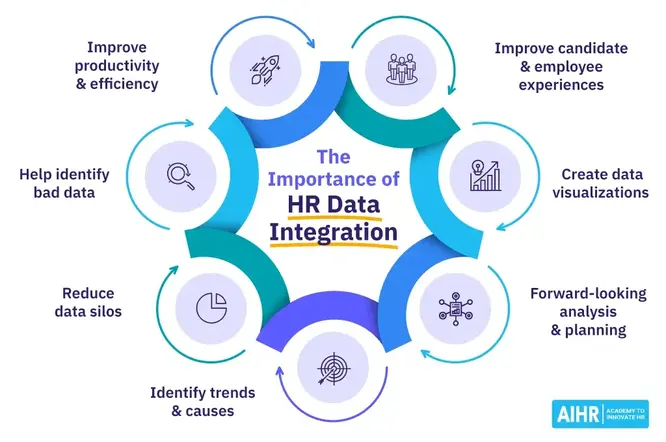
Image Source: AIHR
Standalone employee engagement platforms create more problems than they solve. Departments that independently procure software create data silos without meaning to. These are isolated pockets of information that the rest of the company can't access. Fragmented systems like these hinder collaboration and reduce data quality. They make retrieving important insights slower and more difficult.
The Standalone Platform Problem
The average enterprise runs on nearly 900 applications. Only one-third are integrated. 67% of Indian companies now use three or more HR applications at the same time for HR specifically. That fragmentation creates data silos, manual workarounds, and frustrated employees.
HR and payroll management through multiple systems gets pricey, time-consuming, and prone to errors quickly. Disconnected platforms lead to duplicated data entry and compliance headaches. Inefficiencies grow with every new hire and regulatory change. A mid-sized company running five standalone HR tools might spend Rs 40,000 monthly on subscriptions. Add Rs 2 lakhs annually for integration maintenance and Rs 1 lakh for productivity drain. The effective monthly cost jumps to Rs 65,000.
Why Data Silos Kill Adoption
Data silos create barriers to information sharing. Teams find it difficult to work when these barriers exist. Your payroll system doesn't talk to your attendance system. Someone manually reconciles records and loses hours every pay cycle. Employees access one portal for leave requests, another for reimbursements, and a third for performance reviews. Each has different login credentials and interfaces. The cognitive load adds up.
Integration Requirements That Matter
Standalone tools create data silos. Integrated engagement platforms connect feedback signals with leave, performance, and payroll data in a single view. Organizations without engagement tools often face limited visibility into employee sentiment. They identify morale issues with delays.
InFeedo.ai integrates with existing HR technology and ensures employee data remains synchronized through systems. It delivers up-to-the-minute engagement insights for workforce demographics of all types.
Mistake 8: Inadequate Manager Training on Platform Use
Rolling out employee engagement software platforms company-wide without preparing managers first wastes the data these tools produce. Managers account for 70% of the variance in team-level engagement. Their competence with engagement tools becomes the single most controllable factor in platform success. Skipping manager training remains a common pattern in platform adoption challenges despite this importance.
The Dashboard Avoidance Pattern
Most managers don't know how to make frequent conversations meaningful. Their actions get interpreted as micromanaging without the right tools and direction. Dashboards that display engagement metrics without context overwhelm rather than guide. Managers face walls of charts where nothing stands out. The platform joins forgotten browser tabs through quiet abandonment.
What Managers Actually Need to Learn
Effective training focuses on coaching conversations rather than dashboard navigation. Managers need guidance through prompts and playbooks that help them act with clarity and consistency. Research confirms that managers who receive coaching see a 20 to 28% improvement in performance metrics. Their teams experience up to 18% higher engagement. 69% of employees whose managers help them set goals report being engaged, compared to only 8% when managers don't provide that support.
Ongoing Enablement Strategies
Scenario-based practice beats one-off training sessions. Managers improve at coaching conversations when they rehearse real situations and receive feedback on how they handled them. InFeedo.ai structures manager enablement around continuous support. Leaders in workforce segments of all types receive ongoing guidance as engagement patterns move.
Mistake 9: Overwhelming Employees With Survey Fatigue
Survey fatigue gets blamed on frequency, but that's a myth. More than 20 academic studies revealed that the number one driver of survey fatigue was the perception that the organization wouldn't act on results. The problem isn't how often you ask but what happens afterward.
When Listening Becomes Noise
The disconnect between asking and acting creates measurement theater. 92% of employees believe it's important their company listens to feedback, yet only 7% say their company acts on feedback well. This 85-point gap transforms workplace engagement strategies into noise. Employees who experience survey fatigue become less likely to participate or complete surveys as instructed. They select the same answer to each question and produce inaccurate results.
The Frequency vs. Fatigue Balance
Most employees want regular feedback opportunities. Research shows 77% of employees want to provide feedback more than once per year, with the majority preferring four times a year. Organizations should deploy surveys at a pace that makes it possible for leaders to both communicate and act on results. Some find annual diagnostics work best; others prefer quarterly pulses.
Smart Survey Timing and Design
Question count should follow an inverse relationship with frequency. Monthly surveys shouldn't exceed 15 questions. Bi-annual surveys should cap at 20-25 questions. InFeedo.ai structures survey timing around actionable cadences. This ensures that a variety of workforce demographics receive well-spaced feedback opportunities that create genuine change rather than participation fatigue.
Mistake 10: Choosing Platforms That Don't Fit Your Workforce
Platform selection failures stem from a fundamental mismatch between software design assumptions and actual workforce composition. The best employee engagement platform depends on your organization's goals, workforce structure, and existing technology.
The Desk-Worker Bias
Employee engagement software platforms reveal their design priorities through feature hierarchies. Some help HR teams measure sentiment and recognize employees, while others help internal communication teams reach distributed workforces. These categories overlap, but understanding your main engagement goal narrows the shortlist. The first decision is whether engagement is mainly a measurement problem, a recognition problem, or something you want unified with core HR.
Matching Tools to Your Employee Demographics
Choosing among examples of employee engagement platforms is less about which runs the best survey and more about which turns engagement data into action for every team. Enterprises with deskless or multi-country teams need to match technology to business goals and the complexity of their workforce. This becomes core operating infrastructure. Deploy easy-to-use tools that match existing employee digital literacy rather than attempting to move ingrained user behavior.
Why inFeedo AI Works for Diverse Workforces
inFeedo AI addresses workforce diversity through AI-native architecture that scales across geographies and employee types. It maintains the mobile-first accessibility that frontline teams need and the analytics depth that enterprise HR teams require.
Mistake 11: No Plan for Post-Launch Optimization
Launch day marks the beginning, not the endpoint, of employee engagement platform success. The set-it-and-forget-it mindset might sound like the quickest way forward, but it wastes investment in workplace engagement strategies. Campaigns don't maintain performance without constant monitoring and adaptation. They deteriorate.
The Set-It-and-Forget-It Trap
Digital systems change without pause. Platform algorithms move, employee needs evolve, and engagement patterns change while HR teams focus on other priorities. AI-powered employee engagement platforms require ongoing human oversight to provide context that raw data cannot capture. Feed a model engagement data from employees during a major recognition campaign. It learns who responds to rewards, not necessarily who's genuinely engaged. The machine executes flawlessly toward the wrong insights when context is missing.
Monitoring What Matters After Launch
Post-launch optimization focuses on improving long-term system usage and workflow execution through continuous improvement. The first 90 days after launch should help teams understand how employees use the platform in production and fix the highest-impact friction points. Track workflow completion, feature adoption, and support dependency.
Continuous Improvement Framework
Continuous improvement means analyzing performance, identifying opportunities, and making incremental changes that compound into results. InFeedo.ai structures post-launch optimization around continuous monitoring and ensures employee engagement platforms adapt as workforce needs move in a variety of demographics.
Conclusion
These tactics may seem overwhelming at first, but you can avoid these 11 mistakes once you understand what drives platform adoption challenges. Build trust through external anonymity first. Mobile accessibility for frontline teams matters, and you need clear success metrics before launch. Pilots test readiness before full rollout, and cross-functional ownership prevents HR-only initiatives from failing.
Close the feedback loop. That's what matters most. Employees notice when their input creates real change. We've seen organizations transform engagement outcomes by choosing platforms that merge naturally and train managers well. Treat optimization as an ongoing process rather than viewing launch day as the finish line.
InFeedo AI addresses these adoption barriers in a systematic way and delivers measurable results for different types of workforce demographics.
Key Takeaways
Employee engagement platforms fail not because of poor technology, but due to preventable implementation mistakes that organizations repeatedly make. Understanding these pitfalls is essential for maximizing your investment and driving real workforce transformation.
• Trust trumps technology: 80% of employees won't engage honestly with internal survey systems. External platforms with true anonymity achieve 90%+ response rates versus significantly lower engagement with internal tools.
• Mobile-first isn't optional: 2.7 billion frontline workers (80% of the global workforce) lack desk access. Desktop-only platforms automatically exclude the majority of your workforce from participation.
• Action closes the loop: 60% of employees provide feedback, but only 30% see action taken. Workers who believe their feedback drives change are 4x more likely to stay with the company.
• Manager enablement drives adoption: Managers account for 70% of team engagement variance. Without proper training on platform use and coaching conversations, even the best tools become abandoned browser tabs.
• Integration prevents data silos: The average enterprise runs 900 applications with only one-third integrated. Standalone engagement platforms create manual workarounds, duplicated data entry, and frustrated employees across departments.
• Continuous optimization beats set-and-forget: Launch day marks the beginning, not the end. Platforms require ongoing monitoring, adaptation, and improvement as workforce needs evolve and engagement patterns shift.
FAQs
Q1. Why do employees hesitate to provide honest feedback through internal survey systems? Employees often distrust internal survey platforms because they fear their responses can be traced back to them through IP addresses, login credentials, or response patterns. In small teams, even anonymous surveys can reveal identity through process of elimination. Only 29% of employees trust their organizations with feedback data, and many have witnessed subtle consequences for candid responses, such as changed manager dynamics or less desirable assignments.
Q2. What makes mobile accessibility critical for employee engagement platforms? Around 2.7 billion workers worldwide (80% of the global workforce) operate without desk access, including frontline employees in healthcare, retail, manufacturing, and construction. Desktop-only platforms exclude these workers entirely since they cannot access computers during their shifts. Mobile-first platforms with native apps, offline capabilities, and push notifications ensure all employees can participate regardless of their work environment.
Q3. How does collecting feedback without taking action damage employee trust? When organizations survey employees but fail to act on results, it creates a trust-destroying cycle. Research shows that 60% of employees have feedback channels, but only 30% report their input was acted upon. Employees who believe their feedback drives change are 4 times more likely to stay with the company, while those who see no action become increasingly disengaged with each ignored survey.
Q4. Why is manager training essential for engagement platform success? Managers drive 70% of the variance in team engagement, making their competence with engagement tools the most controllable factor in platform success. Without proper training, managers don't know how to interpret dashboard data or conduct meaningful coaching conversations. Organizations that provide manager coaching see 20-28% improvement in performance metrics and up to 18% higher team engagement.
Q5. What should organizations monitor after launching an engagement platform? Post-launch optimization requires tracking workflow completion rates, feature adoption patterns, task completion times, and support dependency. The first 90 days should focus on understanding how employees actually use the platform and fixing high-impact friction points. Continuous monitoring and adaptation are essential because employee needs evolve, engagement patterns shift, and platforms require ongoing refinement to maintain effectiveness.
Trusted by 330+ CHROs
See why global HR teams rely on Amber to listen, act, and retain their best people.
