HR service delivery at scale presents a unique challenge for growing organizations. Did you know that 85% of organizations report significant time savings and efficiency gains through automation in HR? This statistic highlights why we need to rethink traditional approaches to delivering HR services across expanding teams.
When we talk about HR service delivery, we're referring to how companies provide essential HR services to employees - from onboarding and training to conflict resolution and benefits administration. However, as organizations grow, maintaining both speed and consistency often becomes increasingly difficult. In fact, nearly two-thirds of organizations that optimized their HR service delivery saw measurable improvements in employee experience, proving that this balance is both possible and beneficial.
The stakes are high when it comes to effective HR service management (HRSM). When companies fail to meet employee expectations for instant, consumer-grade experiences, it costs them in productivity, engagement, and talent retention. Additionally, HR service delivery associates face mounting pressure to resolve issues quickly while maintaining quality across diverse teams and locations.
In this article, we'll explore how you can break the false dichotomy between speed and consistency in your HR service delivery. By centralizing routine functions and creating specialized Centers of Excellence, your organization can achieve both operational efficiency and significant cost savings. We'll share practical strategies for scaling your HR services without compromising on either speed or quality - ultimately enabling your HR team to shift focus from transactional tasks to strategic initiatives.
Understanding HR Service Delivery at Scale
Scaling your HR service delivery requires fundamentally different approaches than those used in smaller organizations. Large enterprises face unique challenges that demand specialized systems and processes to maintain both efficiency and personalization.
Definition of HR Service Delivery in Large Organizations
At enterprise scale, HR service delivery encompasses the systematic practice of providing HR-related support and solutions through structured frameworks designed to handle high-volume requests. Unlike generalized HR functions, large-scale HR service delivery operates as a dedicated function supporting the entire employee lifecycle—from recruitment to retirement—across multiple locations and departments.
Enterprise HR service delivery primarily focuses on creating standardized yet adaptable systems for delivering consistent employee experiences. Organizations that implement robust HR service delivery models report up to 60% reduction in inquiry response times, demonstrating the value of structured approaches to employee support.
For multinational or large domestic companies, HR service delivery becomes increasingly complex due to several factors:
- Increased workforce complexity requiring additional management, administrative staff, and specialized HR roles
- Expanded compliance requirements across different jurisdictions
- Operations across multiple locations demanding consistent yet locally-relevant HR services
- Higher technology demands to manage increased complexity and volume
Consequently, large organizations typically implement formalized HR service delivery models that emphasize systematic case management, centralized knowledge repositories, and automation tools to maintain efficiency at scale.
Key Differences Between Small-Scale and Enterprise HRSM
The contrast between small business and enterprise HR service management extends beyond merely handling more employees. Fundamentally, they differ in structure, technology utilization, and service approach.
Small businesses often manage HR through generalist approaches with ad hoc processes handled by founders or small HR teams. Conversely, enterprise HRSM requires specialized roles, formalized processes, and sophisticated technology infrastructure to maintain consistency.
Scale and growth represent distinct concepts in HR service delivery. Growth refers to increasing revenue, profits, or market share, whereas scaling involves expanding output or capacity without proportionate increases in costs. This distinction becomes crucial as organizations mature—successful companies focus not just on growth but on efficiently scaling their HR operations.
Furthermore, enterprise HRSM typically employs multi-tiered service models to balance personalization with efficiency:
- Tier 0: Self-service portals, chatbots, and knowledge bases for basic information access
- Tier 1: HR generalists handling standard inquiries and requests
- Tier 2: HR specialists managing complex issues requiring specific expertise
- Tier 3: HR business partners addressing strategic matters requiring personalized attention
This tiered approach enables large organizations to allocate appropriate resources based on request complexity, essentially providing the right level of service for each situation.
Role of HR Service Delivery Associates in Scaled Environments
HR Service Delivery Associates serve as the human element in increasingly automated HR environments, playing a critical role in bridging technology systems with personalized support. These professionals primarily handle first and second-tier support in the service delivery model.
Their core responsibilities include:
- Employee record management – Maintaining accurate documentation across large employee populations
- Payroll processing – Ensuring accurate and timely compensation across diverse workforce segments
- Benefits administration – Managing complex benefits programs across different employee classifications
- Employee inquiry handling – Serving as first point of contact for HR-related questions
Besides these foundational responsibilities, HR Service Delivery Associates in scaled environments must understand complex case routing, knowledge management systems, and cross-functional workflows. They frequently collaborate with IT, finance, facilities, and legal departments to resolve complex employee issues that cross departmental boundaries.
Organizations that implement AI-driven tools to support these associates have reported a 70% decrease in case volume, demonstrating how technology can amplify human effectiveness rather than replace it. This partnership between technology and human expertise creates the foundation for HR service delivery that balances both speed and consistency.
Choosing the Right HR Service Delivery Model
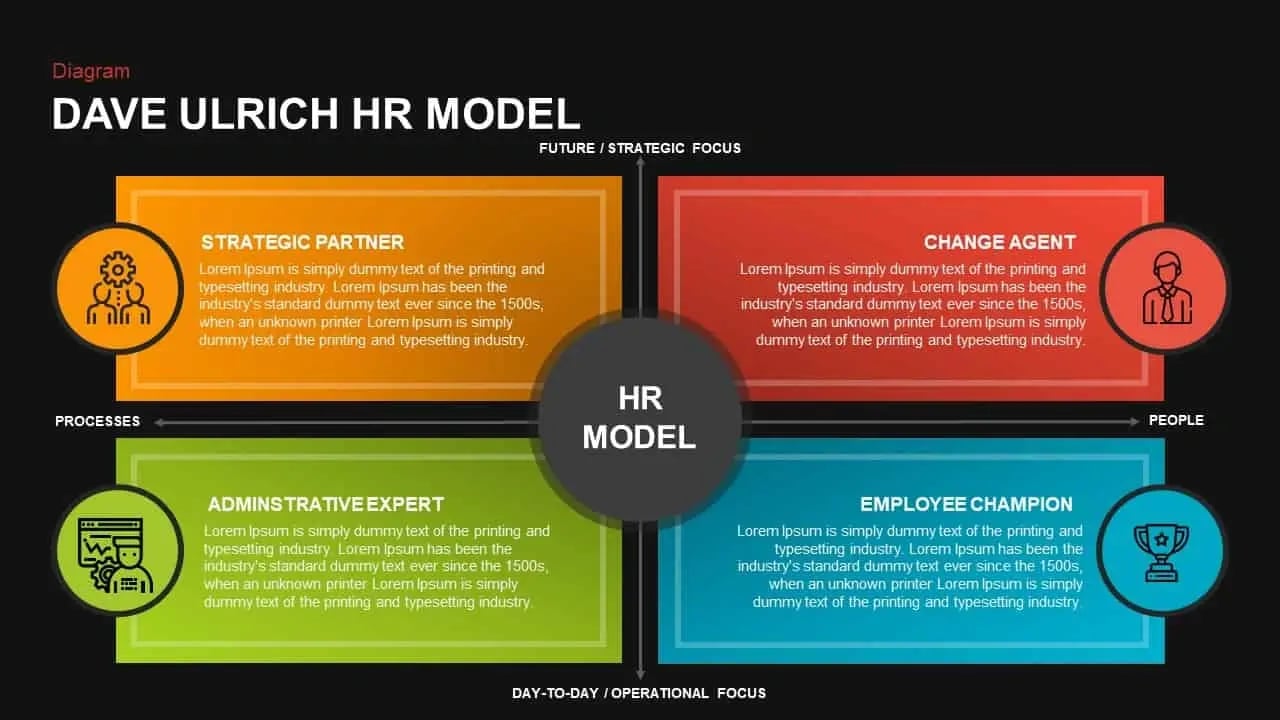
Image Source: SlideBazaar
Selecting the appropriate HR service delivery framework stands as a critical decision that shapes how organizations support their workforce at scale. First and foremost, your chosen model must align with your organizational structure, geographic footprint, and strategic objectives.
Centralized vs Decentralized Models in Global Teams
The debate between centralized and decentralized HR approaches continues to evolve as organizations expand globally. Centralized models consolidate HR functions under a single team serving the entire organization, promoting standardized policies and unified processes across all locations. This approach creates consistency in practices while achieving cost efficiencies through economies of scale.
In contrast, decentralized structures distribute HR responsibilities among individual departments or regional offices, allowing for greater agility and localized decision-making. Nearly 80% of organizations implementing centralized HR services report increased standardization and efficiency of their processes. Nevertheless, decentralized approaches excel in environments requiring customized recruitment strategies and quick adaptation to local market conditions.
The key distinction lies in decision-making authority placement—centralized models flow decisions from the top down, creating uniformity, whereas decentralized models distribute power throughout various organizational levels for faster localized responses.
Ulrich Model: Shared Services, CoEs, and HRBPs
For more than two decades, multinational companies have adopted Dave Ulrich's model as their primary HR framework. Often described as the "three-legged stool," this model separates HR into specialized functions:
-
Shared Services Centers: Act as the first point of contact for employees, handling high-volume transactional tasks like payroll processing and benefits administration.
-
Centers of Excellence (CoEs): Specialist teams developing and implementing best practices in specific domains such as compensation, learning and development, and talent acquisition.
-
HR Business Partners (HRBPs): Strategic professionals who consult directly with business unit leaders on people issues affecting the bottom line.
The model encourages accountability while positioning HR as a business function. Moreover, it enables HR departments to shift from purely administrative roles toward more strategic partnerships that add measurable value to organizations.
Tiered Service Model: Tier 0 to Tier 3 Explained
The tiered service approach combines benefits of self-service with shared service models through four progressive support levels:
Tier 0: Self-service portals and knowledge bases allowing employees to find information independently. Organizations implementing best-in-class models have achieved 80-90% Tier 0 usage.
Tier 1: HR generalists or shared service center staff handling standard inquiries and requests, with most issues resolved on first contact.
Tier 2: Escalation to HR specialists with deeper expertise in specific areas when generalists cannot resolve issues.
Tier 3: Reserved for complex situations requiring direct interaction with HR partners, typically for strategic planning or sensitive personal matters.
This structured escalation pathway creates efficiency by ensuring appropriate resource allocation based on inquiry complexity. As a result, organizations deploying this model report reducing escalations to HR experts by more than 70%, freeing talent for strategic initiatives.
Hybrid and Outsourced Models for Flexibility
Many organizations find pure centralized or decentralized models insufficient for their needs, instead opting for hybrid approaches. Hybrid models maintain centralized control over foundational functions like payroll while allowing regional customization for training and development.
Similarly, outsourced models contract external providers to manage specific HR services. Approximately 47% of companies outsource at least one HR function, with payroll (62%) and employee benefits (68%) being the most commonly outsourced services.
For instance, hybrid supplementation during rapid growth or market expansion helps manage HR resources while reducing investment in fixed assets. Certainly, outsourced models offer specialized expertise, technology access, and scalability, though challenges include reduced service quality control and vendor dependence.
Choosing between these models requires careful consideration of your organization's size, geographic dispersion, technological capabilities, and strategic priorities to ensure HR service delivery aligns with both immediate needs and long-term objectives.
Designing for Speed Without Losing Consistency
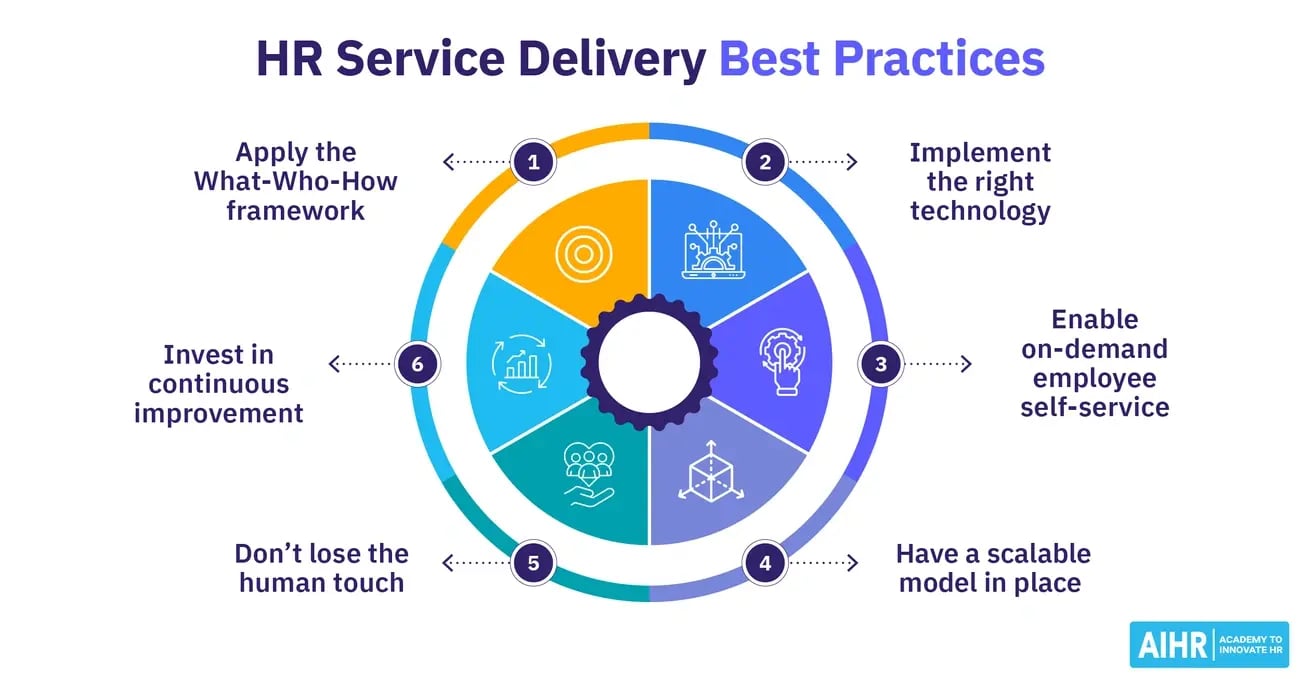
Image Source: AIHR
Achieving balance between speed and consistency represents a fundamental challenge for HR teams supporting large organizations. The solution lies in creating structured yet flexible systems that maintain quality without sacrificing efficiency.
Standardized Workflows for Repetitive HR Tasks
HR workflow automation transforms manual, repetitive tasks into streamlined digital processes that maintain consistency across your organization. This approach replaces traditional checklists, emails, and spreadsheets with organized, automated systems. By standardizing processes like onboarding, payroll, leave approvals, and compliance tracking, your HR team gains valuable time for strategic initiatives.
Automated workflows deliver multiple advantages:
- Error reduction: Standardization minimizes manual errors, ensuring policies apply consistently across the organization
- Improved transparency: Clear workflows reduce duplication, streamline communication, and help identify bottlenecks early
- Enhanced compliance: Automation ensures regulatory requirements remain satisfied regardless of which team member handles the task
Before implementing automation, map your current processes thoroughly—identify actions, owners, triggers, systems used, handoffs between departments, and approval steps. This comprehensive baseline helps you identify inefficiencies and opportunities for standardization.
SLAs and Escalation Paths in Tiered Support
Service-level agreements (SLAs) form critical components of effective HR service delivery by clearly defining response and resolution timeframes for different request types. They establish responsibilities and expectations for both HR teams and employees, ensuring neither party can claim ignorance when issues arise.
Establishing formal SLAs allows your HR department to prioritize requests appropriately, particularly through tiered support systems. For high-priority issues, automated notifications can immediately alert key representatives, specifying resolution timeframes and ensuring affected employees receive prompt communication.
Escalation procedures typically follow predetermined paths based on complexity and urgency. A well-designed escalation matrix visualizes these paths, helping HR service delivery associates understand exactly when and how to elevate complex issues to higher support tiers. This prevents tickets from lingering at inappropriate support levels while ensuring specialized expertise addresses truly complex problems.
For effective escalation management, create clear workflows for each support channel and define whether first-level associates can reassign difficult tickets themselves or if senior managers must handle rerouting.
Balancing Local Customization with Global Standards
One common pitfall in scaling HR service delivery involves confusing uniformity with standardization. While global consistency drives efficiency and scale, local flexibility powers growth and employee engagement. Your challenge lies in developing HR operating models flexible enough for local customization while maintaining global standards.
A successful approach creates a global HR framework for core policies like ethics and performance standards, subsequently allowing room for local adaptation in specific areas like compensation, benefits, holidays, and cultural practices. This "glocal" strategy implements globally integrated HR processes within local contexts.
Throughout this balancing act, maintain clear accountability between global, regional, and local HR teams. The issue often isn't lack of action but uncertainty about responsibility—defining ownership, decision authority, and escalation paths becomes crucial for maintaining process consistency.
Remember that standardization extends beyond process alignment; it connects organizational structure, culture, performance, and talent development into one coherent operating model. This comprehensive approach ensures HR processes serve people effectively, not vice versa.
Technology Stack for Scalable HRSM
The technological foundation of your HR service delivery system determines both its scalability and effectiveness in supporting employees across the organization. A well-designed technology stack enables HR teams to maintain consistent service quality while handling increasing volumes of inquiries and requests.
HR Service Portals and Self-Service Interfaces
HR self-service portals serve as web-based platforms that empower employees to address their HR needs electronically and independently. These portals function as comprehensive digital interfaces where employees can manage everything from leave requests to payroll information without HR intervention. Notably, employees using these portals can view and print pay stubs, tax forms, and update personal information anytime, anywhere. This self-service approach not only streamlines administrative processes but also creates significant time savings for HR departments.
A properly implemented HR portal includes several essential components:
- Secure login systems with password recovery options
- Direct access to personal records and documents
- Automated workflows for common requests
- Real-time access to HR policies and procedures
From an organizational perspective, these portals reduce redundancy in tasks while providing valuable tracking systems for important statistics and employee records. According to research, organizations implementing HR service portals report faster service delivery and measurable cost savings through automation.
AI Chatbots for First-Level Employee Support
AI-powered chatbots represent a significant advancement in first-level HR support, acting as intelligent virtual assistants designed to interact with employees through natural language conversations. These HR bots understand and respond to queries, automate repetitive tasks, and provide round-the-clock support. Initially deployed through messaging platforms like Slack, Microsoft Teams, or company websites, these chatbots handle routine inquiries that would otherwise consume HR professionals' time.
Many employees actually prefer asking a bot over emailing HR as it feels faster, more private, and less awkward. Through natural language processing capabilities, these virtual assistants can address various HR processes—from recruitment and onboarding to ongoing employee support—making HR information instantly accessible in a conversational format.
Integration with HRIS and Payroll Systems
Data synchronization between HR and payroll systems represents a core challenge for organizations scaling their HR service delivery. Without proper integration, these essential functions operate in isolation, creating inefficiencies and inaccuracies. An integrated system provides comprehensive visibility into HR processes, enhancing employee self-service capabilities and enabling real-time data access.
Organizations can approach HRIS-payroll integration through three primary methods:
- Bundled HRIS and payroll solutions that offer streamlined implementation and reduced costs
- Systems with pre-built integrations that provide ease of use and scalability
- Custom integrations tailored specifically to business needs
Proper integration creates a single source of truth for critical HR and payroll information, promoting transparency and organizational trust. Furthermore, integrated platforms provide deeper visibility into workforce analytics, helping HR leaders make data-driven decisions.
Knowledge Base Management and Search Optimization
A searchable knowledge base of HR policies, procedures, and other articles allows the enterprise HR department to reduce time spent answering routine questions. Effective knowledge management underpins both HR case management and employee portals by enabling instant access to captured knowledge—ensuring the same problem never needs solving twice.
Knowledge bases should implement search engine optimization (SEO) techniques to help users find information quickly. This includes adding human-readable keywords in URLs, descriptive meta tags, dynamic page titles, and automatically generated sitemaps for search engines to index. Additionally, knowledge blocks—reusable pieces of content secured by user criteria—can simplify knowledge authoring and consumption, allowing employees to view only content relevant to their needs.
Measuring Performance and Employee Experience
Effective measurement forms the backbone of any successful hr service delivery program. By tracking the right metrics, organizations can continuously optimize their HR processes and enhance the employee experience.
HR Service Response Time and SLA Compliance
Monitoring response times provides critical insights into HR service quality. Average first response time (AFRT) measures the mean duration between ticket submission and initial technician response, helping identify team performance trends and capacity planning needs. Alongside this, tracking SLA compliance rate—the percentage of tickets acknowledged within agreed timeframes—offers visibility into consistency of service. Industry benchmarks suggest maintaining at least 95% compliance rates for response time SLAs.
For maximum visibility, HR departments should track performance across various dimensions:
- Response times by priority level (comparing P1 vs P3 incidents)
- Performance across different communication channels (portal, email, chat, phone)
- Resolution times for different request categories
Regular measurement helps identify resource constraints and optimize staff allocation. Indeed, HR teams using SLA management features gain valuable visibility into bottlenecks, enabling continuous improvement of hr service delivery.
Employee Satisfaction Scores and Feedback Loops
Employee satisfaction directly impacts engagement and retention. The Employee Net Promoter Score (eNPS) measures satisfaction through a single question: "How likely are you to recommend this organization as a place to work?" Organizations can categorize responses into promoters (9-10), passives (7-8), and detractors (below 6). Any eNPS above 0 is acceptable, with scores between 10-30 considered good and above 50 excellent.
Another valuable metric is the Employee Satisfaction Index (ESI), calculated from three questions about workplace satisfaction, expectation fulfillment, and job ideal comparison. The resulting score between 0-100 provides a comprehensive satisfaction measurement.
In addition to measurement, establishing feedback loops ensures continuous improvement. Organizations that close the loop with "You said, we did" updates typically see increased participation and reduced cynicism. Teams that implement meaningful weekly feedback demonstrate 80% higher engagement levels.
HR Cost per Employee and Time to Productivity
HR cost per employee measures total HR expenditure allocated to each employee annually. This metric helps determine HR operational efficiency, with lower costs potentially indicating streamlined processes. To calculate, divide total annual HR expenses by employee count.
The time to productivity metric tracks how quickly new hires reach full performance capability in their roles. On average, employees take 8-12 months to reach full productivity, though this varies by role complexity. Tracking this metric provides valuable insights into onboarding effectiveness and recruitment processes.
By consistently monitoring these metrics, HR leaders can identify improvement opportunities, optimize resource allocation, and demonstrate tangible value to the organization.
Scaling HR Service Delivery with Automation
Image Source: Powerslides
Automation serves as a pivotal lever for expanding hr service delivery capabilities without proportionally increasing costs or sacrificing quality. Organizations implementing the right automation strategies report 25% improvement in service staff productivity and 30% increase in manager productivity.
Automated Onboarding and Offboarding Workflows
Intelligent onboarding automation eliminates the tedious paperwork while providing personalized experiences tailored by role and location. Organizations using automated workflows report higher retention rates as strong onboarding gives new hires more reason to stay. Correspondingly, automated offboarding instantly revokes access across all systems, reducing security incidents by 34%. This end-to-end lifecycle management ensures no former employees retain lingering access to sensitive data.
Document Management and e-Signature Integration
E-signature integration streamlines the entire HR agreement process from hire to retire. These systems enable remote signing of offer letters, NDAs, and employment contracts while providing tamper-proof, legally valid documentation. Coupled with automated workflows, e-signature solutions create audit trails that track who signed what and when, thereby maintaining compliance records automatically.
AI-Powered Case Routing and Resolution
AI orchestrates cross-department workflows, enabling:
- 80% reduction in time spent writing emails
- 33% decrease in case resolution times
- 4x increase in HR productivity
Some companies automate up to 70% of routine requests, allowing hr service delivery associates to focus on complex cases requiring human expertise.
Compliance Automation for GDPR and SOC 2
Compliance automation dramatically reduces manual effort while improving accuracy. GDPR automation platforms report 85-97% reduction in compliance workloads, meanwhile SOC 2 automation streamlines tedious processes by eliminating complicated spreadsheets and folders of screenshots. These systems continuously monitor controls, automatically collecting evidence and generating audit-ready reports.
Conclusion
Breaking the myth between speed and consistency stands as perhaps the most significant achievement for organizations scaling their HR service delivery. Throughout this article, we explored how enterprise HR teams can deliver fast, consistent service regardless of size or geographic distribution.
Consequently, the right service model becomes essential for your organization's specific needs. Whether adopting the Ulrich model with its shared services and centers of excellence, implementing a tiered support system, or creating a hybrid approach, your framework must align with strategic objectives while accommodating growth.
Standardization remains the backbone of scalable HR service delivery, yet success comes from balancing global standards with local flexibility. Therefore, organizations must create structured processes that maintain quality without sacrificing efficiency or cultural relevance across regions.
Technology undeniably serves as the great enabler of scale. Self-service portals, AI chatbots, integrated HRIS systems, and comprehensive knowledge bases collectively create a foundation for handling increased volume without proportional cost increases. These solutions free HR professionals from repetitive tasks while ensuring employees receive consistent answers regardless of location or department.
Measurement drives continuous improvement. SLA compliance, employee satisfaction scores, cost per employee, and time to productivity metrics provide clear visibility into service quality and operational efficiency. Organizations that measure performance consistently identify bottlenecks early and optimize resource allocation accordingly.
Automation represents the ultimate force multiplier for HR teams facing increasing demands. Automated workflows for onboarding, document management, case routing, and compliance dramatically reduce manual effort while improving accuracy and consistency. Companies implementing these technologies report significant productivity gains and enhanced employee experiences.
The traditional trade-off between speed and consistency no longer applies when organizations implement the right combination of service models, standardized workflows, technology, measurement systems, and automation. HR teams can finally shift focus from transactional tasks to strategic initiatives while providing faster, more consistent service to employees worldwide.
Your journey toward scalable HR service delivery might seem challenging, but the rewards—enhanced employee experience, operational efficiency, and strategic alignment—make this transformation essential for any growing organization. Speed and consistency need not be competing priorities; they can be complementary outcomes of well-designed HR service delivery systems.
Trusted by 330+ CHROs
See why global HR teams rely on Amber to listen, act, and retain their best people.
